

Software Product Engineering: Everything You Need to Know
Key Takeaways
- Software product engineering manages the complete journey of a software product from planning and development to testing and ongoing improvements.
- A structured product engineering approach helps teams reduce development challenges and build more reliable software.
- Effective product design and early validation help reduce rework and create a clearer path for development.
- Continuous testing and quality engineering ensure software performs reliably and meets user expectations.
- Regular updates, maintenance, and user feedback help software products remain useful as business and customer needs change.
Introduction
Building a software product does not end when the first version is released. It requires regular updates, bug fixes, performance improvements, and new features as user needs and business requirements change. Software product engineering covers this complete process, from planning and design to development, testing, deployment, and ongoing maintenance.
The global Product Engineering Services Market is expected to reach $2,041.4 billion by 2028, growing at a CAGR of 8.5%. This increase indicates how businesses are progressively investing in structured approaches to develop, improve, and maintain software products.
This blog explores the fundamentals of software product engineering, its key benefits, the seven stages of the product engineering lifecycle, and strategies for building an effective product engineering approach in 2026. It also covers the role of product design engineering software, real-world applications across industries, product testing methods, and the key challenges along with effective practices involved in delivering successful software products.
What Is Software Product Engineering?
Software Product Engineering (SPE) covers the complete journey of a software product, starting from the first idea and planning stage to development, testing, launch, and the improvements that follow. A software product does not really stop evolving after release. It continues to change through bug fixes, new features, performance improvements, and updates driven by user feedback and business needs.
This is what sets software product engineering apart from traditional software development. Traditional development is usually focused on delivering a specific application or feature, while SPE looks at how the product will perform and evolve over time.
| Capgemini highlights that software has become critical to customer value and loyalty, new business models, and revenue generation. It also emphasizes that the time to pursue software product engineering is now. This reinforces why SPE has become so important for businesses that rely heavily on software. |
As software takes on a bigger role in business operations, the way it is managed has also become more complex. Requirements keep changing, features evolve, and user expectations shift quickly. Without a structured approach, development can easily become inconsistent. SPE helps bring more stability by improving how teams plan, build, test, and refine products over time.
To handle this lifecycle in a practical way, teams usually follow a few common development models.
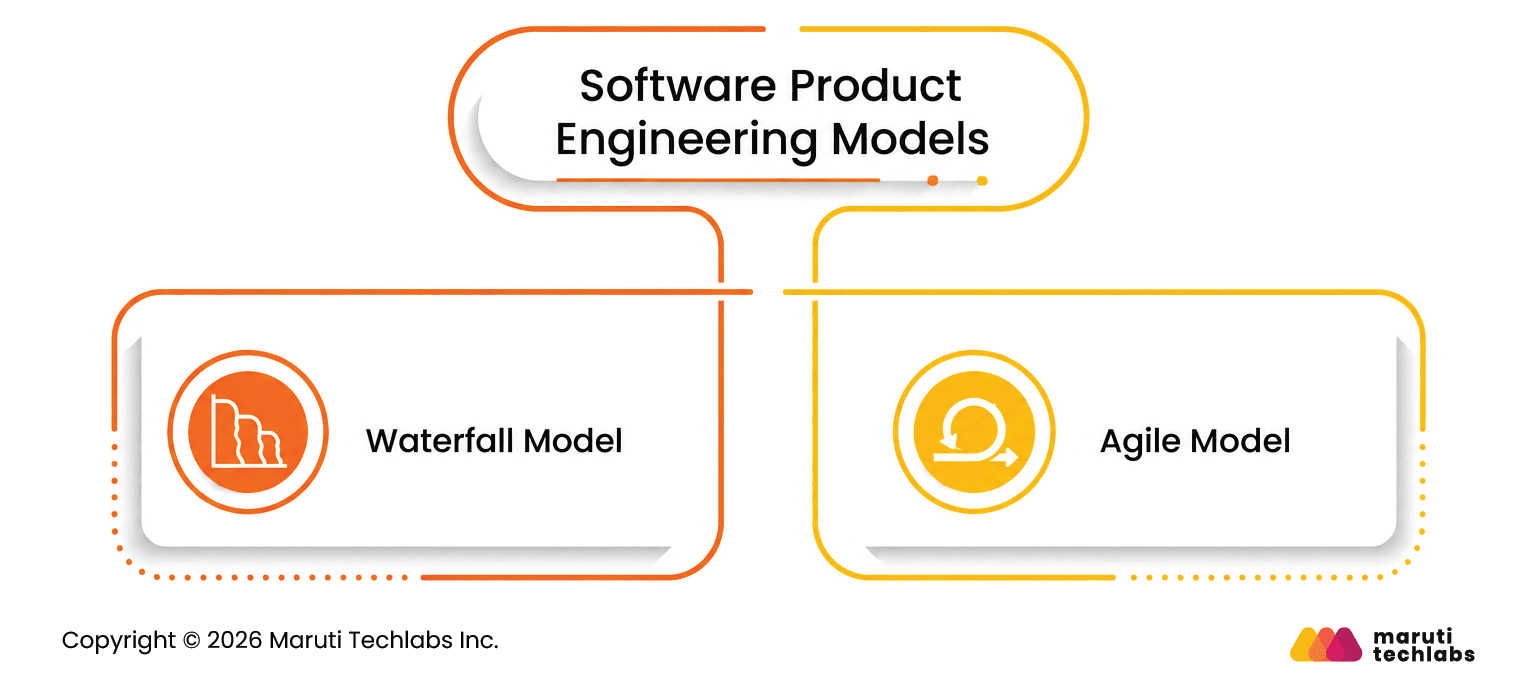
- Waterfall Model: The waterfall model follows a step-by-step approach where one stage is completed before the next begins. It is usually used for projects where the goals, scope, and requirements are clear from the start and are unlikely to change much later.
- Agile Model: The agile model breaks development into smaller iterations, permitting teams to build, test, gather feedback, and make improvements along the way. It is better suited for projects where requirements may evolve over time.
Benefits of Software Product Engineering
Software product engineering provides multiple advantages throughout the development process. It helps teams build better software, reduce unnecessary development effort, and deliver a consistent experience across systems. It also makes products easier to maintain and improve over time.
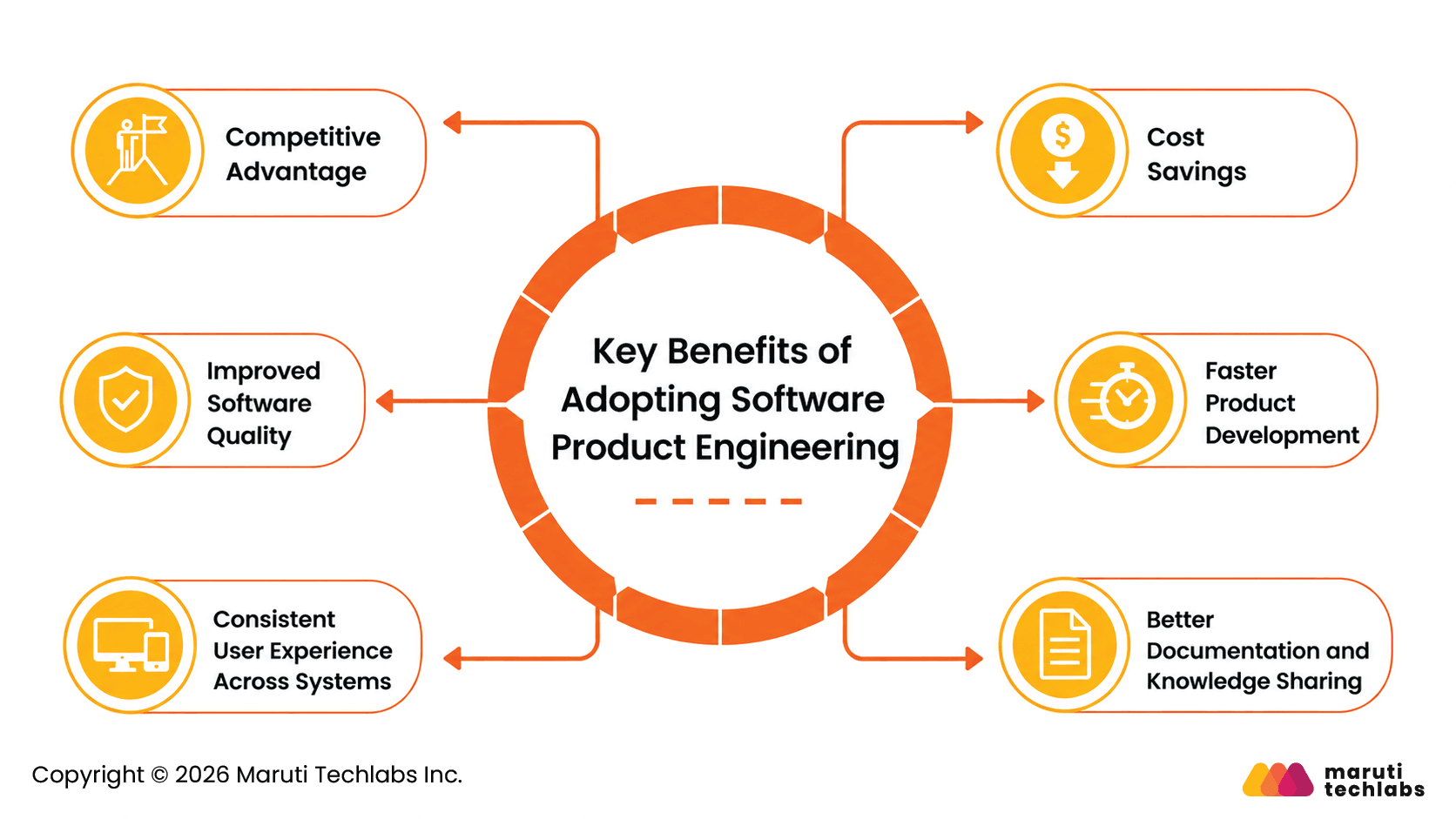
1. Competitive Advantage
Software product engineering helps businesses build products with better functionality, usability, and overall quality. Well-designed software can help organizations stand out from competitors and better address customer requirements.
2. Cost Savings
A structured development process helps teams catch issues before they become expensive to fix. This reduces rework, controls software development costs, and makes ongoing maintenance easier.
3. Improved Software Quality
Software product engineering includes practices such as quality assurance, testing, validation, and code reviews to ensure the product meets technical and business requirements.
4. Faster Product Development
A well-defined development roadmap, standardized processes, and better team cooperation help accelerate software development and reduce time-to-market.
5. Consistent User Experience Across Systems
SPE focuses on usability and design consistency, helping businesses deliver an effortless experience across web, mobile, and other digital channels.
6. Better Documentation and Knowledge Sharing
Full documentation, including requirement specifications, technical designs, and test plans, helps development teams keep clear project visibility and keeps stakeholders aligned.
7 Stages of the Software Product Engineering Lifecycle
Software product engineering follows seven stages that guide the entire journey of a product, from initial planning to development, testing, release, and continuous improvement. Each stage contributes to building a reliable and well-structured software product.
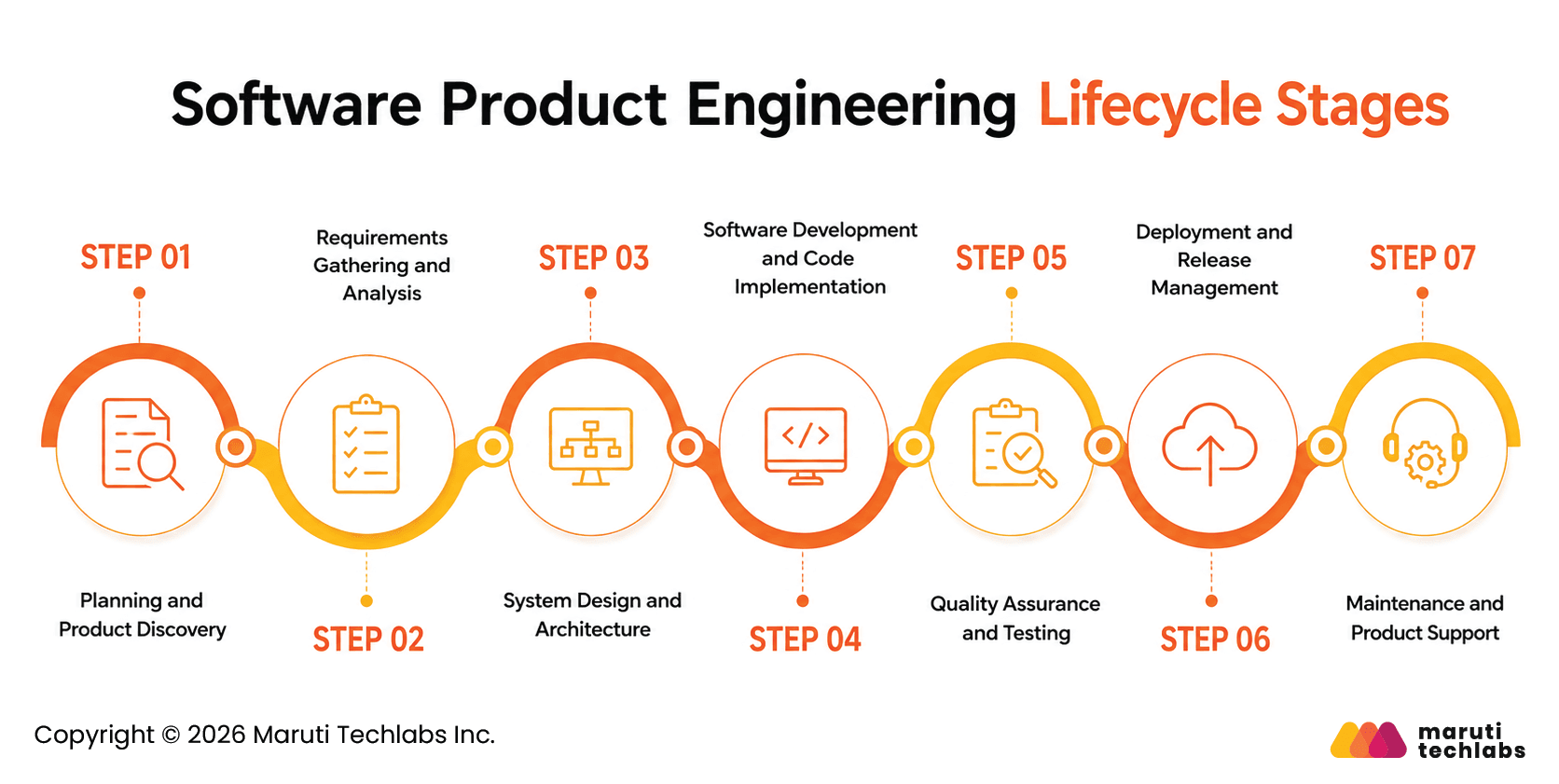
1. Planning and Product Discovery
This stage is where teams define the product vision, understand user problems, evaluate technical feasibility, and create a clear roadmap for the development process.
2. Requirements Gathering and Analysis
In this stage, business analysts and product teams gather functional and non-functional requirements. These requirements are documented in a Software Requirement Specification (SRS) to guide the development process.
3. System Design and Architecture
Based on the requirements, architects and designers plan how the software will be structured. They define the overall architecture through High-Level Design (HLD) and detail individual modules, components, and their interactions through Low-Level Design (LLD).
4. Software Development and Code Implementation
Developers build the application by writing code, conducting code reviews, and managing source code through version control systems.
5. Quality Assurance and Testing
QA teams test the software to identify defects and verify its functionality, security, performance, and overall reliability before release.
6. Deployment and Release Management
After successful testing, the software is moved to the production environment. Many teams use CI/CD pipelines to automate deployments and make software releases more consistent.
7. Maintenance and Product Support
After a product goes live, teams continue improving it based on real-world usage. This includes resolving issues, refining existing features, and making changes needed to support business and user requirements.
How to Build an Effective Software Product Engineering Strategy in 2026
An effective software product engineering strategy in 2026 requires balancing innovation with maintainability, performance, and long-term product scalability. Modern engineering teams are focusing on the following areas to build reliable, adaptable, and efficient software products.
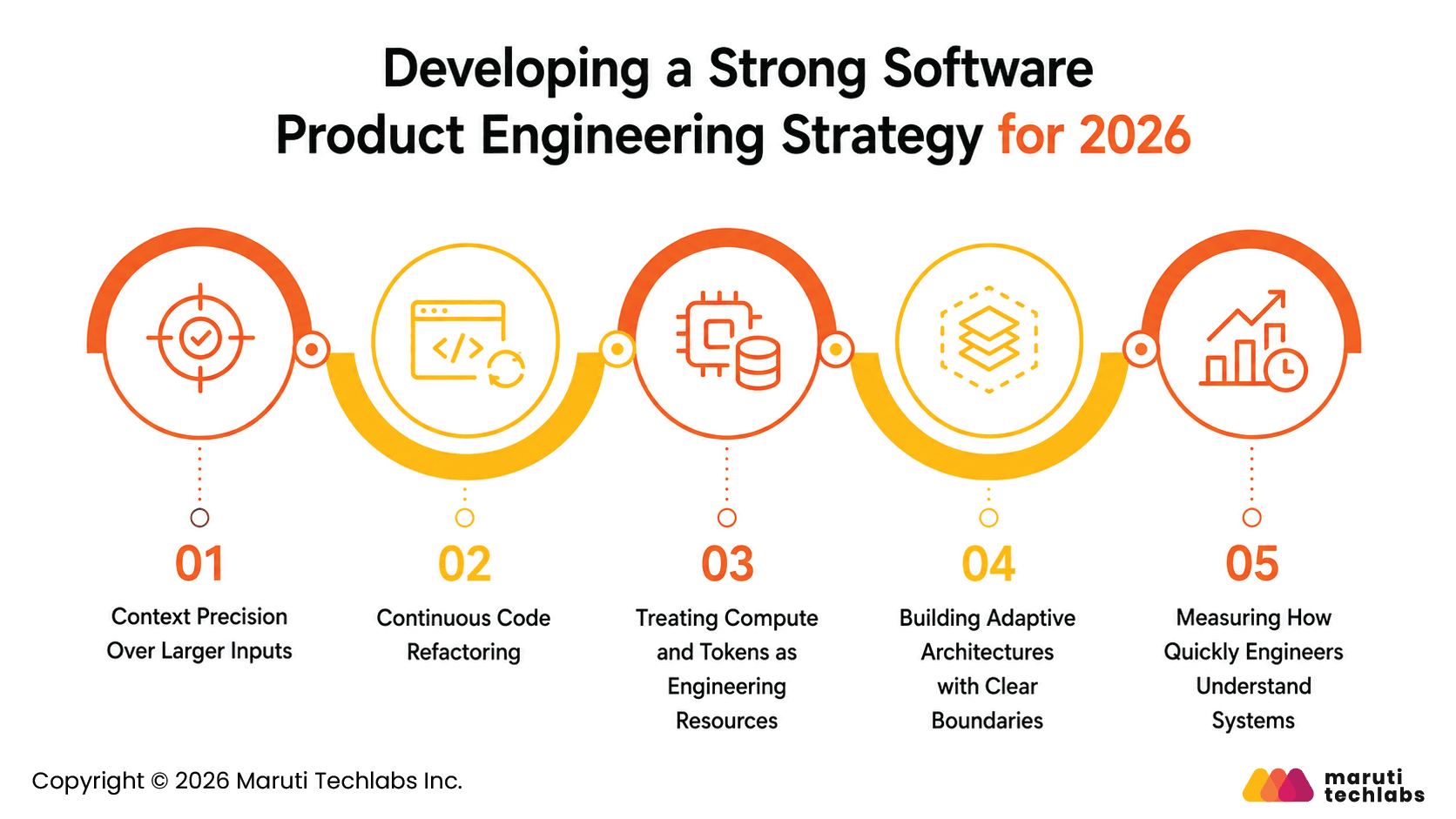
1. Context Precision Over Larger Inputs
Larger context windows can increase complexity and bring in irrelevant information. A more effective approach is to control how context is selected and passed to the system based on the task being performed.
2. Continuous Code Refactoring
Refactoring is the practice of reviewing and improving existing code without changing its functionality. It helps development teams remove duplicate code, improve readability, and maintain a cleaner codebase that is easier to modify over time.
3. Treating Compute and Tokens as Engineering Resources
Tokens are becoming a resource that engineering teams need to manage carefully, much like memory or processing power. Measuring how much computation a task requires helps teams make better decisions about when and how to use larger models.
4. Building Adaptive Architectures with Clear Boundaries
Growing software systems can become difficult to manage when services and dependencies are not clearly defined. Setting clear boundaries early helps teams maintain a more reliable and manageable architecture.
5. Measuring How Quickly Engineers Understand Systems
Building features quickly is important, but engineers also need to understand the existing system before making changes. Metrics like Mean Time to Comprehend (MTTC) measure how much time it takes to understand the code, identify issues, and work on it confidently.
The Role of Product Design Engineering Software in Modern Product Development
Product design engineering software helps teams plan and shape a software product before development begins. It allows them to capture requirements, design user interfaces and experiences, test concepts, and make important design and technology decisions before writing code.
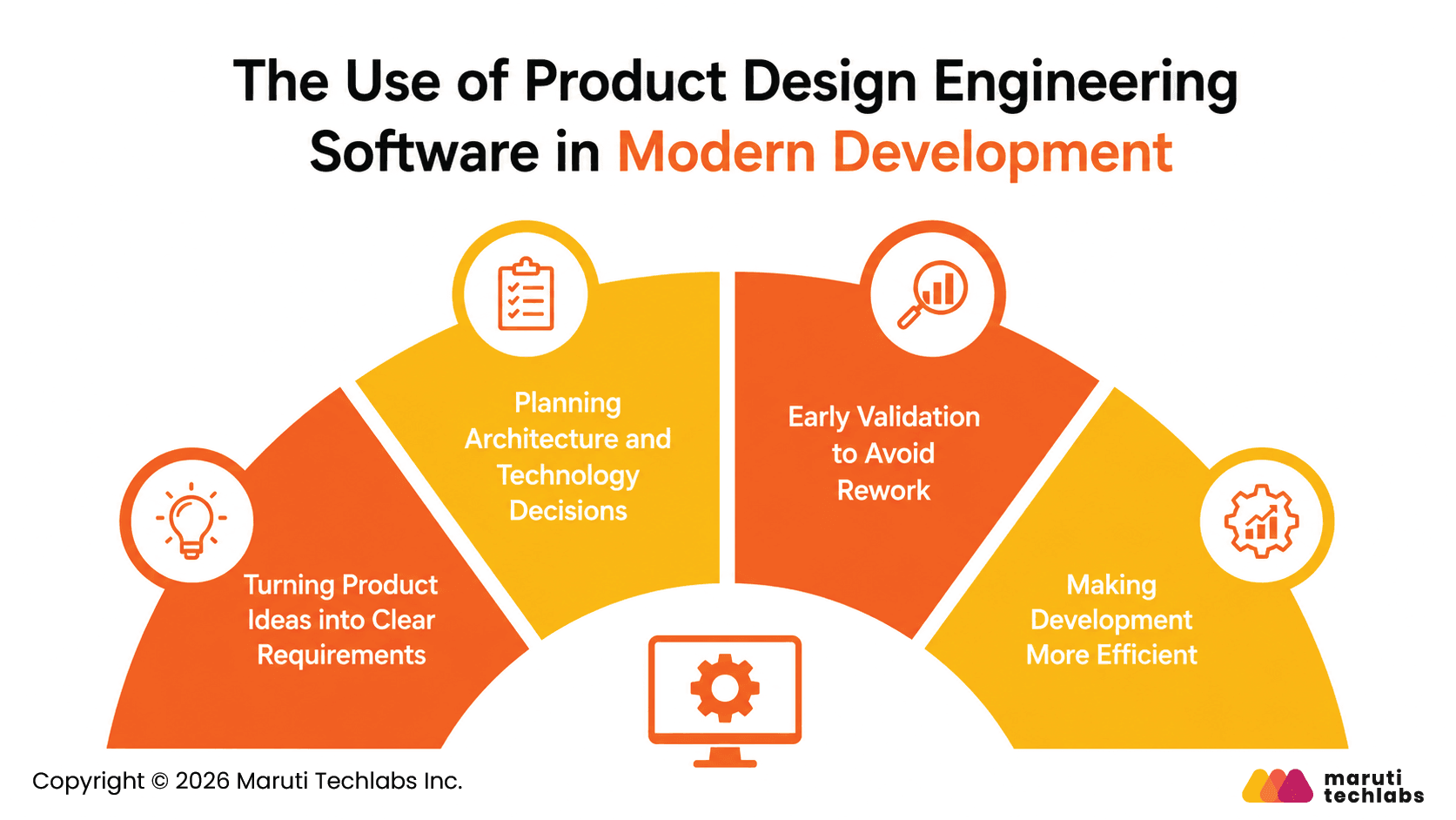
1. Turning Product Ideas into Clear Requirements
Designing a software product requires several decisions before the first line of code is written. Teams need to decide how users will interact with the product, how different screens and features will connect, and what the final experience should look like. Design engineering tools help organize these decisions and turn them into a clear plan for development.
2. Planning Architecture and Technology Decisions
Planning the product architecture early helps teams avoid unnecessary changes during development. Product design software supports this process by helping teams document requirements, design system architecture, and evaluate technology options.
3. Early Validation to Avoid Rework
Checking ideas before development helps teams identify what needs improvement before significant time is spent on coding. Prototypes and design reviews allow teams to make adjustments early, reducing unnecessary changes later in the development process.
4. Making Development More Efficient
A clear plan before development helps developers understand what needs to be built and how different parts of the software should work. With finalized requirements and designs, teams can spend less time revisiting earlier decisions and more time focusing on development.
Real-World Applications of Software Product Engineering Across Industries
Software product engineering is applied in different industries to build and maintain the software that businesses use every day. Whether it is a healthcare application, a banking platform, or a retail system, software products need regular updates, strong performance, and the ability to handle growing user demands.
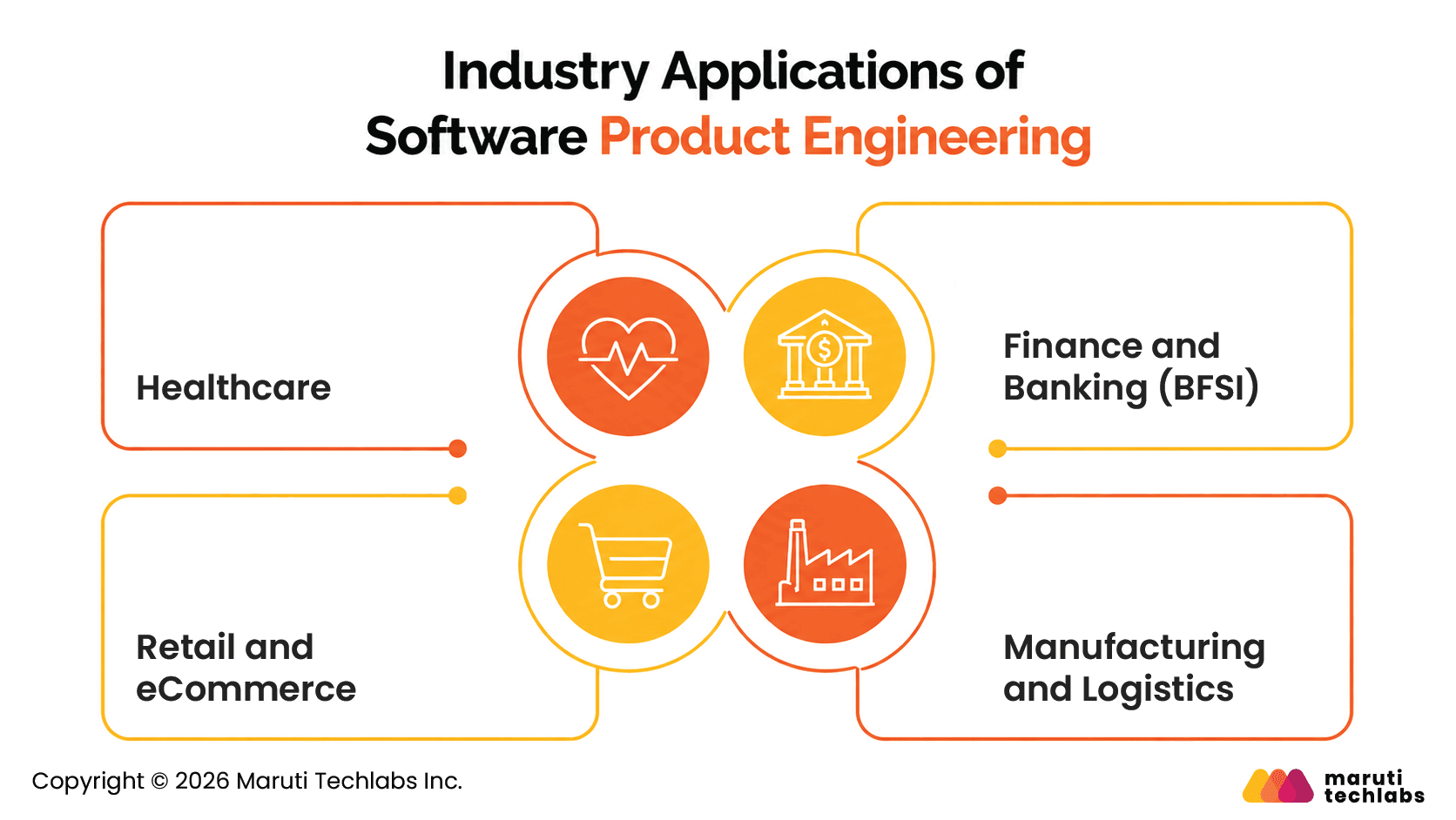
1. Healthcare
Software product engineering plays a major role in improving how healthcare services are delivered and managed. Hospitals and healthcare providers use Electronic Health Records (EHR) to maintain patient information and telehealth platforms to connect with patients remotely. It is also used in wearable health devices that track important health parameters and share data for continuous monitoring.
2. Finance and Banking (BFSI)
Banks use software for everything from managing customer accounts to processing digital payments. Along with mobile banking applications, software product engineering also supports fraud detection systems that identify suspicious transactions and algorithmic trading platforms that analyze market data and execute trades automatically.
3. Retail and eCommerce
A large part of the shopping experience today happens through software. Businesses use it to understand customer preferences, keep track of inventory, and connect their online and offline sales channels. This is where technologies like recommendation engines and omnichannel retail platforms play an important role.
4. Manufacturing and Logistics
Manufacturing facilities and logistics networks generate large amounts of operational data every day. Software helps teams monitor IoT devices, manage warehouse operations, and support fleet management with better route planning and vehicle tracking.
Product Testing in Software Engineering: Methods and Strategies
Software products need continuous testing as they are developed and improved over time. It allows teams to check whether changes are working correctly and address problems before releasing updates.
Common Software Product Testing Methods
Software product testing includes different methods to verify application functionality, code quality, system operation, and overall product performance.
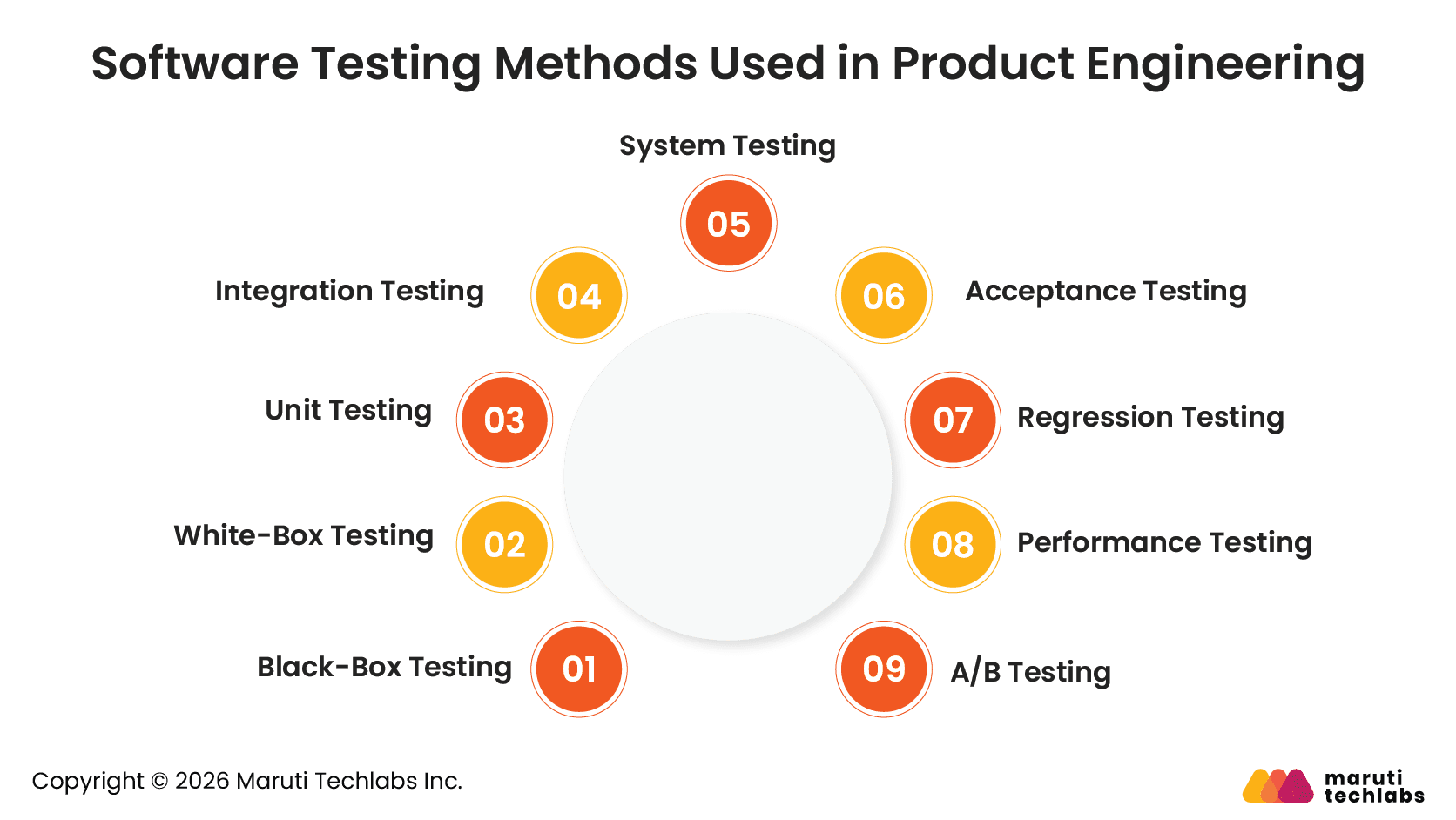
- Black-Box Testing: It examines the software from a user's point of view and checks whether features work correctly and whether the application behaves as expected without reviewing the internal code.
- White-Box Testing: This testing approach looks at how the application is built internally. Developers review the source code and logic flow to find issues and improve code reliability.
- Unit Testing: It checks small pieces of code on their own before they become part of a larger system. This makes it easier to identify defects at an early stage.
- Integration Testing: This testing checks how different parts of the application work together. It verifies data flow between modules, databases, external services, and third-party APIs.
- System Testing: System testing examines the complete software product in a real-world-like environment. It helps teams understand whether all components work together as expected before release.
- Acceptance Testing: This is the final stage of testing where the product is reviewed from a user or business perspective. It confirms that the software is ready to move into production.
- Regression Testing: Regression testing is performed after code changes, updates, or bug fixes. It helps teams ensure that existing features continue to work correctly after modifications.
- Performance Testing: This testing measures how the application performs under different levels of traffic and usage. It helps identify response delays, stability issues, and system limitations.
- A/B Testing: A/B testing compares different versions of a feature, design, or workflow with actual users. It helps teams understand which version delivers better engagement or business outcomes.
Software Product Testing Strategies
A structured testing approach throughout the software development lifecycle helps teams maintain quality and reduce issues during release and maintenance.
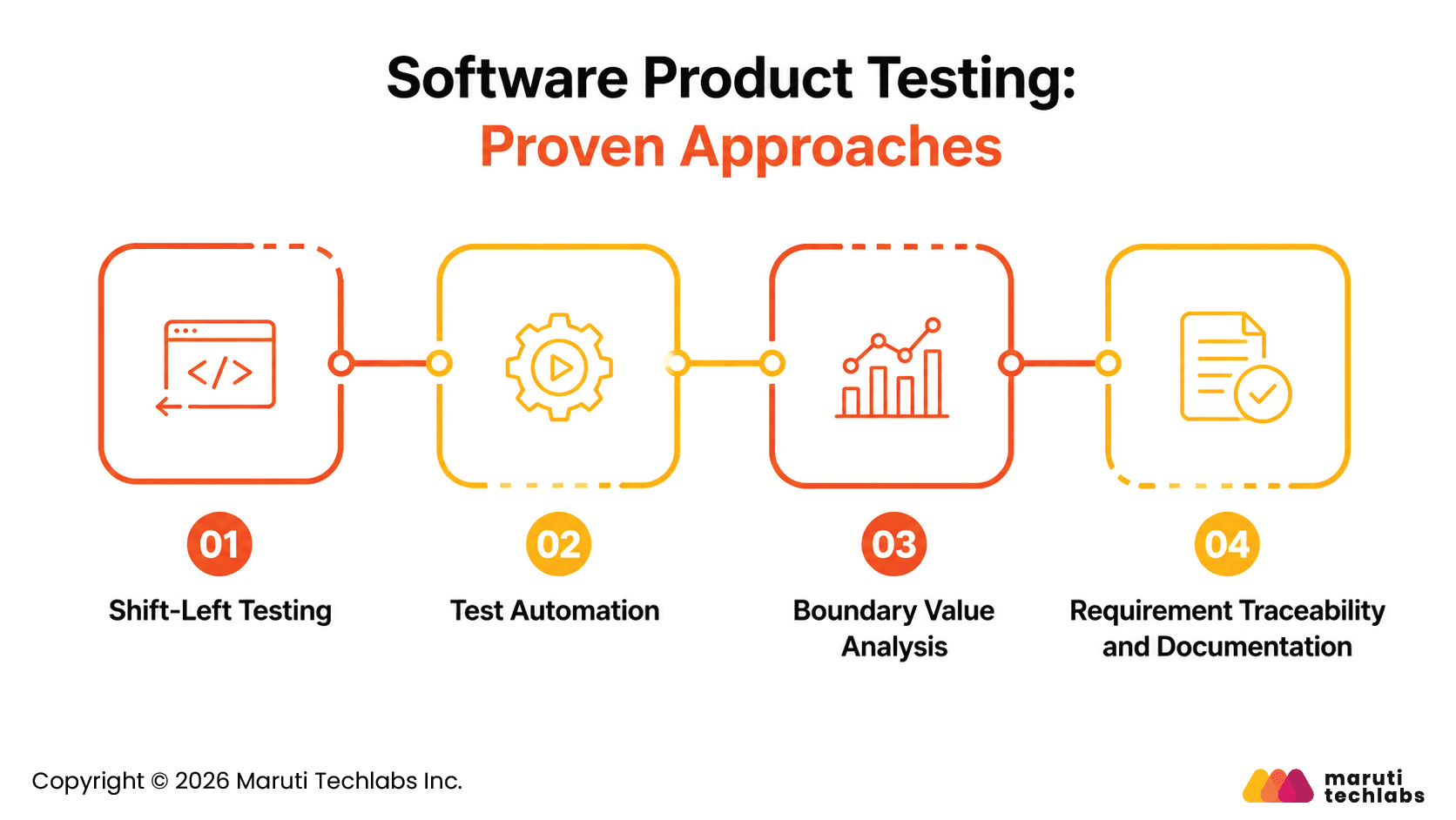
- Shift-Left Testing: Testing is started early in the development process, even during requirement and design discussions. This helps teams catch issues before any code is written or finalized.
- Test Automation: Repetitive testing tasks are handled using automation scripts, especially for checks like smoke and regression testing. Manual testing is still used when human judgment is needed for edge cases and exploratory work.
- Boundary Value Analysis: Test cases are focused around input limits, such as minimum, maximum, and unexpected values, since many issues tend to show up around these edges.
- Requirement Traceability and Documentation: Test cases are linked back to original requirements so teams can track what has been tested. Tools like Jira are often used to log defects and keep everything traceable during development.
Challenges and Best Practices of Software Product Engineering
Software product engineering involves managing changing requirements, multiple teams, evolving technologies, and long-term product improvements. Following the right practices helps teams overcome common development challenges and maintain product quality.
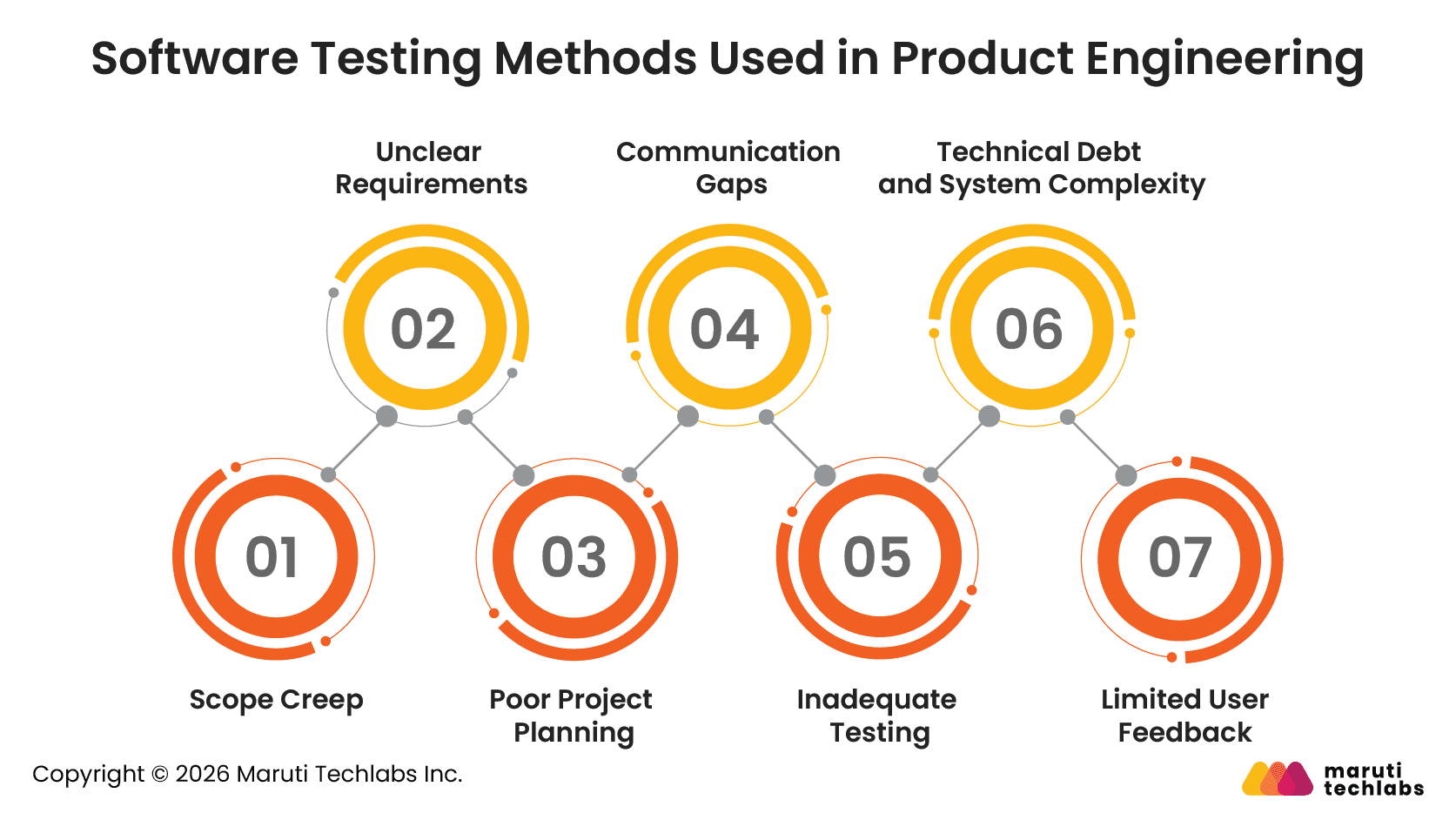
1. Scope Creep
Challenge: Requirements can keep changing during development when teams continue adding new features or modifying existing plans. This becomes difficult because the project can take longer than expected, and developers may lose focus on the most important tasks.
Best Practice: Teams should avoid adding every new request immediately. Reviewing new features with stakeholders and understanding their impact helps maintain focus and prevents unnecessary delays.
2. Unclear Requirements
Challenge: Development can become difficult when requirements are not clearly defined from the beginning. Teams may have different interpretations of what needs to be built, which can result in frequent revisions, rework, and delays.
Best Practice: A structured requirement-gathering process with user stories, stakeholder input, and requirement prioritization helps keep development efforts focused on the most important product needs.
3. Poor Project Planning
Challenge: When the work is not planned properly, teams may struggle to estimate how much time a feature will take or who should handle specific tasks. This can cause delays and make it difficult to keep development moving smoothly.
Best Practice: Breaking the project into smaller goals, having clear ownership of tasks, and reviewing progress regularly helps teams understand what is working and what needs attention.
4. Communication Gaps
Challenge: Software products are built by different teams, so clear communication is important. When updates or decisions are not shared properly, teams may work with different assumptions, leading to repeated work and delays.
Best Practice: Better collaboration comes from keeping discussions transparent, sharing updates regularly, and making sure everyone has the same understanding of product decisions.
5. Inadequate Testing
Challenge: When testing is limited or pushed to later stages of development, software issues may remain unnoticed until the product is released. These problems can affect application performance, security, and overall user experience.
Best Practice: Continuous testing throughout development helps teams identify issues earlier. A combination of unit, integration, system, and acceptance testing provides a more complete view of how the product performs before release.
6. Technical Debt and System Complexity
Challenge: Quick development decisions, outdated technologies, technical debt, and increasing code complexity can make software harder to maintain, scale, and update over time.
Best Practice: Regular maintenance activities like code refactoring and architecture improvements help reduce complexity. Reviewing database performance and security regularly also supports a more reliable product.
7. Limited User Feedback
Challenge: A product can move in the wrong direction when teams do not understand how users interact with it after release. This may lead to features that are less useful or improvements that do not address real user problems.
Best Practice: User feedback collected through interviews, surveys, usage data, and A/B testing helps teams make better decisions about future updates.
Conclusion
Software product engineering is not limited to building and launching an application. It involves managing the complete journey of a software product, including planning, design, development, testing, deployment, and ongoing improvements after release. This approach helps teams maintain product quality while adapting to changing user needs and technology requirements.
Effective software product engineering combines the right development practices, testing processes, and technology decisions throughout the product lifecycle. This allows teams to improve software quality, manage technical debt, and deliver updates in a more controlled manner.
Over time, this approach supports faster product improvements, stable software performance, and a more efficient development process.
How We Helped a DaaS Startup Develop a Centralized Workforce Management Platform
We developed a consolidated platform and mobile app that brought together workforce data, payroll management, and employee engagement for a UK-based DaaS startup. The solution made temporary workforce operations easier to manage and provided HR teams with accurate data for better decisions. It also improved communication between employers, agencies, and workers.
At Maruti Techlabs, our software product engineering services support businesses from product planning and development to testing and long-term product enhancement. We also provide quality engineering services to help teams identify glitches early, improve software performance, and deliver more stable applications.

FAQs
1. What is the difference between software engineering and software product engineering?
Software engineering mainly focuses on designing, developing, and maintaining software applications. Software product engineering takes a broader approach by managing the complete product journey, including market research, product design, development, testing, deployment, and regular updates based on user and business requirements.
2. How does software product engineering work?
Software product engineering starts with understanding what the product needs to achieve and the problems it should solve. Teams then design and develop the software, test how it works, and release it to users. The work does not end there, as the product continues to evolve through fixes, updates, and new features.
3. What is involved in software product engineering?
Software product engineering involves everything required to turn an idea into a working software product and improve it over time. Teams focus on product design, development, quality assurance, performance, and regular updates to ensure the product continues to meet user and business needs.
4. What are the key components of software product engineering?
The key components of software product engineering cover everything needed to build and maintain a software product. This includes understanding requirements, designing the system, developing features, testing the product, and continuing improvements after launch to keep the software useful and reliable.
5. What does software product engineering encompass?
Software product engineering covers every stage of a software product, starting from the initial concept and continuing after it goes live. It includes product planning, development, testing, and regular updates to keep the software working well and aligned with user and business needs.
6. What is the best product design engineering software?
There is no single product design engineering tool that works for every business. The right choice depends on how your team plans, designs, and validates a product before development. Tools such as Figma, Jira, Miro, and Adobe XD are widely used for UI/UX design, requirement discussions, and product planning.
7. What is the best product design engineering software for startups?
Startups usually prefer product design tools that are simple to use and support fast-moving teams. Figma helps create designs and prototypes, while tools like Jira, Miro, and Notion make it easier to capture ideas, plan features, and keep product information organized.