

Building a Data Analytics Platform for Temporary Workforce Management
Maruti Techlabs built a centralized analytics platform to streamline cost, compliance, and engagement in temporary staffing.
AT A GLANCE
A UK-based recruitment startup needed transparency and control in the temporary staffing industry. Maruti Techlabs designed and built a centralized data analytics platform, giving employers accurate cost visibility and giving temporary workers a voice, recognition, and a safe communication channel.
Industry
Recruitment
Function
Workforce, Payroll & Compliance Management
Solution
Data Analytics Platform
Engagement
Product Development, from Discovery to MVP and Beyond
The Client
Our client, a UK-based DaaS (Data-as-a-Service) startup, is committed to revolutionizing the recruitment space. They launched a centralized platform to streamline cost management, enhance control, and ensure compliance across the temporary workforce. This platform serves as a catalyst between agencies, employers, and employees, boosting engagement, transparency, and trust.
The Challenges
Outdated Systems Lead to Hidden Costs
Despite steady growth, temporary staffing remained an undervalued, poorly managed part of the workforce. A comprehensive analysis revealed an inherently flawed, outdated industry model that left employers, agencies, and workers without the transparency needed to work together effectively.
Discrepancies Between Actual Costs and Agency Fixed Rates
Agency margins could run, on average, 60% higher than actual costs incurred. Factors like low average hours, mid-week inductions, and low pension uptake created "gray margins," while varying worker hours complicated National Insurance and pension cost calculations, leaving employers overpaying without realizing it.
Disconnected, Inaccessible Workforce Data Across Agencies
End-hirers lacked accurate visibility into their temporary workforce. Data was scattered across disconnected agency silos, requiring manual collation, while agencies operated in isolation without data sharing, increasing the risk of overlooked issues and impairing workforce optimization and cost reduction.
Low Engagement and High Attrition Among Workers
High attrition rates, subpar engagement, and reduced productivity plagued the temporary workforce. Workers faced long hours and insufficient breaks with no safe channel to raise concerns, no platform for upskilling, and poor communication with core staff, deepening disengagement and turnover.
You're one platform away from fixing costs, data, and trust.
Turn workforce complexity into clarity, efficiency, and better engagement.
THE SOLUTIONS
A Centralized Analytics Platform
Maruti Techlabs ran a 7-day discovery workshop to map requirements using the MoSCoW method, then designed and built a web-based data analytics platform that gives employers real-time cost control and temporary workers a transparent, supportive space to engage and be heard.
Working with the client's core team, Maruti Techlabs engineered mathematical formulas covering levies, Working Time Regulations, National Insurance, and pension variables. Integrated into the back end, these formulas let end-hirers calculate accurate, dynamic labor costs with a single click, replacing guesswork with precision.
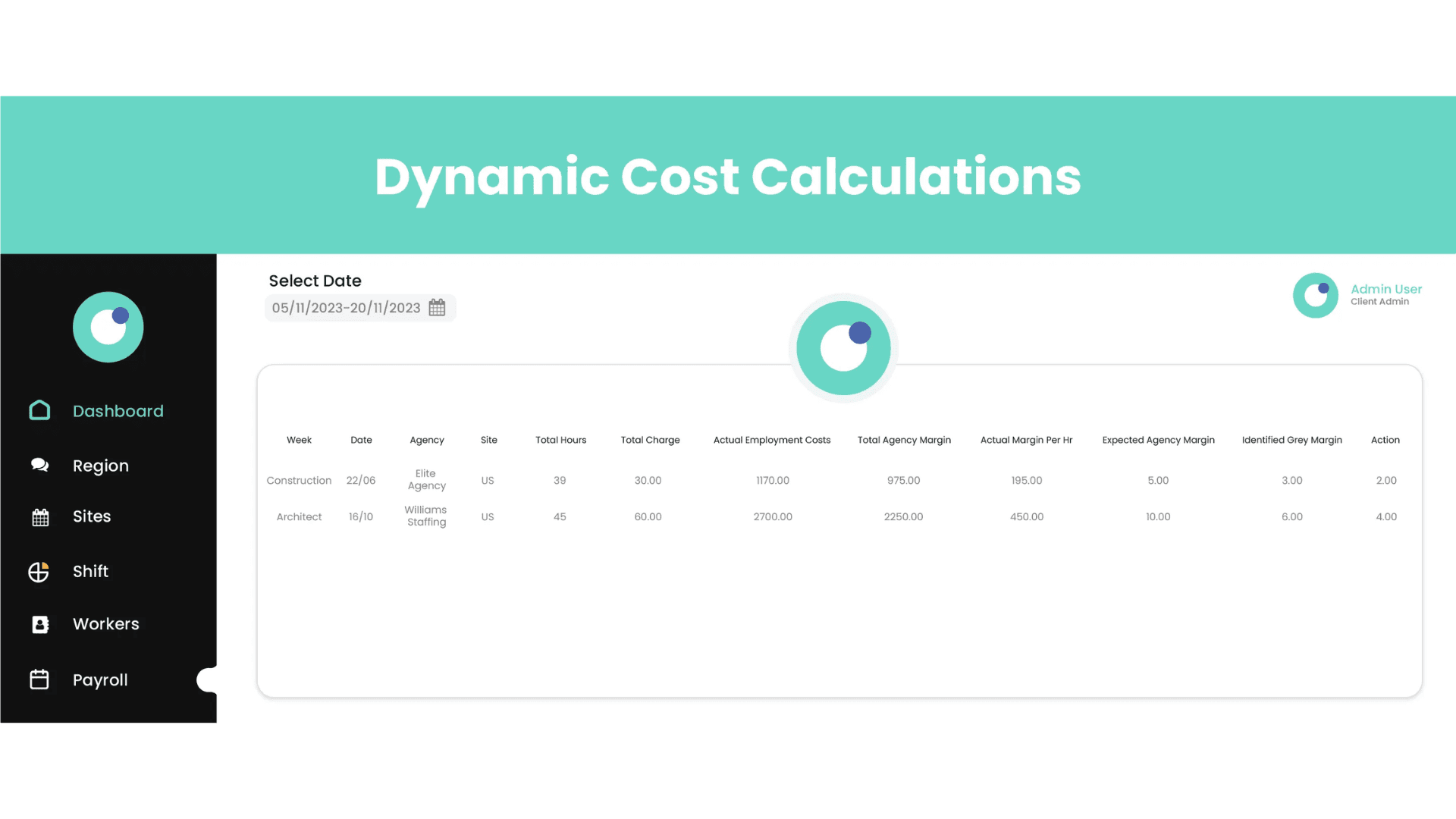
Working with the client's core team, Maruti Techlabs engineered mathematical formulas covering levies, Working Time Regulations, National Insurance, and pension variables. Integrated into the back end, these formulas let end-hirers calculate accurate, dynamic labor costs with a single click, replacing guesswork with precision.
The Journey
Building the Platform
Business Outcomes
Transformation Felt Across Every Department and Partner
30% Faster Onboarding, Better Retention
HR teams sped up onboarding and improved retention by making employee work history, achievements, and ratings easily accessible in one place.
Automated, Accurate Wage Calculations
Finance teams automated temporary workers' wage calculations via real-time shift tracking, factoring in employment type, pension, National Insurance, and WTR variables.
20% Reduction in Labor Pay-outs
Switching from fixed agency rate cards to actual employment costs reduced labor pay-outs and optimized workforce efficiency without disrupting business operations.
Stronger Agency Collaboration and Placement
Agency partners used key employee metrics to optimize workforce allocation, place better candidates, and act on feedback to improve client service.
25% Higher Worker Voice and Satisfaction
The multilingual platform let workers share feedback via pulse surveys and access native-language training content, improving work culture and satisfaction.
Conclusion
Maruti Techlabs and the client continue their collaboration, enhancing the platform based on ongoing feedback. Both teams remain closely aligned, working toward a shared goal: uplifting the global temporary recruitment sector through greater transparency and trust.
Tech Stack

Want to build a data-driven workforce platform like this?
Let's turn your workforce challenges into a solution built for your business




Struggling with observability costs or limited access to system data?
Frequently Asked Questions
A temporary workforce management platform centralizes workforce, payroll, cost, compliance, and engagement data in one system. It helps employers and agencies track workers, calculate labor costs, monitor workforce performance, and make faster, data-driven decisions.
Workforce analytics gives employers visibility into actual labor costs, worker hours, agency performance, and workforce patterns. By comparing actual employment costs with agency rates, organizations can identify hidden margins, control unnecessary spending, and optimize workforce allocation.
A workforce platform can combine real-time shift data with employment type, pension, National Insurance, and Working Time Regulations to automate wage calculations. This reduces reliance on manual calculations and helps finance teams work with more consistent and accurate payroll data.
Key metrics can include hours worked, labor costs, attendance, employee performance, worker tenure, leaver trends, agency performance, and workforce allocation. Bringing these metrics together helps employers identify workforce gaps, cost issues, and retention risks.
Providing workers with accessible communication, feedback, recognition, training, and a safe way to raise concerns can strengthen their connection with the organization. Multilingual support can also make communication and learning more accessible across a diverse temporary workforce.
Yes. Connecting these functions creates a single source of workforce data and reduces the need to manage information across disconnected systems. It allows HR, finance, employers, agencies, and workers to work from more consistent information while improving visibility and operational efficiency.