

Building a Patient-Friendly EHR Platform for Modern Care
A digital healthcare platform connected patients, doctors, and sales teams through dedicated portals, CRM workflows, appointments, records, and telehealth services.
At a Glance
The client wanted to move beyond traditional, clinic-based processes and create a digital experience covering appointments, consultations, patient information, and prescription management.
Industry
Healthcare
Function
Patient Data Management
Solution
Custom Healthcare Platform
Engagement
Product Development
The Client
The client is a Florida-based healthcare clinic specializing in Testosterone Replacement Therapy and related treatments, including weight management, sexual health, fatigue management, and other wellness services.
The Challenges
Turning a Traditional Clinical Model Into a Digital Experience
The client needed to digitize key parts of the patient journey while bringing patient, doctor, and sales workflows together through a unified platform.
Limited Patient Access
Patients faced challenges with clinic access, long wait times, and the need to visit the clinic for consultations.
Fragmented Patient Journey
The client wanted to connect appointments, virtual consultations, diagnostic tests, prescriptions, and patient information within one digital experience.
Multiple User Workflows
The platform needed separate experiences for patients, doctors, and sales representatives while keeping information connected across the system.
Patient Data Management
Doctors and patients needed efficient ways to access, update, upload, and manage medical information and reports.
Unclear Product Scope
The initial concept was only a high-level idea, requiring detailed discovery and requirements analysis before development could begin.
Turn Your Healthcare Concept Into a Working Digital Platform
Define the right product scope, technology approach, and user workflows before investing in full-scale healthcare software development.
The Solution
A Platform for Digital Healthcare
Maruti Techlabs transformed the initial concept into a healthcare platform combining a patient-facing website, CRM, and dedicated portals for different user groups.
A seven-day discovery workshop assessed the idea's feasibility, architecture, integrations, design, scope, budget, and timelines.
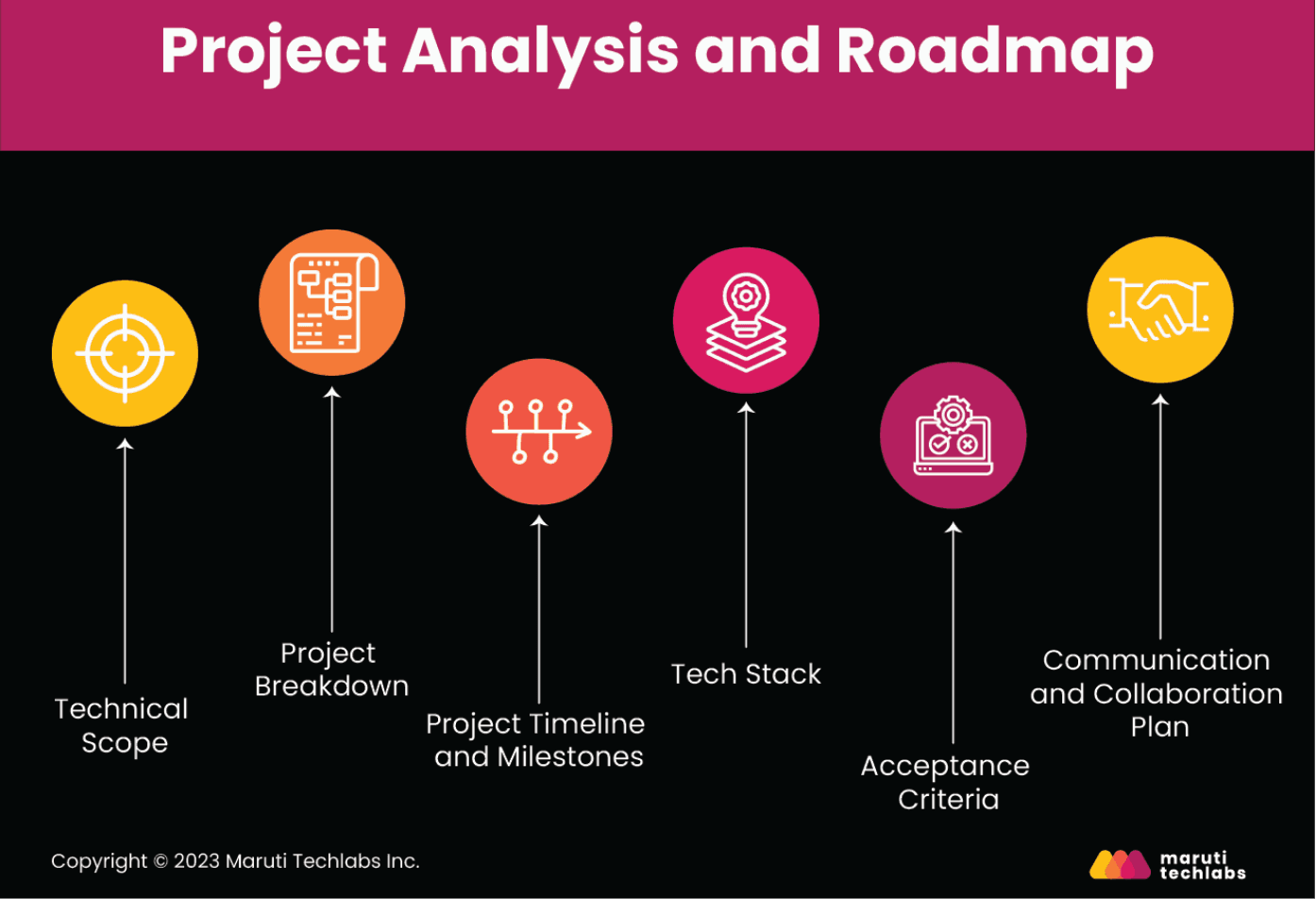
A seven-day discovery workshop assessed the idea's feasibility, architecture, integrations, design, scope, budget, and timelines.
The Journey
Idea to Launch
Business Outcomes
Connected Workflows, Faster Delivery, Better Patient Management
Four-Month Delivery
The website, CRM tool, and three portals were completed in four months, despite teams working across different time zones.
Connected User Experiences
Patients, doctors, and sales representatives received dedicated interfaces aligned with their respective workflows.
Simplified Patient Management
Patients could update their information, upload reports, submit forms, and schedule appointments through the portal.
Streamlined Sales Operations
Website submissions were automatically converted into CRM leads, helping sales representatives manage and follow up with prospects.
Centralized Clinical Information
Doctors could access patient records and lab reports while managing prescriptions through their dedicated portal.
Scalable Product Foundation
The structured roadmap and cloud-based technology stack provided a foundation for continued development and support.
Conclusion
The platform modernized the client's traditional clinical processes by bringing key patient and internal workflows into a digital environment.
Tech Stack

Build a Connected Digital Experience for Modern Healthcare
Create healthcare software that brings patients, practitioners, and internal teams together through connected digital workflows.


Download Your Free Case Study Today.
Frequently Asked Questions
Role-based architecture should define access, actions, and data visibility for each user type. In this project, we created separate portals for patients, doctors, and sales representatives. This approach allows each role to work with relevant information while keeping workflows connected through the underlying platform.
A patient portal can move routine activities away from manual or clinic-based processes. Patients can update their information, submit forms, upload test reports, and schedule appointments themselves. This reduces dependency on administrative staff for routine data collection and gives patients greater control over their interactions with the healthcare provider.
The integration should establish a reliable flow between website submissions and CRM records. In this project, patient form submissions automatically created unique leads in the CRM, allowing sales representatives to monitor and manage interactions throughout the sales process.
Doctor-facing workflows should prioritize access to relevant clinical information while minimizing unnecessary navigation. The doctor portal in this project provided access to patient records and lab reports and supported prescription creation with digital signatures. The design should also account for appropriate access controls and regulatory requirements.
Healthcare platforms typically involve multiple user groups, workflows, integrations, and data requirements. A discovery workshop helps validate the concept and establish the technical scope before development. In this case, the seven-day workshop covered architecture, integrations, design, feasibility, requirements, budget, deliverables, and timelines.