

Composable Data Products Made Simple: A Hands-On Guide for Teams
Introduction
Composable data products represent a modern approach to managing and utilizing data. Instead of relying on a single, rigid platform or tool, this approach allows teams to select and combine the best-fit tools, data sources, and services tailored to their specific needs. Everything connects directly to a cloud data warehouse, making the setup more flexible, scalable, and efficient.
Unlike older monolithic dashboards, which tightly bundle everything into a single system, composable setups are more adaptable. You can easily plug in new data sources, update models, or redesign user interfaces without requiring a complete overhaul of the entire system.
The shift is driven by the need for agility. Businesses want to move faster, innovate more quickly, and stay prepared for change. Composable data architecture makes that possible by breaking down data silos and promoting seamless integration across components.
This blog will cover the understanding of composable data architecture and its components, the key benefits and challenges of composable data architecture, the foundational principles of data composability, and how composable data analytics works.
Understanding Composable Data Architecture and Its Components
A composable data architecture is a method of building systems using smaller, reusable components such as APIs, microservices, and business tools that fit and work well together. Instead of putting everything into one big system, it breaks things down into separate pieces. That way, you can easily add, remove, or update parts without disrupting the whole setup. It's a flexible approach that grows with your needs.
Now, let us discuss the core elements of composable data architecture:
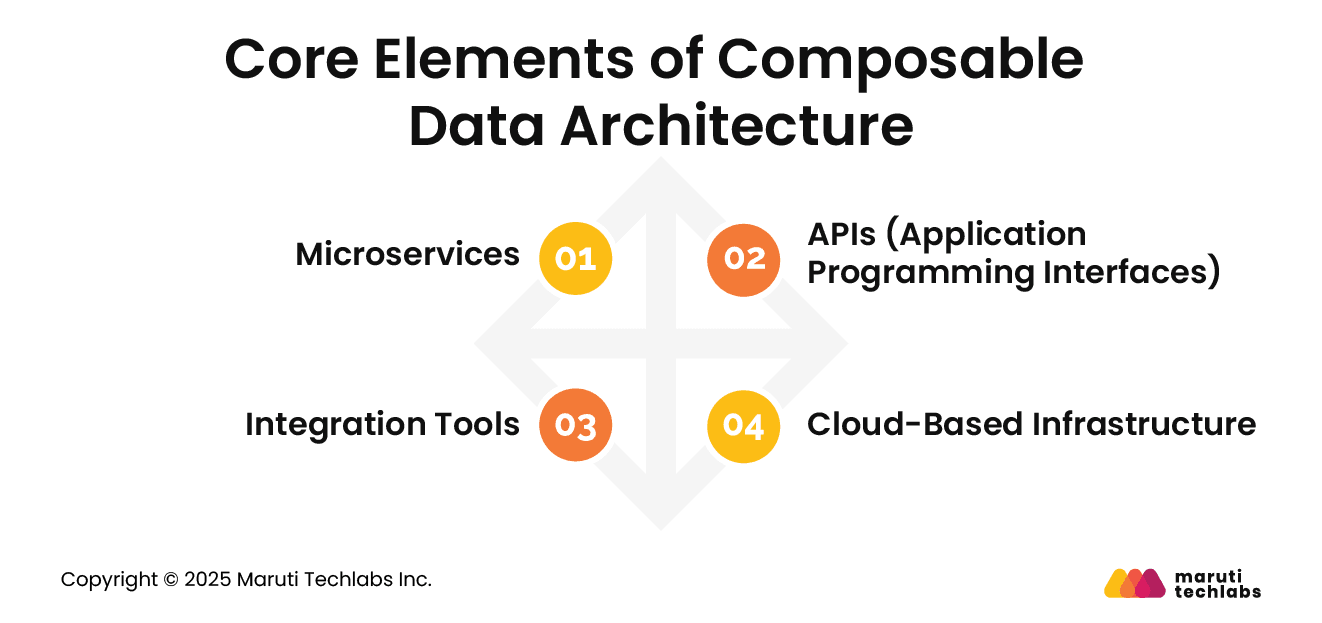
- Microservices: These are small, self-contained services that handle specific tasks. They work together to power bigger systems without getting in each other's way.
- APIs (Application Programming Interfaces): APIs enable different parts of your system to communicate with each other. They make sure your tools work well together, from front-end apps to back-end services.
- Integration Tools: Platforms like SnapLogic connect your tools, systems, and data. They help everything run smoothly without building custom connections every time.
- Cloud-Based Infrastructure: Utilizing cloud-native tools enables you to launch updates more quickly, handle larger amounts of data, and make adjustments to systems without causing disruptions.
Together, these components make a composable data architecture a powerful, flexible, and future-ready approach.
4 Key Benefits and Challenges of Composable Data Architecture
Composable data architecture is a new approach to building systems that more businesses are adopting. It makes systems easier to update, grow, and maintain. It offers numerous benefits, but it also presents some challenges. Let's examine both to see how this approach can benefit your business.
Benefits of Composable Data Architecture
As business systems become larger and more complex, companies seek systems that are easy to modify, expand, and manage without excessive effort or delay. That's where composable data architecture helps. Here are the four benefits of using this approach:
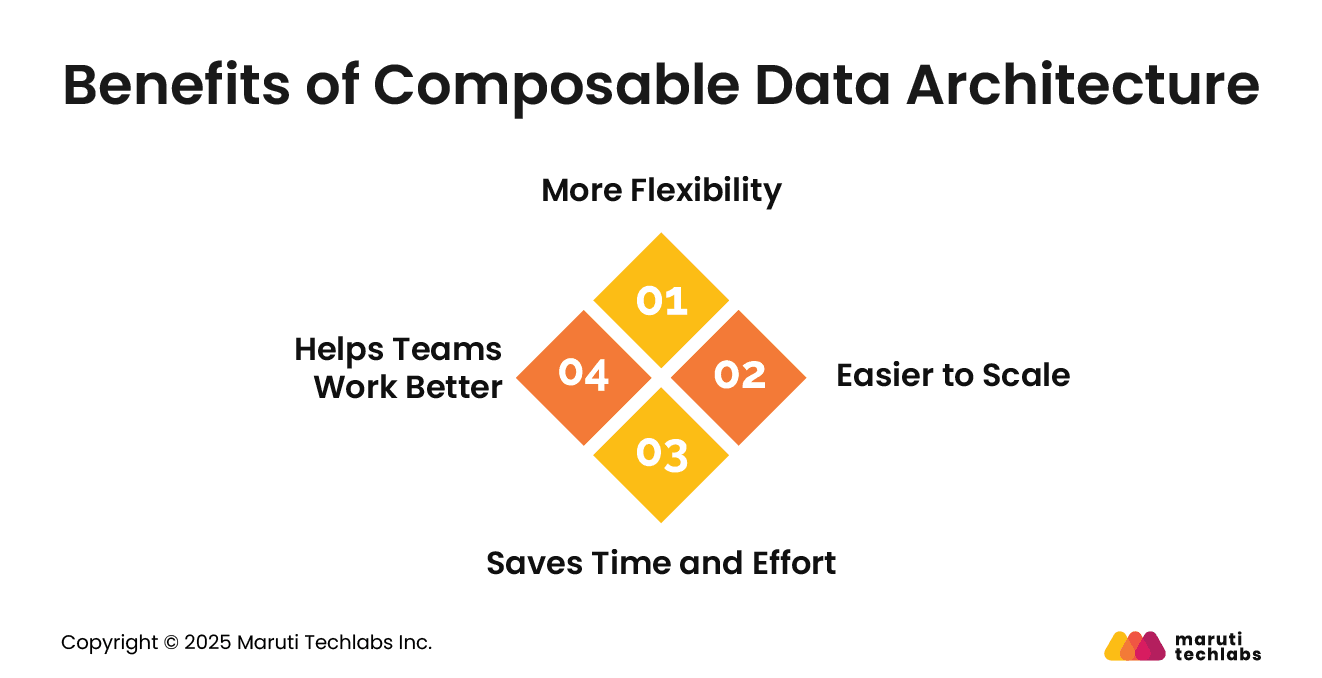
1. More Flexibility
In a composable setup, each part of the system operates independently and can be reused. So, if you want to make a change, like updating a tool or adding a new feature, you don't have to touch the rest of the system. This makes it easier to keep up with new business needs or emerging technologies without having to start over.
2. Easier to Scale
As your business grows, certain aspects of your system may require more power or space. With a composable architecture, you can scale only the part that needs it. You don't have to upgrade everything. It also allows you to avoid being locked into a single vendor, so you can choose or switch tools that better fit your needs.
3. Saves Time and Effort
Since parts of the system can be reused, your team doesn't need to build everything from scratch every time. This saves a lot of time and effort. It also helps reduce costs and enables teams to deliver new updates or features more quickly.
4. Helps Teams Work Better
Smaller parts are easier to manage, allowing teams to work on different areas simultaneously without waiting on each other. It also becomes easier to mix your tools with tools from outside vendors. This gives your team more flexibility and freedom to build what works best for the business.
Challenges to Look For
While composable data architecture offers numerous benefits, it also presents a few challenges. Knowing these in advance can help you plan better and avoid problems later on:
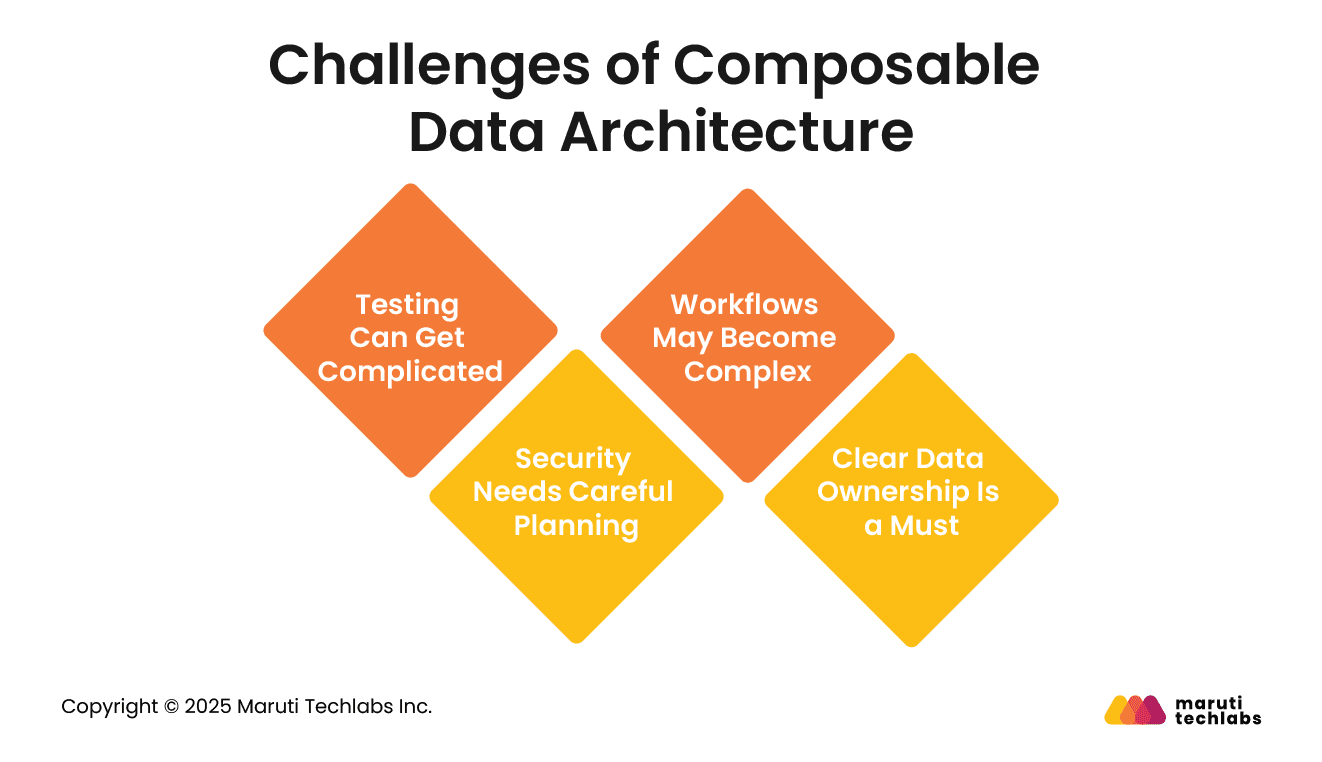
1. Testing Can Get Complicated
Since different parts are built separately, testing them together can be tricky. You'll need proper testing practices to make sure everything works well as a system.
2. Security Needs Careful Planning
With many tools working together, each one must be secure. Strong access control, regular checks, and clear rules are essential for maintaining data security.
3. Workflows May Become Complex
Different tools might use different formats or rules. This can make managing workflows more challenging without proper documentation and established standards in place.
4. Clear Data Ownership Is a Must
When data moves through different systems, it's essential to know who is responsible for it. Good governance ensures that your data is accurate, safe, and compliant.
5 Foundational Principles of Data Composability
A composable data architecture works best when built on a few fundamental principles. These help keep the system easy to manage, flexible for future needs, and useful across the organization. Here are five simple principles that make data composability effective.
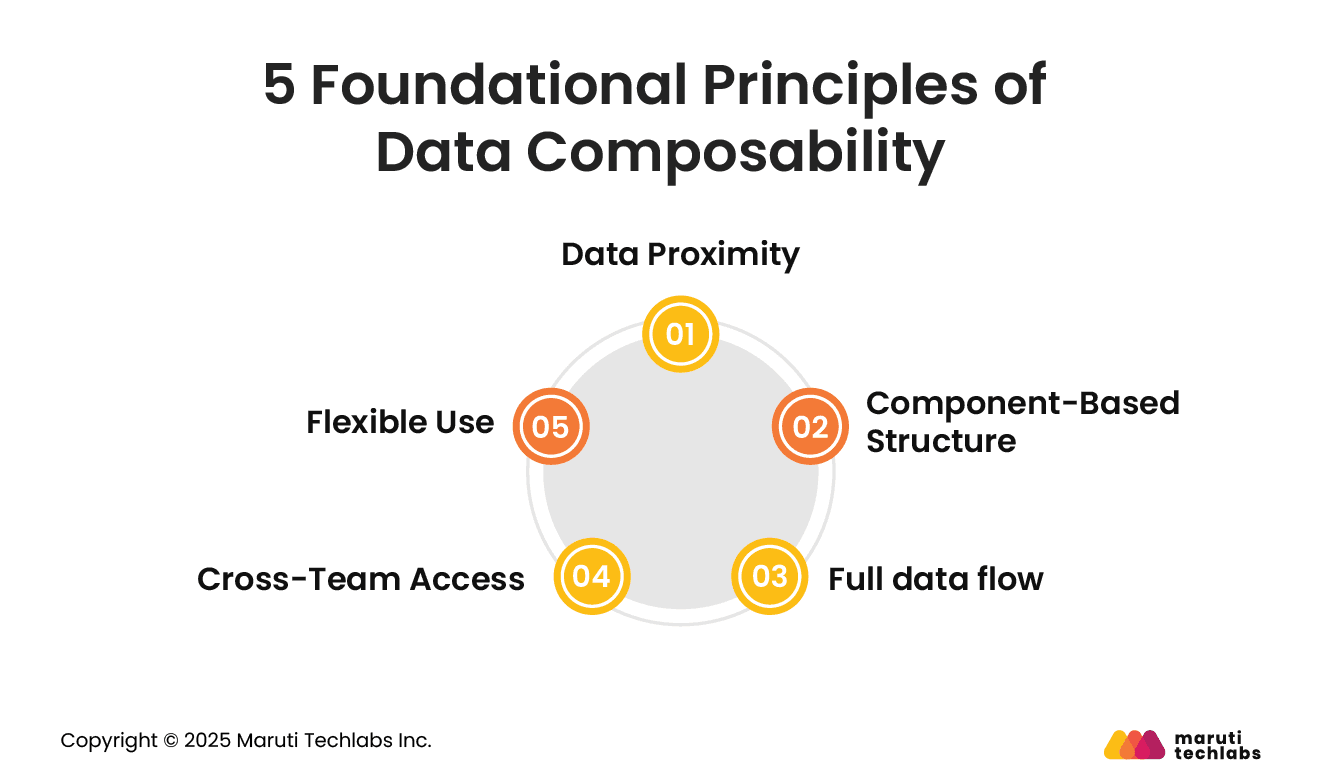
1. Data Proximity
In a composable setup, most data is stored in a single central location, typically a cloud data warehouse. Instead of sending data to different tools or places, the system brings the tools to the data. This reduces data movement, making things faster, safer, and less costly. Keeping data close also helps avoid delays and lowers the chance of mistakes or security issues.
2. Component-Based Structure
Composable systems are built using smaller parts or "modules." Each part of the system has a specific job, such as cleaning data, verifying it, or presenting it in a report. These parts connect easily and work together. This makes it easy to update, add new tools, or fix problems without requiring a complete overhaul. It also allows different teams to work on their parts simultaneously.
3. Full data flow
Composable data architecture helps manage data from the time it’s created till it’s used. All the system's components are interconnected, allowing data to flow seamlessly between tools and teams. For example, the same data used in a report can also be displayed in a dashboard or sent to another tool for further analysis. This way, everything stays in sync, and you don’t have to repeat the same steps.
4. Cross-Team Access
In many companies, data stays separated in different teams or tools. Composability helps bring that data together, allowing everyone to access what they need. Whether it’s sales, marketing, or finance, teams can utilize the same data to work more effectively and make faster, informed decisions.
5. Flexible Use
Composable data systems enable teams to utilize data in various ways. You can create reports, view live dashboards, or use advanced tools such as machine learning. Since the system is built in parts, it’s easy to add new tools or try new ideas without having to start over.
How Composable Data Analytics Works
Composable data analytics means building your system one step at a time. Instead of using a single large platform for everything, you select the tools you need and connect them. This makes it easy to change, grow, or update your system as your needs change. Here’s how it usually works:
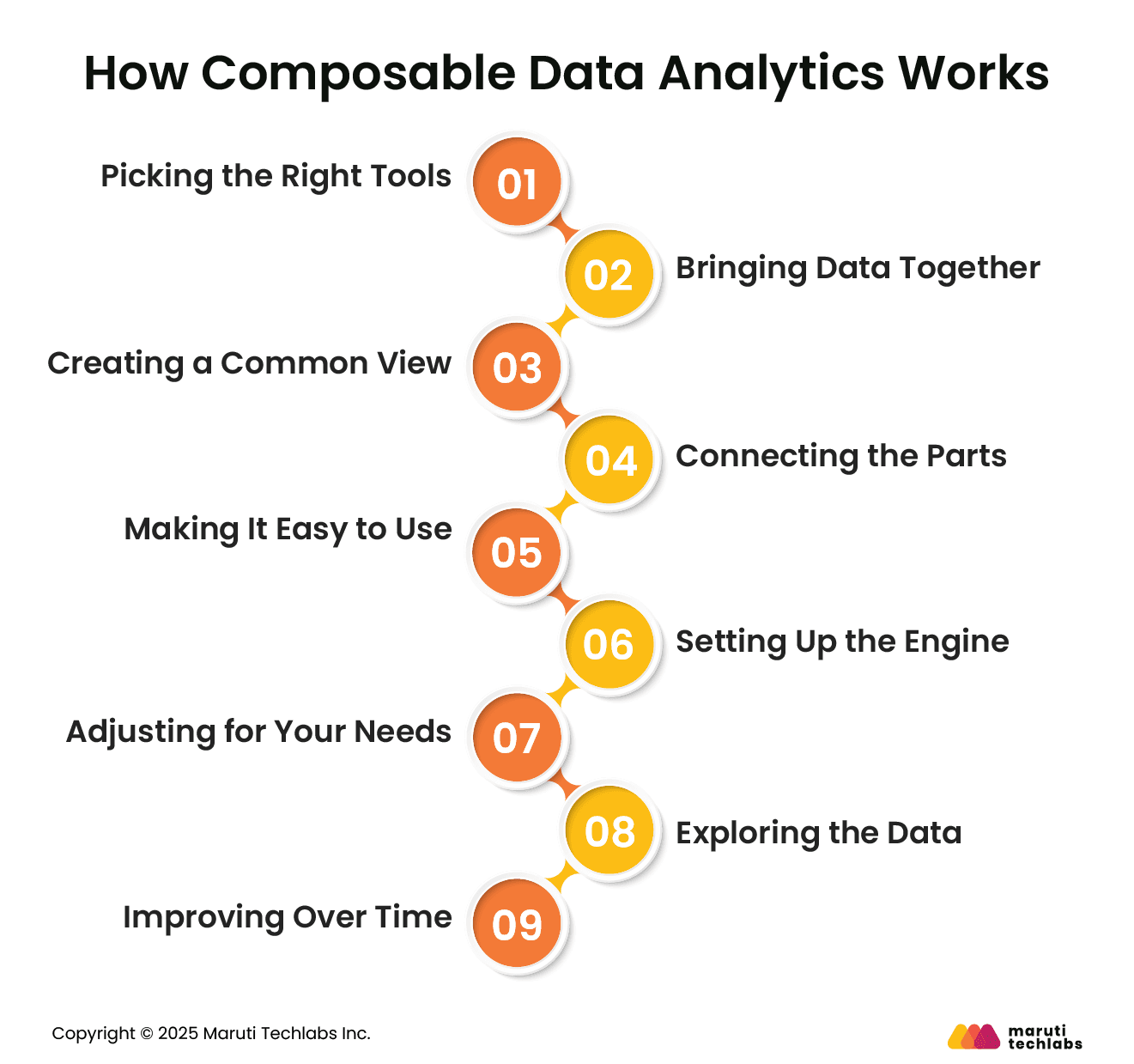
1. Picking the Right Tools
The first step is to choose the necessary parts, such as tools to collect data, analyze it, display results in charts, or even incorporate AI features. You select what fits your goals.
2. Bringing Data Together
Once the tools are selected, the next step is to connect your data. This could be from spreadsheets, apps, websites, or cloud platforms. All your data, whether clean or messy, comes together in one place.
3. Creating a Common View
To maintain clarity across teams, a shared layer is added to ensure everyone has a consistent understanding of the data. This helps avoid confusion and keeps reports consistent.
4. Connecting the Parts
Using connectors or service layers, all the tools and data sources are linked. This enables the different parts to communicate with each other and function as a unified system.
5. Making It Easy to Use
Simple drag-and-drop tools or low-code options are added, allowing even non-technical users to build reports and dashboards without needing assistance from developers.
6. Setting Up the Engine
A central engine is added to handle all the heavy work, such as calculations and storing metrics, ensuring that results are always accurate across all tools.
7. Adjusting for Your Needs
Teams can mix and match these tools to fit their exact goals, whether it’s tracking sales, predicting trends, or building reports.
8. Exploring the Data
Once everything is ready, users can begin exploring the data, whether through reports, dashboards, or more in-depth analysis.
9. Improving Over Time
As your needs evolve or change, new tools can be easily added or swapped out. This keeps your setup flexible and always up to date.
Conclusion
Composable data systems are quickly becoming the future of smart data management. By breaking things down into smaller, flexible parts, businesses can build systems that are easier to manage, grow, and adapt over time. These setups also support better performance and lower costs, especially when using modern tools and hardware. With the ability to connect different engines and tools through APIs, companies can work faster and make better use of their data.
As more businesses adopt this approach to working with data, it’s clear that it’s not just a trend; it’s a smarter, more flexible way to manage data in today’s rapidly changing world.
At Maruti Techlabs, we help businesses build and manage composable data systems that are easy to grow and adapt. If you’re exploring ways to build or modernize your data platform, contact us for our Data Engineering Services.
FAQs
1. What is composable data?
Composable data refers to the concept of organizing and utilizing data in smaller, reusable components. Instead of storing everything in one place or tool, the data is kept flexible and easily accessible through various elements. This allows teams to mix and match tools, update systems easily, and connect data from different sources without having to start over every time.
2. What is composable vs non-composable data?
Composable data is flexible and can be reused across different systems and tools. It’s easy to connect, update, or rearrange without disrupting the entire setup.
Non-composable data, on the other hand, is locked into one system. It’s more challenging to share, reuse, or modify without impacting everything else. Composable data is ideal for businesses that want to move quickly and remain adaptable.
3. What is the difference between a data product and an API?
A data product is a complete, usable data asset, such as a dashboard, report, or dataset, that addresses a specific need. It’s something people use to get insights or make decisions. An API (Application Programming Interface) is a means by which systems or applications can communicate with each other and exchange data.
While a data product is designed for users, an API is primarily a tool for developers and systems.
4. What is the difference between composable architecture and microservices?
Composable architecture is a broader approach to building systems using small, plug-and-play components, such as tools, data services, and platforms. Microservices are one type of these components, focused services designed to do one job well.
While microservices are often part of a composable architecture, the concept also encompasses other elements, such as APIs, integration tools, and data layers, that work together seamlessly.