Zero Trust Security: The Smartest Way to Protect Patient Data
Learn the essentials of securing patient data in healthcare with zero trust and HIPAA compliance.
Data Analytics and Business Intelligence
Zero Trust Security: The Smartest Way to Protect Patient Data
Learn the essentials of securing patient data in healthcare with zero trust and HIPAA compliance.
Table of contents
Table of contents
Key Takeaways
Introduction
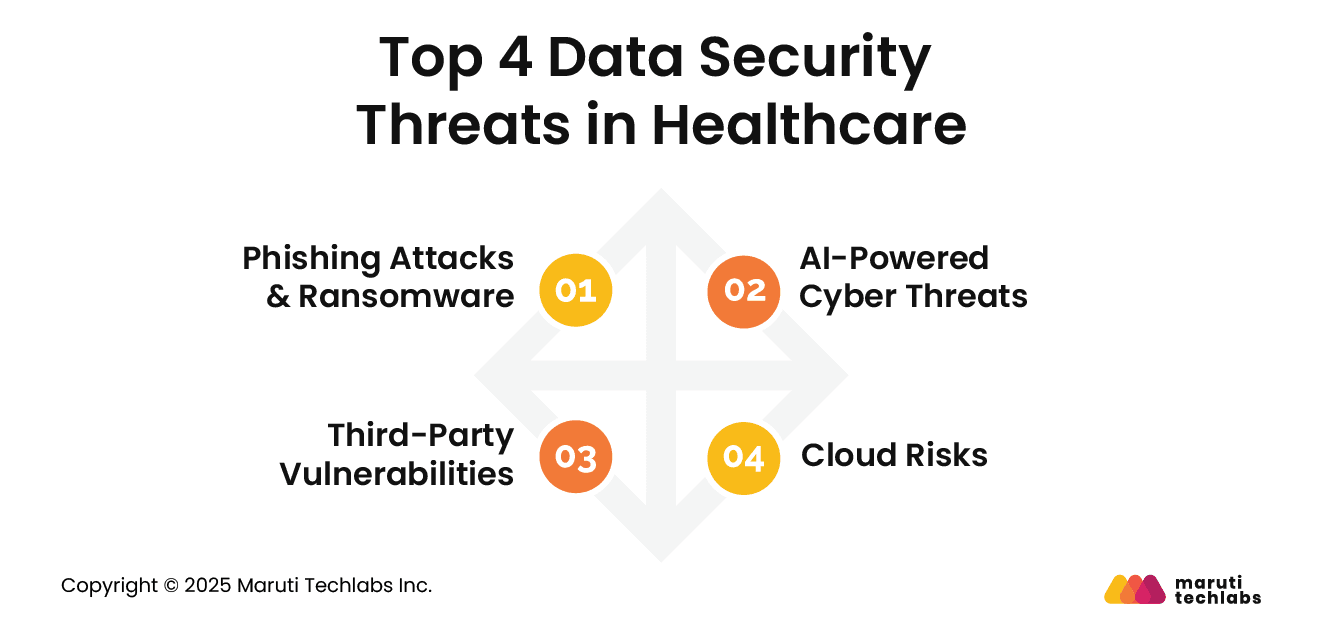
Top 4 Data Security Threats in Healthcare
How Unsecured APIs Can Compromise Security?
Why Zero Trust Architecture Matters for Healthcare Data Security?
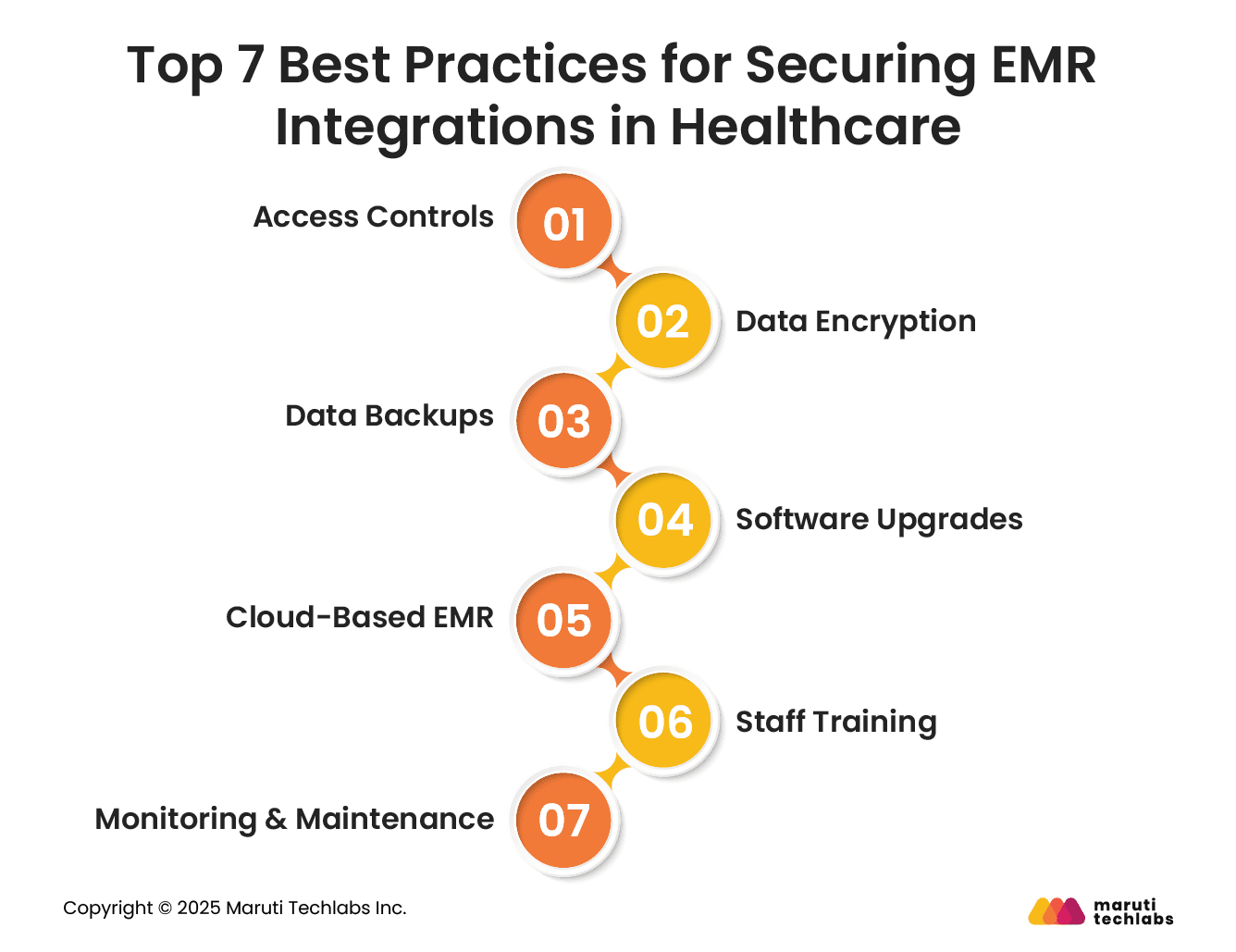
Top 7 Best Practices for Securing EMR Integrations in Healthcare
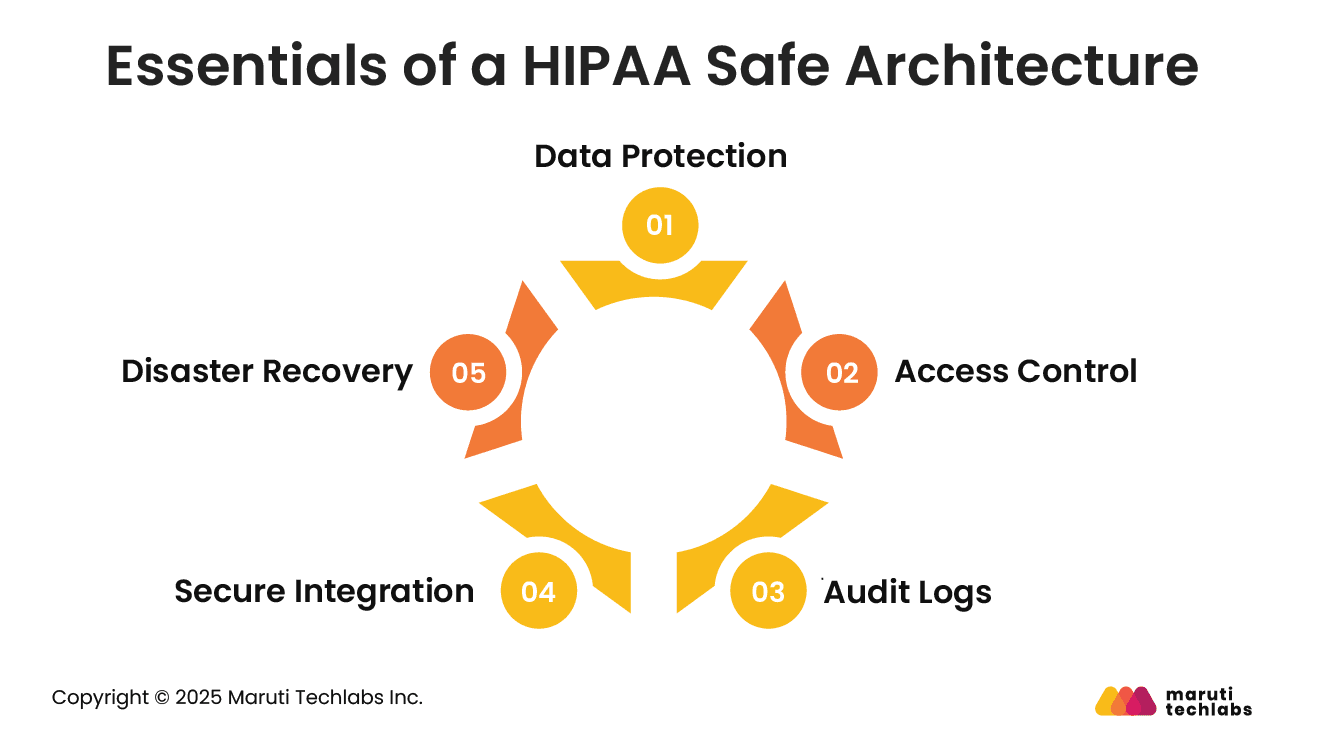
Essentials of a HIPAA Safe Architecture
Conclusion
FAQs
Key Takeaways
Healthcare data breaches are rising due to AI, cloud adoption, interoperability, and the expansion of digital ecosystems.
Unsecured APIs, third-party integrations, and misconfigurations significantly increase risks to sensitive patient data.
Zero Trust Architecture enables continuous verification, least-privilege access, and stronger protection across healthcare systems.
Securing EMR integrations requires encryption, access controls, monitoring, staff training, and regular system updates.
HIPAA-compliant architectures ensure resilience through audit logs, secure integrations, disaster recovery, and data protection.
Introduction
The modern healthcare landscape is experiencing rising risks surrounding patient data as digital transformation accelerates.
The healthcare industry continues to face the costliest data breaches of any sector. In 2025, the average cost of a healthcare data breach reached $7.42 million, significantly higher than the global all-industry average of $4.44 million. Patient health records are considered dramatically more valuable to attackers than financial data, making the industry a prime target for cybercrime.
At the same time, healthcare organizations are adopting digital technologies, including AI-powered tools, telemedicine platforms, cloud services, and interconnected systems, to improve patient care and operational efficiency.
While these innovations offer significant benefits, they also create new security gaps, particularly in interoperability, identity management, and secure data exchange across distributed networks.
This blog will explore the evolving threat landscape, the importance of architectures such as Zero Trust for protecting sensitive healthcare data, and best practices for secure EMR integrations.
Top 4 Data Security Threats in Healthcare
Cybercriminals today are using sophisticated techniques to compromise security. Here are 4 security threats that continue to pose serious risks to healthcare data.
1. Phishing Attacks & Ransomware
Cybercriminals target healthcare organizations and encrypt patient records, demanding hefty ransom for decryption keys. Additionally, phishing attacks disguised as regular communications can trick anyone into sharing confidential information or compromising access. These attacks can impede hospital operations and incur data loss.
2. AI-Powered Cyber Threats
AI is extensively used not only for cyberprotection but to devise intelligent attack strategies. AI-based social engineering attacks are becoming more prevalent, making it difficult to spot fraudulent activity with conventional security measures.
3. Third-Party Vulnerabilities
Healthcare companies use third-party applications for cloud storage, software, and medical record management. If these third-party vendors haven’t invested enough in implementing stringent security, it doubles the risk of breaches.
4. Cloud Risks
Cloud adoption has been booming for years, and organizations are transitioning to the cloud for improved scalability and anytime, anywhere access. But improper encryption, misconfigured settings, and unauthorized access can create security gaps that attackers exploit.
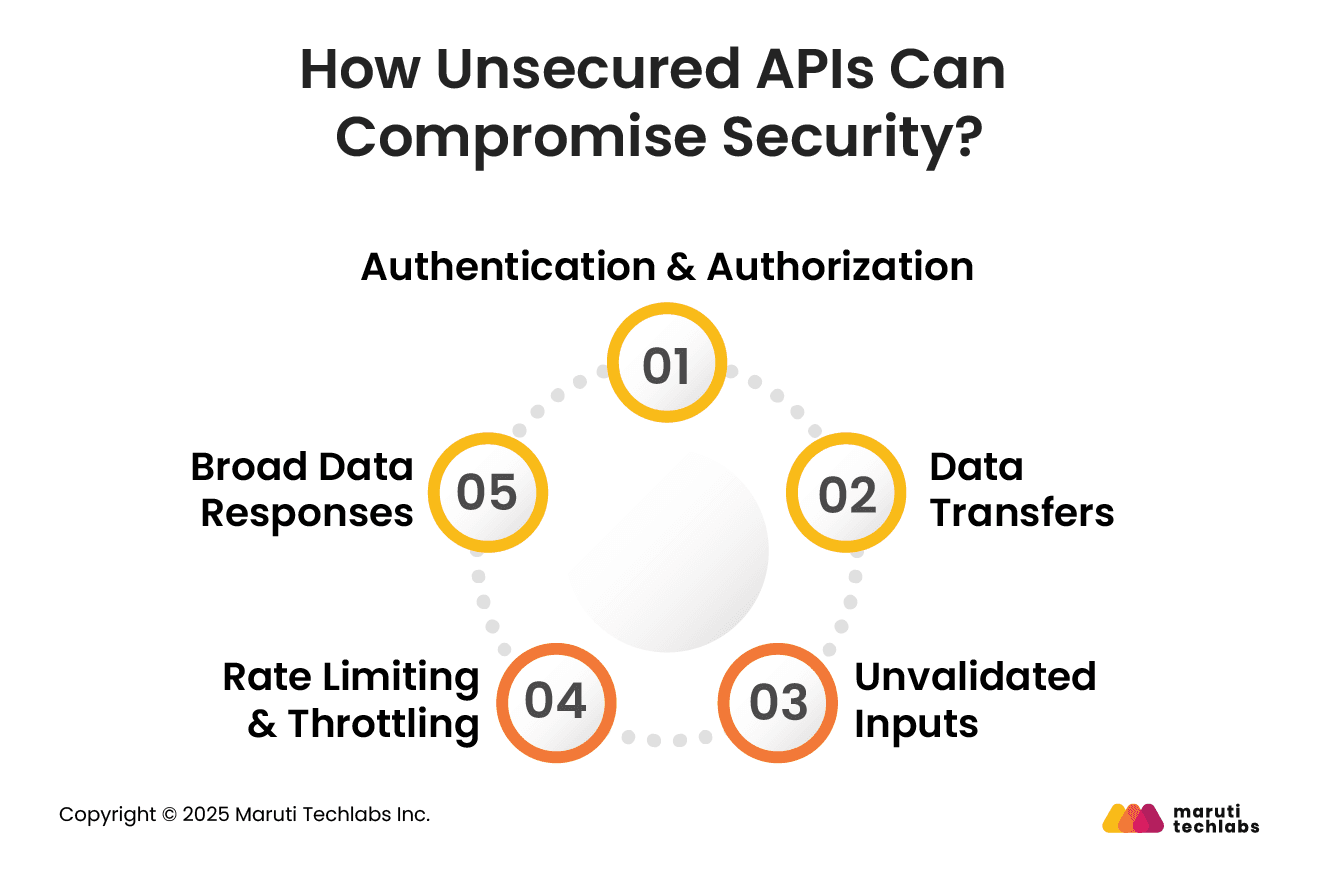
How Unsecured APIs Can Compromise Security?
APIs, if not implemented with adequate security, can expose vulnerabilities that lead to data leaks, compliance violations, and unauthorized access. Here are some of the top risks healthcare organizations face and how to mitigate them.
1. Authentication & Authorization
APIs without strong authentication and authorization in place are primary targets for attackers. It’s a gold mine, especially in the healthcare sector, where sensitive data such as medical records and insurance details can be misused.
Expert Tip: Limit access to essential users and systems by implementing multi-factor authentication (MFA) and role-based access controls (RBAC). A simple but effective way to manage access.
2. Data Transfers
If unencrypted healthcare data is transmitted, it can be intercepted. Patient data transfer without adequate encryption can compromise their most private information.
Expert Tip: Leverage HTTPS/TLS to enforce encryption during transit and at rest. Inadequate encryption not only poses risks but is a direct violation of HIPAA and other regulations.
3. Unvalidated Inputs
Did you know that unvalidated input data can compromise your systems? Systems with unvalidated input data are prone to injection attacks, such as SQL injection and XML External Entity (XXE). This can severely compromise system integrity.
Expert Tip: Implement stringent input validation to ensure all input data is clean. Ensure your APIs only allow valid, known data types to prevent injection attacks.
4. Rate Limiting & Throttling
Imagine the result if an attacker bombarded your API with requests? APIs are particularly vulnerable to brute-force and denial-of-service (DoS) attacks. This can disrupt service for regular users by overloading the system.
Expert Tip: Ensure user availability and prevent abuse by setting rate limits and throttling rules.
5. Broad Data Responses
Do you know what data your API responses are sending? In some cases, APIs send larger data sets than they should be sharing. This can expose confidential data.
Expert Tip: Configure APIs to share only essential data. Limit your APIs so they don't share information that isn’t required.
Why Zero Trust Architecture Matters for Healthcare Data Security?
Zero Trust shifts security from perimeter-based defenses to continuous verification, ensuring no user or system is trusted by default. Here’s why zero-trust architecture has proved crucial for industries like healthcare.
1. Data Sensitivity
Patient health records (PHRs) are more valuable on the dark web than credit card information. They make healthcare organizations prime targets for ransomware, identity theft, and large-scale data breaches.
2. Remote Care Models
Telehealth and remote work require something more than the traditional network perimeters. It demands continuous user verification, device validation, and secure access across distributed clinical and administrative environments.
2. Regulatory Pressure
To comply with HIPAA, GDPR, and HITECH, organizations need stringent data access controls, auditability, and least-privilege enforcement to reduce compliance risk, penalties, and reputational damage.
3. IoT & Connected Devices
If not adequately secured, hospitals' connected devices can be exploited. They expand the attack surface and increase the need for granular access control and continuous monitoring.
Top 7 Best Practices for Securing EMR Integrations in Healthcare
Securing patient data is a critical responsibility shared by all healthcare organizations. With so much confidential data that can be misused in myriad ways, there is a high demand for protection.
Here are seven practices that can help you tighten your security posture.
1. Access Controls
Access to patient records isn’t a necessity for all your staff members. Therefore, it should only be shared with individuals who actually need it.
Share access based on roles (i.e., doctors, nurses, and support staff).
Implement MFA using biometrics, OTP, or PIN.
Limit admin rights to selected personnel.
2. Data Encryption
Encryption is about securing your data within an unreadable code. Even if stolen, it can’t be understood without a decryption key. It’s important to encrypt the data when at rest or in transit.
3. Data Backups
Cyberattacks, viruses, or system failures can result in complete data loss. Losing all your patient data can be the worst nightmare for a clinic or healthcare organization.
A viable solution is to store daily backups at an independent location.
4. Software Upgrades
EMR software, if not kept up to date, can pose security risks. With advancements in the types of attacks cybercriminals use, it's necessary to patch vulnerabilities, add protective layers, and keep your systems up to date.
5. Cloud-Based EMR
Cloud platforms are more secure than traditional on-prem EMR systems. This is because:
There is no dependency on your hands or on a single device.
Highly secure servers store your data.
You receive timely security upgrades.
Your data is always backed up and adequately encrypted.
6. Staff Training
Data breaches aren’t always a result of security mishaps; they can also happen due to human oversight. This includes sharing passwords, clicking compromised links, or leaving systems unattended.
7. Monitoring & Maintenance
To maintain complete data security, an EMR system should maintain detailed visibility into user activity. Logging activities can help detect suspicious behavior before it becomes hazardous. This can be done using real-time alerts, audit logs, and user activity tracking.
Essentials of a HIPAA Safe Architecture
To meet HIPAA requirements, healthcare systems must be designed with security, access control, and resilience built in from the ground up. Let’s observe the foundational requirements of a HIPAA-compliant architecture.
1. Data Protection
Using AI mechanisms for data privacy, patient data must always be protected throughout the system.
At Rest: When stored in a database, even if someone steals a hard drive, the data is unreadable without encryption keys.
In Transit: Data should be encrypted when accessed remotely by doctors, during information exchange, or when patients use your portal.
In Use:Only authorized users should be able to decrypt and view data.
In Backup: Data must be stored securely with encrypted backups.
2. Access Control
Various users should be granted access with appropriate encryption and access control.
Physicians: Complete access to all patient records.
Nurses: Access limited to assigned patients.
Specialist Consultants: Can only access relevant patient information.
Admin: Can access limited data like demographics, scheduling, and more
Billing: Limited access to clinical or financial details.
Third-Party Partners: Time-based, specific data access.
3. Audit Logs
One of the primary HIPAA requirements is logging all interactions with patients. This includes who accessed a particular dataset, when, what they accessed, where they accessed it, and what they did with it.
The logs should also be untampered with. They should be in the system for at least 6 years, searchable for audits, and monitorable for suspicious activities.
4. Secure Integration
Healthcare software can’t function without external integrations. It connects with Electronic Health Records (EHRs), imaging systems, insurance services, telemedicine platforms, IoT-equipped medical devices, patient monitoring systems, and more.
All integrations must adhere to the same level of security as your primary systems. One weak link can unleash a security breach that can compromise everything.
5. Disaster Recovery
HIPAA demands that patient data should be accessible even in emergencies. This requires your software to have timely auto-backups, data stored in different locations, an optimal recovery process, and backup access methods in case of system failure.
This is important because, in the case of ransomware, your systems must be robust enough to recover without paying the criminals. In addition, during natural disasters, patient care should remain unaffected.
Conclusion
Healthcare data security has become a high-stakes priority as cyber threats grow more advanced and attack surfaces continue to expand. From ransomware and AI-driven attacks to unsecured APIs, cloud misconfigurations, and vulnerable integrations, the risks span people, processes, and technology.
At the same time, regulatory mandates like HIPAA and GDPR leave little room for error. Adopting Zero Trust principles, strengthening API security, and building a HIPAA-safe architecture are no longer optional; they are foundational to protecting patient trust and ensuring continuity of care.
A proactive, layered security approach enables healthcare organizations to safeguard sensitive data while supporting modern care models such as telehealth and cloud-based systems.
If you’re planning to strengthen your healthcare ecosystem’s security posture, consult Maruti Techlabs’ AI Strategy & Readiness Services to assess risks, align AI initiatives with compliance requirements, and design secure, scalable healthcare systems.
Connect with us today and discover how we can help you build a secure, intelligent, and accessible healthcare ecosystem.
FAQs
1. What is data security in healthcare?
Data security in healthcare refers to protecting patient information from unauthorized access, breaches, and misuse. It includes safeguarding electronic health records (EHRs), medical histories, billing data, and personal identifiers using encryption, access controls, monitoring, and compliance frameworks such as HIPAA.
2. How to keep patient data secure?
Patient data can be secured by implementing role-based access controls, multi-factor authentication, encryption at rest and in transit, regular system updates, secure backups, staff training, and continuous monitoring. Adopting Zero Trust principles and ensuring HIPAA compliance further strengthens protection.
3. What are the best patient data security platforms for small clinics?
Small clinics benefit from platforms like Microsoft Azure Health Data Services, AWS HealthLake, Google Cloud Healthcare API, Drata for compliance, and Vanta for security automation. These platforms offer scalable security, built-in compliance, encryption, and centralized access management.
Pinakin Ariwala has over 20 years of experience in AI/ML, data engineering, and software development. He has led AI and machine learning projects across industries, including agriculture, finance, and healthcare, and has been featured on the Clutch Leaders Matrix podcast discussing real-world AI/ML applications.
Stuck with a Tech Hurdle?
We fix, build, and optimize. The first consultation is on us!