Top Tools, Templates, and Agenda Examples for Scoping Sessions
Metrics and Success Indicators for Scoping Sessions
When Should You Run Additional Scoping Sessions or Follow-Ups?
4 Common Pitfalls and How to Avoid Them
Conclusion
FAQs
Introduction
Scoping sessions are the foundation of every successful project. They help teams understand what needs to be built, who will be involved, and which constraints matter most.
Without proper scoping, teams often rush into planning with unclear requirements, unrealistic timelines, and hidden assumptions. This leads to cost overruns, avoidable rework, and constant change requests.
A well-run scoping session creates clarity, shared understanding, and a realistic roadmap. It aligns business goals with technical possibilities and allows early detection of risks. Most importantly, it sets the stage for accurate estimation and smooth execution. Strong scoping is the first step toward predictable delivery.
This blog offers crucial insights into scoping sessions, common pitfalls, practical templates, success metrics, and clear guidance to help teams run sessions that lead to accurate and confident project estimation.
What is a Scoping Session
A scoping session is a structured discussion where teams define objectives, requirements, constraints, and expectations. It creates shared clarity before planning begins and ensures everyone understands the work ahead.
1. What’s the Role of Scoping Sessions in Project Planning & Execution?
Scoping sessions help teams understand what the project must deliver and why it matters. They outline features, constraints, risks and success criteria. This clarity supports accurate estimates, realistic timelines and smooth coordination.
Scoping serves as a reference point for decisions throughout execution and reduces confusion in later project stages.
2. What’s the Difference Between Scoping and Other Planning Workshops?
Scoping focuses on defining what will be done and why it matters. It clarifies goals and boundaries. Other planning workshops handle detailed activities such as sprint planning or technical design.
Those sessions decide how the work will be done. Scoping comes first and sets direction for all later planning. It prevents teams from diving into solutions before understanding the problem.
Importance of Scoping Sessions
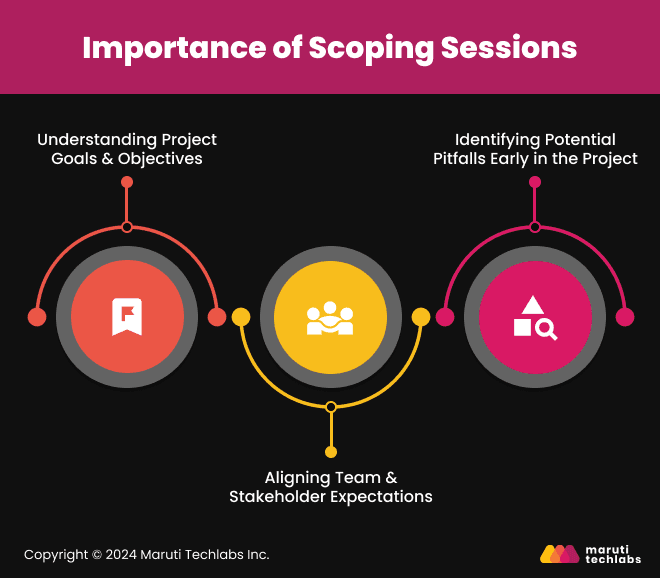
Scope meetings are more than just a prelude to determining the project scope; they are the project’s foundation. These sessions set a clear direction for execution by addressing key aspects such as objectives, alignment, and potential challenges.
Here are some reasons why they are so important:
1. Understanding Project Goals and Objectives
A project without well-defined goals is like a journey with no destination. Scoping sessions help teams identify the “what” and “why” of the project. By clearly outlining the purpose, deliverables, and success criteria, everyone involved knows what the project aims to achieve.
For example, a marketing campaign project might define its primary goal as increasing brand awareness by 25% over six months. With such clarity, teams can focus on measurable outcomes and avoid unnecessary deviations.
2. Aligning Team and Stakeholder Expectations
Lack of proper planning usually leads to projects with different stakeholders' expectations, which can lead to delays and frustrations. Scoping enables the creation of a temporary shared context in which multiple project teams and stakeholders come together to establish consistency on the topic of discussion despite having different perspectives and objectives.
For instance, the development team might find software technically feasible, but the stakeholders could question its commercial viability from the customer's perspective. This misalignment can lead to issues if not addressed early on.
A scoping session guarantees that such issues have been addressed while there isn’t any disagreement afterward. This alignment points projects in the right direction and builds trust amongst the staff.
3. Identifying Potential Pitfalls Early in the Project
The project contains unknown hazards, but a significant improvement in the likelihood of detecting them can reduce the time and effort spent on detection. A scoping session, by focusing on fundamental problem-solving, allows one to identify potential risks before they become significant obstacles.
For example, during a scoping session for enhancing an e-commerce website, a team might discover that integrating a third-party payment option will take longer than expected. This early insight allows them to adjust deadlines and budgets proactively, ensuring smoother execution and fewer surprises later.
Now that we understand the importance of scoping sessions, we must discuss the specific steps to plan and execute them successfully.
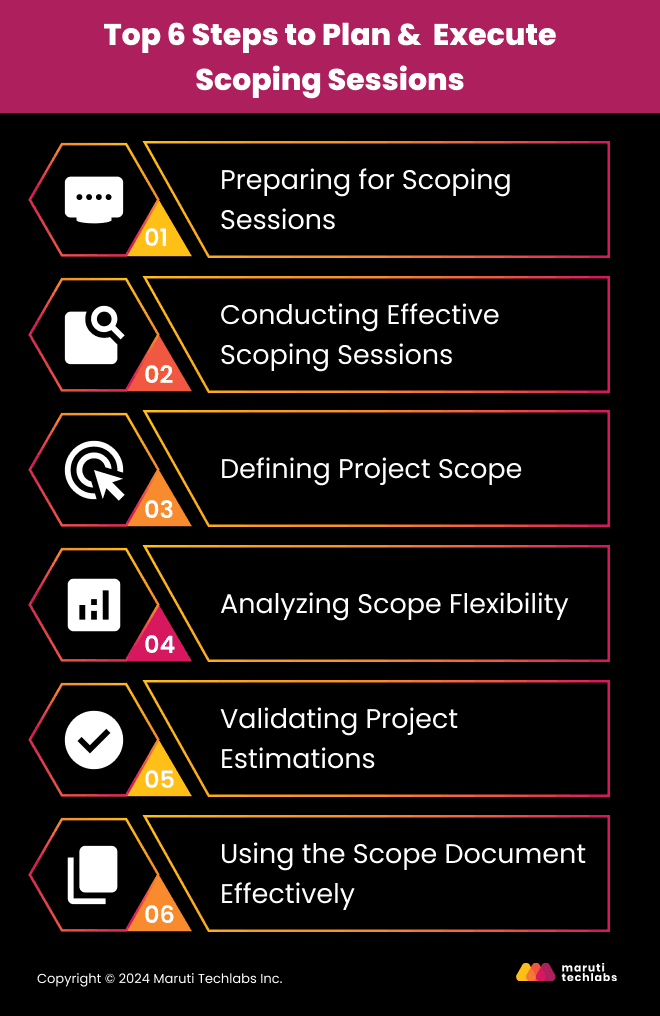
Top 6 Steps to Plan and Execute Scoping Sessions
Scoping sessions are your project’s compass, helping you steer toward success with clarity and precision. Let’s break down the essential steps to make these sessions impactful and result-driven.
1. Preparing for Scoping Sessions
A well-prepared session sets the tone for clear communication and effective decision-making.
Gather Necessary Project Information
Collect all relevant documents, data, and past project reports. Use project management tools like Trello or Notion to organize this information. Gathering customer requirements ensures that no critical detail is missed during the session.
Identify Key Stakeholders and Decision-Makers
Map out everyone who impacts project decisions. Tools like stakeholder mapping templates can help visualize roles and responsibilities. Involving these individuals early ensures their insights are captured, avoiding delays or missteps later.
Develop an Agenda to Cover Critical Topics
Create a detailed agenda that highlights all necessary discussion points. Include time for addressing risks, setting goals, and reviewing deliverables. An agenda keeps the session on track and ensures every participant knows what to expect.
2. Conducting Effective Scoping Sessions
Planning sets the stage, but conducting the session effectively determines its success. A well-run scoping session listens to all perspectives and documents decisions for seamless execution.
Practice Open Communication
Create a safe space for participants to share risks, concerns, and priorities. Use techniques like brainstorming sessions or anonymous polling to surface diverse perspectives. For example, starting with a question like, "What’s the biggest challenge we foresee?" can spark honest dialogue.
Involve all Key Stakeholders
Make sure every relevant stakeholder participates and contributes their insights. Tools like stakeholder mapping or digital collaboration platforms (e.g., Miro or Zoom) can ensure everyone stays engaged, even in remote settings. This alignment helps avoid misunderstandings later in the project.
Document Outcomes Thoroughly
Record key agreements, action items, and assigned responsibilities using tools like Notion or Google Docs. For instance, during a scoping session for a new software feature, documenting the agreed-upon timeline ensures everyone remains accountable. These notes become a vital reference point throughout the project.
3. Defining Project Scope
A successful project is based on a clearly defined scope that guarantees manageable goals and a clear focus.
Create a Detailed Scope Document
Describe the project’s goals, deliverables, and resource needs. For instance, a website redesign scope document may outline a content migration strategy, SEO optimization, and a responsive layout. The team uses this document as a shared reference.
Establish Boundaries to Avoid Scope Creep
Clearly state the project's inclusions and exclusions. For example, clearly state that frontend design changes are outside the scope of a project that focuses on backend modifications. This clarity helps avoid unexpected demands and keeps budgets in check.
Set Clear Milestones and Achievable Goals
Break the project into smaller, measurable steps. Use tools like Gantt charts or milestone trackers to define deliverables and deadlines. Within two weeks, marketing operations may commence with the preparation of content calendars. Tracking these goals supports continuous growth.
4. Analyzing Scope Flexibility
Adaptability is crucial for every project to handle changes in the real world. While allowing for essential modifications, a flexible scope guarantees that your project stays aligned with your objectives.
Use Early Feedback to Refine the Scope
Gather input from stakeholders regularly through feedback sessions or surveys. For example, a product development team might adjust features after beta testers identify usability issues. This approach keeps the project relevant without disrupting timelines.
Balance Flexibility with Constraints
Adjust the scope as needed, but ensure it aligns with the project’s budget, deadlines, and resource availability. For instance, adding a new feature might require extending the timeline or reallocating resources. Tools like a Work Breakdown Structure (WBS) can help identify where adjustments are feasible.
Make Realistic Adjustments
Stay practical about what changes can be implemented without overburdening the team. For example, if customer feedback suggests a major redesign, evaluate whether it can be phased into future updates instead of overwhelming the current project.
5. Validating Project Estimations
Accurate project estimations are critical for avoiding surprises and ensuring smooth execution. A well-validated estimate effectively aligns efforts, resources, and timelines.
Compare Efforts with Project Complexity
Assess whether planned resources match the project’s scope. For instance, if a mobile app development project requires custom API integration, ensure the team has the expertise and time to handle it.
Refine Estimates Based on Scoping Insights
Use findings from scoping sessions to update resource and effort estimations. If a feature is identified as more complex than expected, adjust timelines and budgets accordingly to avoid delays.
Align Timelines and Budgets with Stakeholder Input
Verify that everyone involved agrees on the viability. Visualizing deadlines and expenses using budget forecasting software or Gantt charts can ensure realistic expectations.
6. Using the Scope Document Effectively
The scope document serves as the basis of project management and keeps the team informed during execution, making it more than just a planning tool.
Use the Scope as a Roadmap
Refer to the document regularly to track progress and ensure deliverables meet the agreed-upon goals. For example, use it to verify whether milestones align with the plan.
Communicate Updates Clearly
Keep stakeholders informed of any changes to prevent confusion. For instance, if a deliverable timeline shifts due to resource constraints, update the scope document and share it promptly.
Resolve Disputes with Documented Agreements
When conflicts arise, use the scope document to clarify what all parties agreed on. This promotes transparency and prevents unnecessary delays.
Top Tools, Templates, and Agenda Examples for Scoping Sessions
Tools and templates help make scoping sessions structured, repeatable, and easy to run. These examples support better collaboration and make discussions more productive.
1. Sample Agenda with Time Slots
Welcome and objectives - 10 minutes
Problem overview - 10 minutes
Requirements discussion - 20 minutes
Technical considerations - 20 minutes
Risks and dependencies - 15 minutes
Success criteria review - 10 minutes
Next steps and responsibilities - 15 minutes
This agenda keeps the conversation focused while allowing space for detailed discussions.
2. Stakeholder Mapping Template
List all involved groups, their roles, decision authority, and required inputs. Identify owners for business goals, technical design, user needs, and compliance. Add communication preferences and availability.
This map ensures everyone who influences scope or estimation is included early and avoids missing voices that impact project clarity.
3. Scope Document Checklist
Clear objectives
Defined requirements
Constraints and assumptions
Dependencies
Data needs
Success criteria
Nonfunctional expectations
Integration points
Risks and open questions
Approval path
This checklist ensures the scoping output is complete, understandable, and ready for estimation without missing details that cause confusion later.
4. Recommended Collaborative Tools
Miro
Miro supports collaborative diagrams, flow charts, and requirements mapping. Teams can capture ideas visually, organize discussions, and create a shared space that remains accessible after the session. It is ideal for distributed workshops.
Notion
Notion provides structured documents, linked pages, and easy templates. It supports meeting notes, requirement logs and shared project spaces. Teams can create a centralized source of information that stays up to date and transparent throughout the project lifecycle.
Google Docs
Google Docs enables real-time collaboration for notes, requirements, and scope drafts. Multiple stakeholders can review and comment instantly. It ensures everyone has a single accessible document during and after the scoping session.
Metrics and Success Indicators for Scoping Sessions
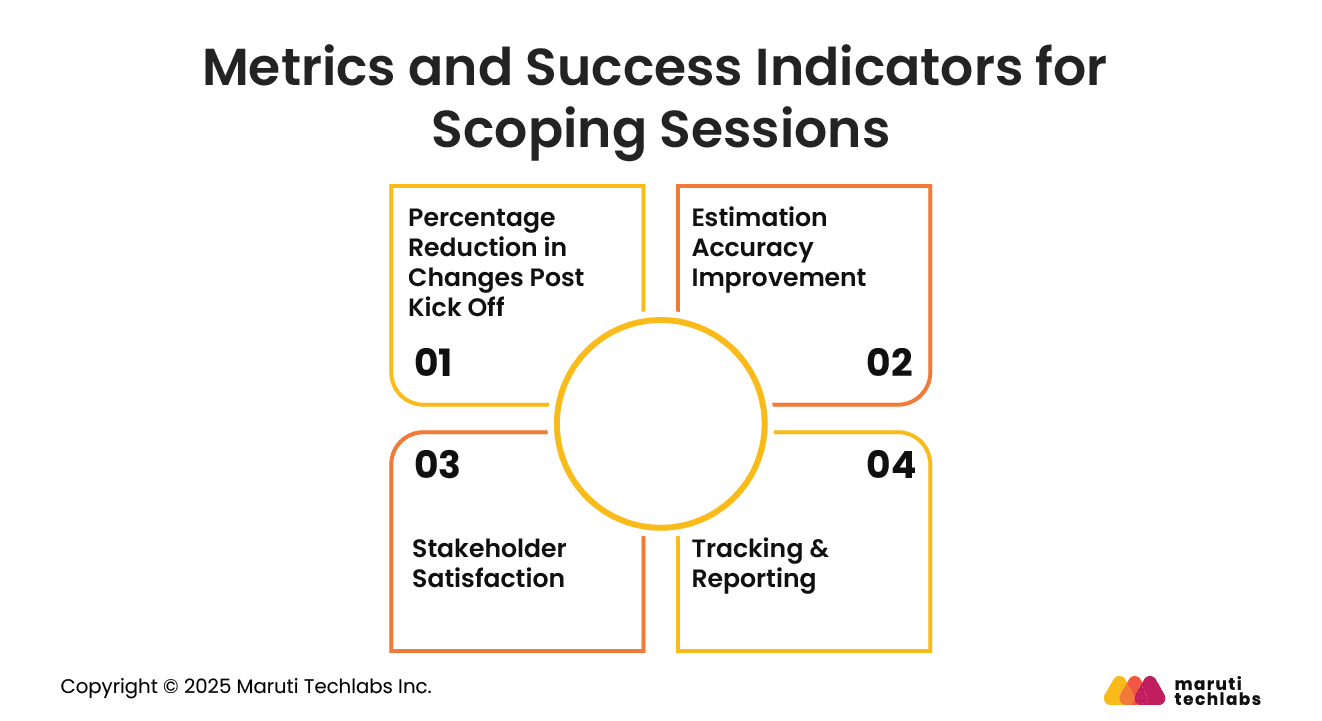
Measuring scoping success helps teams improve estimation accuracy and identify weak areas. These metrics show whether the session created clarity and reliable inputs for planning.
1. Percentage Reduction in Changes Post Kick Off
Track how many scope changes happen after the project begins. Fewer changes indicate that scoping was clear and complete.
If changes remain high, the session likely missed details or required deeper discussions. This metric reflects the overall strength of early understanding and alignment among stakeholders.
2. Estimation Accuracy Improvement
Measure accuracy by comparing estimated effort with actual effort. Improved accuracy over time indicates that scoping sessions are capturing details more effectively.
This metric also highlights whether teams understand complexity, dependencies, and risks. Consistent improvement demonstrates that scoping is setting strong foundations for planning.
3. Stakeholder Satisfaction
Gather feedback from attendees on the clarity, completeness, and usefulness of the session. High satisfaction means the team feels confident about the scope and expectations.
Low satisfaction shows communication gaps, missing information, or unresolved concerns that may affect estimates and execution quality.
4. Tracking & Reporting
Use surveys, dashboards, and retrospective reviews to collect data. Track metrics over time and compare across projects. Share findings with leadership and delivery teams. Regular reporting creates accountability, guides improvements, and helps predict successful outcomes for future scoping efforts.
When Should You Run Additional Scoping Sessions or Follow-Ups?
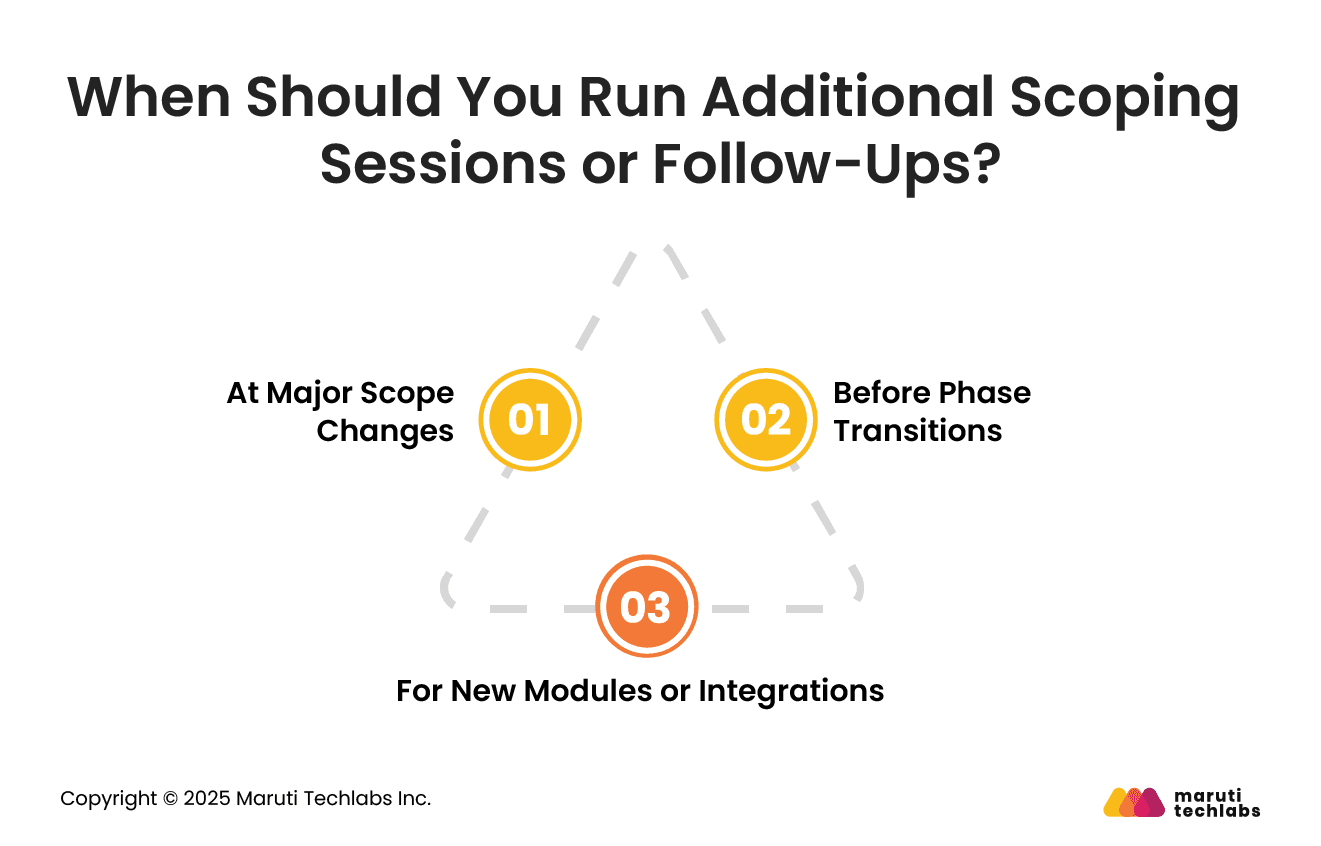
Additional scoping sessions help refine understanding when significant changes occur. They ensure estimates remain accurate and aligned with evolving project needs.
1. At Major Scope Changes
Run a follow-up session whenever goals or requirements shift significantly. New insights may affect budget, timelines, or feature priorities.
A quick alignment meeting helps the team reassess complexity and adjust estimates with confidence. It keeps planning grounded in fresh information.
2. Before Phase Transitions
Phase changes often introduce new tasks and dependencies. A scoping refresh clarifies what will happen next and identifies risks in the upcoming stage.
This ensures the team enters the new phase with a shared understanding and updated estimates for the work ahead.
3. For New Modules or Integrations
Whenever a new system, module, or external integration is added, the team must analyze requirements, risks, and data needs.
A dedicated scoping session ensures these additions are understood clearly. It helps teams estimate effort accurately and prevents surprises during development.
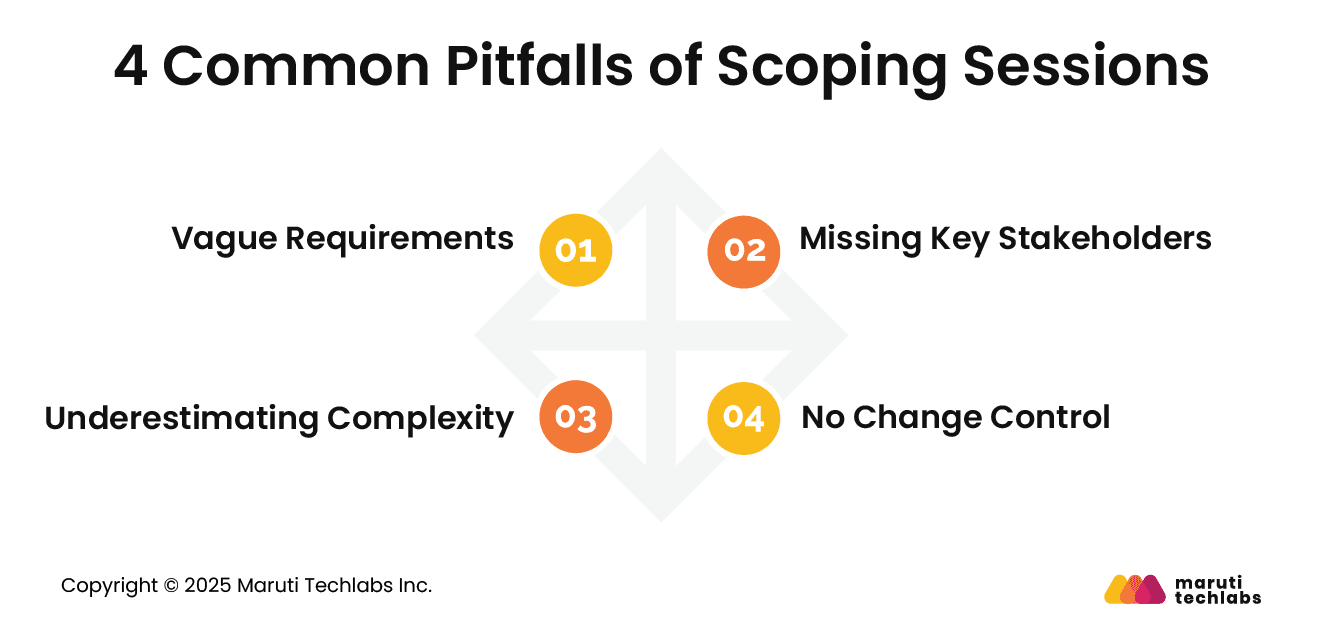
4 Common Pitfalls and How to Avoid Them
Scoping sessions often fail due to unclear inputs or missing voices. Understanding common pitfalls helps teams prepare better and avoid issues that lead to incorrect estimates.
1. Vague Requirements
Unclear requirements lead to assumptions that produce inaccurate estimates. When teams do not fully understand the problem, they put effort into it based on partial information.
This confuses execution and creates avoidable rework. Vague requirements also undermine confidence in planning and weaken stakeholder trust from the start of the project.
Quick Solutions
Ask clarifying questions, collect examples, request sample data and document expected outcomes clearly so everyone agrees on what needs to be delivered before estimation starts.
2. Missing Key Stakeholders
If critical voices are absent, vital details remain unknown. Key decisions are often delayed or misunderstood. This leads to gaps in scope and incorrect effort estimates.
Marketing, product, engineering, legal, and operations may all hold information that shapes the project. Without full representation, the scoping session becomes incomplete.
Quick Solutions
Create a stakeholder list early, confirm attendance, and assign roles so each perspective is included. This ensures that decisions are informed and estimates are realistic.
3. Underestimating Complexity
Teams sometimes assume tasks are simpler than they genuinely are. They overlook dependencies, integrations, data issues, and technical constraints.
This leads to optimistic estimates that break during execution. Underestimating complexity also hides risks until late in the project, when changes are costly and disruptive.
Quick Solutions
Break work into smaller components, involve technical experts, and review similar past projects to understand hidden complexities before finalizing estimates.
4. No Change Control
Projects fail when new features are added casually after scoping. Without change control, the scope expands silently. This disrupts planning, increases cost, and adds stress to teams. Scope creep creates confusion, missed deadlines, and reduced quality because original estimates no longer match the new workload.
Quick Solutions
Document the scope clearly, define approval steps for changes, and use a single source of truth to track and communicate updates.
Conclusion
A well-run scoping session is the foundation of effective project planning, not merely a phase in the procedure. Establishing clear goals, encouraging communication, and identifying problems early can create the conditions for more efficient execution and better results.
When paired with continuous communication and a willingness to adapt to real-world changes, scoping sessions become the key to delivering projects on time and within budget.
At Maruti Techlabs, we specialize in helping businesses achieve project success through tailored planning solutions. From startups launching their initial products to enterprises managing complex initiatives, we’re here to streamline your processes, enhance collaboration, and ensure your goals are met.
Looking for a reliable software development company in Los Angeles? Maruti Techlabs combines technical expertise with strategic planning to bring your vision to life—on time and within scope.
FAQs
1. What is the ideal duration for a scoping session?
The duration depends on the project's complexity, but most sessions last between 2 and 4 hours. In some cases, especially for larger projects, scoping sessions may span 1 to 2 days to allow for in-depth discussions without causing fatigue.
2. How do I decide who should attend a scoping session?
This list should include key stakeholders such as project leads, decision-makers, team representatives, and anyone directly impacted by the project’s outcomes.
3. What tools can I use to streamline scoping sessions?
Tools like Zoom for remote collaboration, Notion for documentation, and Miro for brainstorming can facilitate practical sessions.
4. How often should scoping sessions be conducted during a project?
Teams usually hold a single, in-depth session at the beginning, with follow-up sessions planned for significant project milestones or scope modifications.
5. How can I ensure everyone stays engaged during the session?
Set clear expectations, use a detailed agenda, and incorporate interactive elements like brainstorming or polls to keep participants involved.
Mitul Makadia is the Founder and CEO of Maruti Techlabs, a custom software and AI engineering company he built from the ground up in 2009. Over 20+ years, he has led product development, business strategy, and engineering teams across startups to Fortune 500 clients.
Stuck with a Tech Hurdle?
We fix, build, and optimize. The first consultation is on us!