Making Omnichannel Supply Chains Work Better With AI
A simple guide to how AI helps retailers manage inventory, orders, and delivery across all channels.
Data Analytics and Business Intelligence
Making Omnichannel Supply Chains Work Better With AI
A simple guide to how AI helps retailers manage inventory, orders, and delivery across all channels.
Table of contents
Table of contents
Key Takeaways
Introduction
What Makes Retail Supply Chains Omnichannel
AI Use Cases Transforming Omnichannel Supply Chains
The Real-World Impact of AI on Retail Operations
What Data Architecture Is Needed to Support AI in Omnichannel Supply Chains?
Conclusion
FAQs
Key Takeaways
Customers expect a smooth experience across stores, websites, and apps.
Managing stock and orders across channels is difficult without connected systems.
AI helps businesses plan better, reduce delays, and avoid stock problems.
Real examples show AI is already improving day-to-day retail operations.
Clean, connected data helps teams respond faster and keep supply chains running smoothly.
Introduction
Customers today move easily between online platforms and physical stores as part of their shopping journey. They may search for a product online, read reviews, and then buy it from a store. For shoppers, this behavior feels natural, and they expect a smooth, consistent experience regardless of where they choose to shop.
For businesses, managing this mixed online‑and‑in‑store shopping is harder. Products are spread across stores and warehouses, while orders come in through websites, mobile apps, and physical shops. When these systems operate in isolation, visibility is lost. Inventory becomes difficult to track, deliveries are delayed, and the customer experience suffers.
This is where AI comes into the picture. By analyzing customer behavior, sales patterns, and real-time inventory data, AI helps businesses understand demand, place the right products in the right locations, and manage orders more effectively across all channels. Instead of reacting to issues after they occur, teams can plan ahead and make smarter, data-driven decisions.
In this blog, we’ll explain what an omnichannel supply chain means, how AI is being used in day-to-day operations, the impact it has on retail performance, and the data setup needed to support it.
What Makes Retail Supply Chains Omnichannel
An omnichannel supply chain means all sales channels work together. This includes physical stores, websites, mobile apps, and even social media shops. Instead of running each channel separately, everything is connected behind the scenes.
In a traditional setup, each channel usually works on its own. Stores, websites, and apps manage their stock separately. This fragmentation makes it hard to maintain accurate inventory visibility and fulfill orders reliably.
Omnichannel supply chains remove these silos by creating shared visibility across inventory, orders, and fulfillment operations.
For customers, this feels easier and more reliable. They can check a product online, buy it in-store, or order through an app and get the same experience every time. For businesses, it means fewer stock problems, fewer delays, and smoother order fulfillment across all channels.
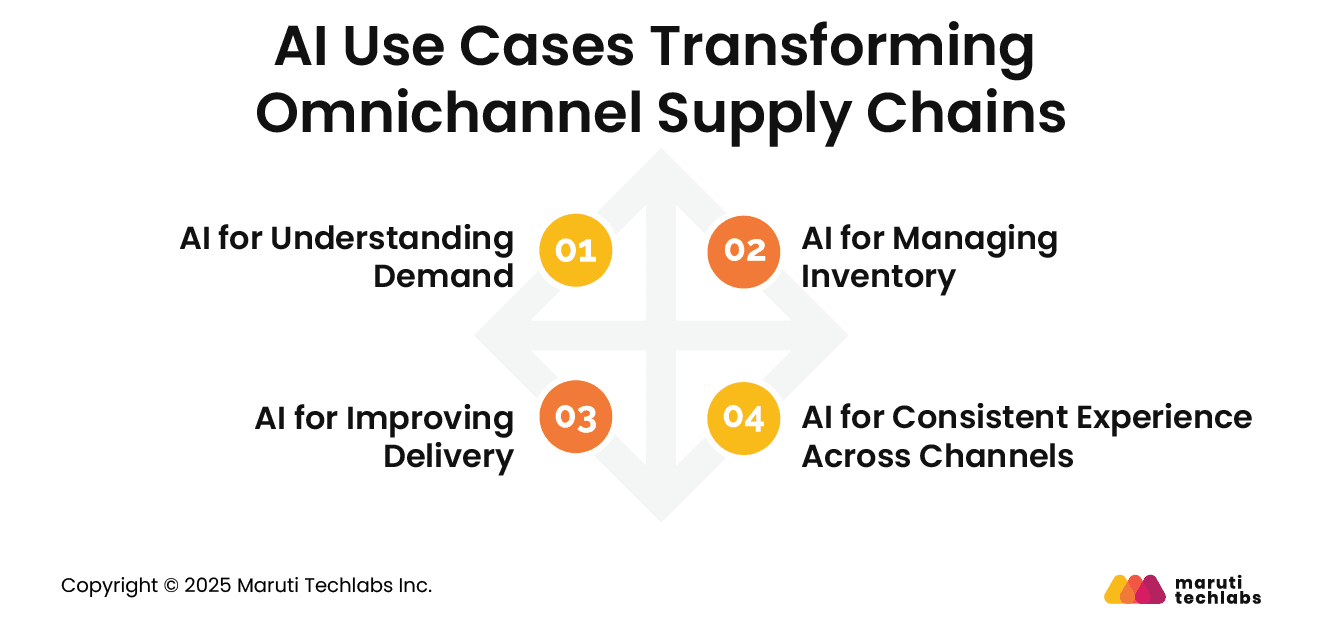
AI Use Cases Transforming Omnichannel Supply Chains
Managing an omnichannel supply chain takes careful planning and constant coordination. Products move between stores, warehouses, and delivery partners every day.
At the same time, customer needs keep changing based on location, season, and how they choose to shop. When planning falls short, small gaps turn into delays, stock issues, and unhappy customers.
1. AI for Understanding Demand
Customer demand does not remain the same everywhere or at all times. What sells well in one city may move slowly in another. Demand can also change during holidays, weekends, or sales periods.
By analyzing current buying activity across channels, AI helps teams detect these shifts early. This makes it easier to plan stock based on what people are buying now, rather than relying solely on past sales figures.
2. AI for Managing Inventory
Keeping the right amount of stock is a daily challenge. Too little stock leads to missed sales and empty shelves. Too much stock increases storage pressure and waste.
AI helps teams balance this by showing which products are moving quickly, which are slowing, and where to place stock. This allows businesses to avoid guesswork and keep inventory under better control.
3. AI for Improving Delivery
Delivery problems often occur because routes change, traffic builds up, or unexpected issues arise along the way.
As conditions change, AI dynamically adjusts delivery plans by recommending better routes and timing. It can suggest better routes and timings so products reach customers faster and with fewer delays. This makes deliveries more predictable for both businesses and customers.
4. AI for Consistent Experience Across Channels
Customers expect the same experience whether they shop online, through an app, or in a store. When systems stay connected, customers see accurate stock information and receive orders on time.
AI helps keep data aligned across stores, websites, and delivery platforms, so information stays consistent everywhere.
Overall, AI helps teams plan better, reduce confusion, and keep omnichannel supply chains running smoothly day to day.
The Real-World Impact of AI on Retail Operations
Many retail brands already use AI in their daily work. These examples highlight how AI is already addressing everyday operational challenges in retail.
1. Amazon
Ever wondered how Amazon keeps prices competitive across millions of products? AI and machine learning models continuously analyze demand shifts, competitor pricing, and market conditions. This allows Amazon to update prices frequently and respond to changes in near real time, without relying on manual pricing decisions.
2. Zara
Not every store needs the same products. Zara uses AI-driven demand forecasting to decide how much inventory each location should receive. By factoring in local preferences, seasonal trends, and real-time sales data, the brand places products where they are most likely to sell, reducing overstock while avoiding missed sales.
3. Walmart
To make shopping faster and more convenient, Walmart has introduced AI-enabled voice shopping through its mobile app. Customers can add items to their cart, manage orders, and arrange deliveries using voice commands, which works exceptionally well for repeat purchases and everyday essentials.
4. Starbucks
Starbucks uses AI to create personalized offers based on customer purchase history. Data from stores, the app, and the loyalty program is brought together and checked for accuracy. This helps Starbucks send relevant offers that feel timely and personal, encouraging repeat visits.
5. Levi Strauss
Levi Strauss uses AI to plan inventory across regions. Sales data, store performance, and supply chain information are connected through integrated systems. This helps teams understand where certain styles sell better and move stock before problems appear.
6. Sport Clips
AI is not limited to inventory and logistics. Sport Clips uses AI-driven automation to handle interview scheduling during hiring. By removing manual coordination, managers save time and can focus more on store operations and customer experience.
These examples show how AI works best when data is connected, updated in real time, and shared across systems, helping retailers save time, reduce effort, and improve daily operations.
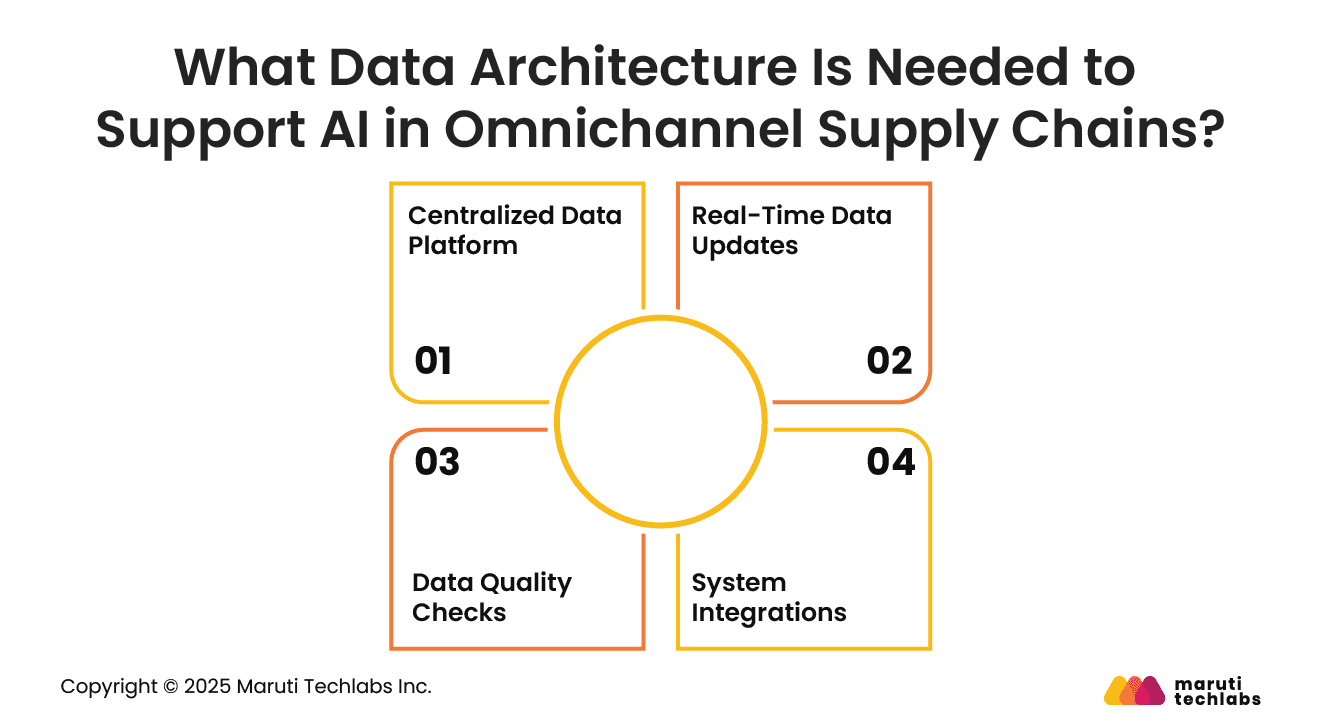
What Data Architecture Is Needed to Support AI in Omnichannel Supply Chains?
For an omnichannel supply chain to work well, all information needs to be in one place. Sales data from stores, orders from websites and apps, stock levels from warehouses, and delivery updates should not sit in separate systems.
When data is scattered, teams struggle to see the whole picture, and mistakes become common. To support AI-driven decision-making, this data foundation must include a few key components.
1. Centralized Data Platform
A centralized data platform brings all supply chain information together. It stores sales, inventory, orders, and delivery details in one shared system. This helps teams quickly check what is available, where products are located, and what needs restocking.
2. Real-Time Data Updates
Supply chains change throughout the day. Products get sold, new orders come in, and deliveries move forward. Real-time data updates ensure that everyone is working with the latest information. This reduces wrong stock numbers and prevents delays caused by outdated data.
3. Data Quality Checks
Accurate data is just as important as fast data. Duplicate entries, missing values, or incorrect numbers can cause confusion. Regular data quality checks help clean the data and keep it reliable so teams can trust what they see.
5. System Integrations
Different tools are used across stores, warehouses, and logistics teams. System integrations connect these tools, allowing data to flow smoothly between them. When systems talk to each other, teams spend less time fixing errors and more time doing their work.
With centralized, accurate, and connected data, AI can support better planning, faster decisions, and smoother omnichannel supply chain operations.
Conclusion
Managing an omnichannel supply chain well means keeping products, orders, and deliveries organized across all channels. Businesses that plan carefully, track stock, and keep information connected can reduce delays and make customers happier.
Looking ahead, supply chains will become even smarter. Automation will handle more tasks, such as stocking, ordering, and delivery planning, making daily operations faster and easier. Real-time visibility will help teams spot issues early and fix them before they become problems.
Smarter planning will also support sustainability by reducing waste and improving delivery efficiency. Integration with devices and sensors will provide businesses with up-to-the-minute information on stock, shipments, and equipment, helping them respond quickly to changes.
If you want to see how data and analytics can help your supply chain run more smoothly and intelligently, check out Maruti Techlabs Data Analytics services or contact usto learn more.
FAQs
1. What is an omnichannel supply chain?
An omnichannel supply chain connects all sales channels, such as stores, websites, apps, and warehouses. Products, orders, and inventory are managed together instead of separately. This helps businesses fulfill orders faster, avoid stock issues, and give customers a smooth experience across every channel.
2. What are the top supply chain optimization tools?
Common supply chain optimization tools include inventory management systems, demand planning tools, order management systems, warehouse management software, and delivery tracking tools. These tools help businesses plan stock, manage orders, track shipments, and reduce delays in daily supply chain operations.
3. What are the four pillars of omnichannel?
The four pillars of omnichannel are connected channels, shared data, flexible fulfillment, and consistent customer experience. Together, they ensure customers can easily move between channels, see accurate product information, receive timely deliveries, and receive the same service across all touchpoints.
4. What does "omnichannel" mean in the supply chain?
In supply chains, omnichannel means managing inventory, orders, and deliveries as one system across all channels. Stores, online platforms, warehouses, and delivery partners work together. This approach helps businesses fulfill orders across any channel and respond more effectively to customer demand.
Pinakin Ariwala has over 20 years of experience in AI/ML, data engineering, and software development. He has led AI and machine learning projects across industries, including agriculture, finance, and healthcare, and has been featured on the Clutch Leaders Matrix podcast discussing real-world AI/ML applications.
Stuck with a Tech Hurdle?
We fix, build, and optimize. The first consultation is on us!