

How a Cyborg Bot Resolved 2,500+ Weekly Situations
A human-in-the-loop chatbot integration helped resolve complex buyer and seller responses without stalling vehicle transactions.
At a Glance
The client needed to prevent complex buyer and seller responses from interrupting vehicle transactions. Maruti Techlabs introduced Cyborg, a support bot that connected the Dispatch Bot with human agents.
Industry
Automotive
Function
Customer Communication
Solution
Cyborg Bot Integration
Engagement
Chatbot Development
The Client
The client is a US-based car trading platform that connects buyers and sellers through a nationwide network of 2,000+ buyers. Its platform facilitates instant vehicle quotes and handles nearly 1 million car sales annually.
The Challenges
Complex Responses Disrupted Automated Conversations
Long or unexpected responses from buyers and sellers fell outside the Dispatch Bot's trained knowledge base, creating failure points that could put transactions on hold.
Unexpected Responses Confused the Bot
Buyers and sellers sometimes sent detailed text responses that did not match the bot's trained scenarios.
Failed Conversations Interrupted Transactions
When the bot could not interpret a response, the communication flow stopped before the pickup could be completed.
Revenue Was Held Up by Conversation Failures
Unresolved communication issues could prevent vehicle sales from progressing.
Agents Needed Context to Intervene
Human support was needed to interpret ambiguous responses and decide the next action.
Keep customer interactions moving when bots reach their limits.
Route complex responses to the right human support while preserving the continuity of automated conversations.
The Solution
Connecting Chatbot Automation With Human Support
Maruti Techlabs introduced Cyborg as a human-in-the-loop layer for the Dispatch Bot. When the bot could not interpret a buyer or seller response, Cyborg routed the conversation to an experienced agent through Slack.
Cyborg was triggered when the Dispatch Bot encountered long or unexpected responses that fell outside its trained knowledge base, preventing the conversation from reaching a standstill.

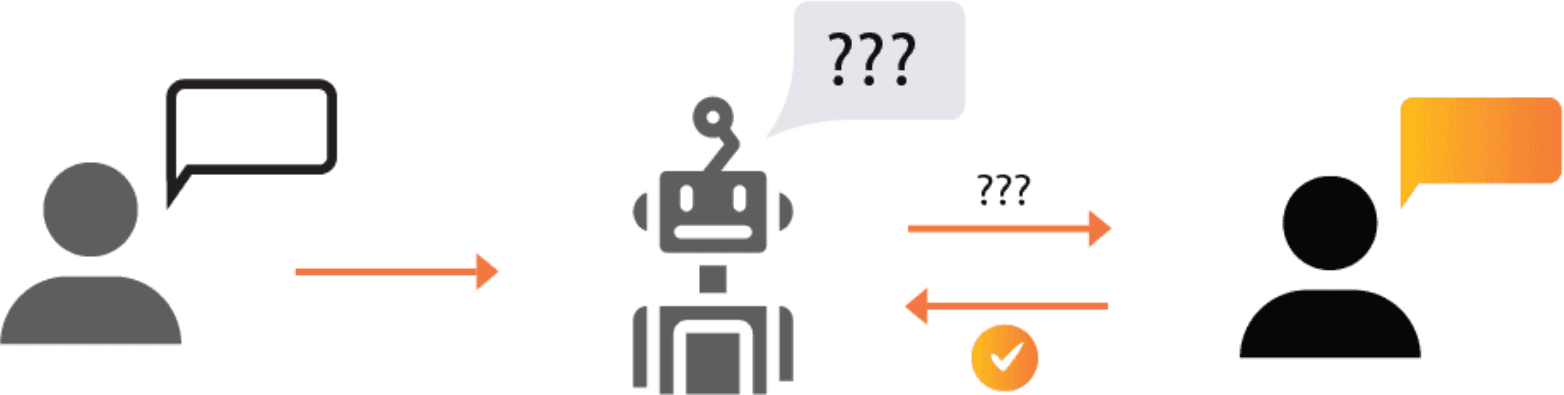
Cyborg was triggered when the Dispatch Bot encountered long or unexpected responses that fell outside its trained knowledge base, preventing the conversation from reaching a standstill.
The Journey
Bot to Human
Business Outcomes
Smoother Conversations, Fewer Interruptions
2,500+ Situations Resolved Weekly
Cyborg helped human agents handle complex conversations that the Dispatch Bot could not interpret automatically.
600K+ Transactions Supported
The Dispatch Bot's implementation supported more than 600K transactions to date.
Human Support at Critical Points
Agents could intervene when automated responses failed, helping transactions move forward instead of remaining stalled.
Structured Escalation
Predefined response options gave agents a consistent way to classify ambiguous buyer and seller responses.
Continued Transaction Flow
Cyborg connected human decisions back to the Dispatch Bot, allowing automated communication to resume after clarification.
Conclusion
The solution reduced conversation interruptions, enabled timely human intervention, and kept transactions moving smoothly.
Tech Stack

Human intervention shouldn't interrupt automated workflows.
Connect chatbots with human agents to handle complex conversations and keep critical processes moving.



Download Your Free Case Study Today.
Frequently Asked Questions
Cyborg acted as the bridge between automation and human support. It identified situations the Dispatch Bot could not understand, presented structured options to the agent, and passed the selected instruction back to the Dispatch Bot.
Instead of treating an unrecognized response as a dead end, Cyborg routed it to a human agent through Slack. The agent could classify the intent and trigger the appropriate next action.
Agents could confirm pickup, treat a response as affirmative, request clarification, stop communication, cancel an offer, or flag the conversation for manual handling.
The automated bot handles routine interactions, while predefined escalation logic brings a human into conversations that require contextual judgment. Once the agent decides the next action, the automated workflow can continue.
Conversation logs and usage data can reveal recurring failure points, abandoned conversations, and scenarios where the bot struggles to interpret user intent. These insights can then guide escalation rules and future bot training.
Yes. The case study's chatbot process integrates with CRM systems, knowledge bases, backend systems, and other enterprise software, rather than requiring the entire workflow to be replaced.