

AI Consciousness and AI Governance: A Complete Guide
Key Takeaways
- Today's AI is not conscious, but it is powerful enough to require clear rules and responsible oversight.
- The debate around AI consciousness is still ongoing, and researchers have not reached a common conclusion.
- For businesses, good AI governance matters far more today than questions about machine consciousness.
- Clear policies, human oversight, and accountability help organizations use AI more safely and confidently.
- As AI continues to advance, responsible governance will be just as important as technological innovation.
Introduction
As AI becomes more advanced, the conversation is shifting beyond what it can do. Today, the debate goes beyond what AI can do. People are beginning to ask whether AI could ever become conscious, while businesses focus on governing AI responsibly.
Interest in this topic grew after Anthropic let two Claude Opus 4 models interact without specific instructions. Instead of discussing random topics, they repeatedly talked about consciousness and their own cognition. These conversations do not prove AI is conscious, but they highlight why the subject deserves closer attention.
AI consciousness may still be a topic for future research. AI governance, however, is something organizations need to focus on today to build and use AI responsibly.
This blog explains what AI consciousness is and whether AI could ever become conscious. It also explores AI governance, its importance, key frameworks, and what lies ahead.

What Is AI Consciousness?
AI consciousness is the concept that a machine could develop subjective awareness, self-awareness, and the ability to experience thoughts or emotions. It is also known as machine, synthetic, or digital consciousness. Researchers from AI, neuroscience, cognitive science, and philosophy continue to study whether this is possible.
| Lenovo defines AI consciousness as “the theoretical concept of creating or simulating consciousness in artificial systems, such as computers or robots. It involves imbuing machines with subjective experience, self-awareness, and the ability to perceive and interact with the world in meaningful ways.” |
Today's AI can write, solve problems, and carry on conversations that often sound human. Even so, it doesn't think or feel the way people do. Instead, it generates responses by identifying patterns in the data it was trained on.
To understand the debate, it’s important to distinguish intelligence from consciousness.
How AI Differs from Conscious Awareness
- Artificial Intelligence: Recognizes patterns, solves problems, and generates responses using algorithms and large amounts of data.
- Conscious Awareness: Involves subjective awareness, self-reflection, and the ability to experience thoughts, emotions, or sensations.
Recent studies have kept this discussion active. As mentioned earlier, research involving advanced AI models such as Claude Opus 4 has encouraged scientists to explore the topic more closely. While these findings are interesting, they do not show that AI is conscious.
The bigger question now is not whether AI is conscious today, but whether it could ever become conscious as the technology evolves.
Can AI Gain Consciousness? Exploring the Present and Future
As discussed earlier, today's AI is not considered conscious. It generates human-like responses by learning patterns from large amounts of data rather than through thoughts, feelings, or self-awareness. Even the most advanced models do not have subjective experiences.
The conversation has evolved over the past few years. During controlled studies, some advanced AI systems have displayed behaviors associated with monitoring their own internal processes. Scientists disagree on what these results mean, but they agree the topic deserves further investigation.
Can AI Gain Consciousness in the Future?
No one has a definitive answer yet. Researchers still debate whether future AI could ever develop genuine consciousness, and the discussion is largely divided into two viewpoints.
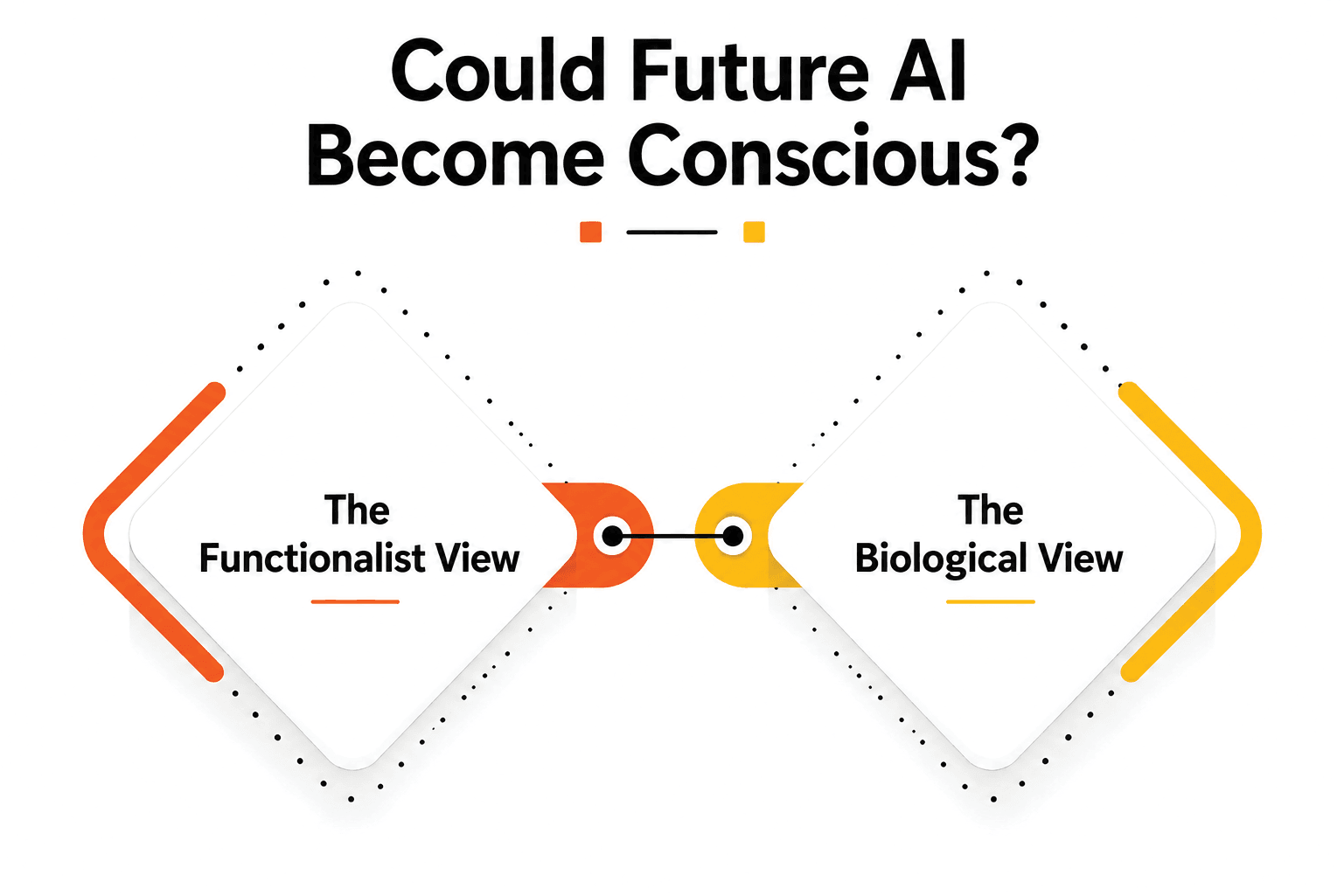
1. The Functionalist View
According to one school of thought, consciousness may not depend on biology alone. Supporters believe that if AI becomes complex enough to reason, learn over time, and monitor its own thinking, some form of consciousness could eventually emerge.
2. The Biological View
Others see it differently. They believe consciousness is closely tied to living organisms and cannot be recreated through software alone. From this perspective, AI may become more intelligent over time without ever experiencing real thoughts, emotions, or awareness.
Since there are no clear answers yet, many experts believe research should continue alongside stronger AI governance. This allows organizations to prepare for future developments without making assumptions that science cannot yet support.
What Is AI Governance and Why Is It Important?
AI governance is a practical framework for ensuring AI is developed and used responsibly. It helps organizations manage risks, meet regulatory expectations, and maintain human oversight as AI systems evolve.
| UNESCO describes AI governance as the combination of policies, regulations, and ethical principles that guide how AI is developed and used. The focus goes beyond compliance to ensuring AI benefits people while respecting human rights and social values. |
AI governance gives organizations a clear way to manage AI from development to deployment. It helps teams understand who is accountable, how risks should be handled, and when people need to stay involved in decision-making.
Examples of AI Governance
AI governance isn't a single policy. It is reflected in laws, global principles, and internal processes that guide how AI is developed and used. Some examples include:
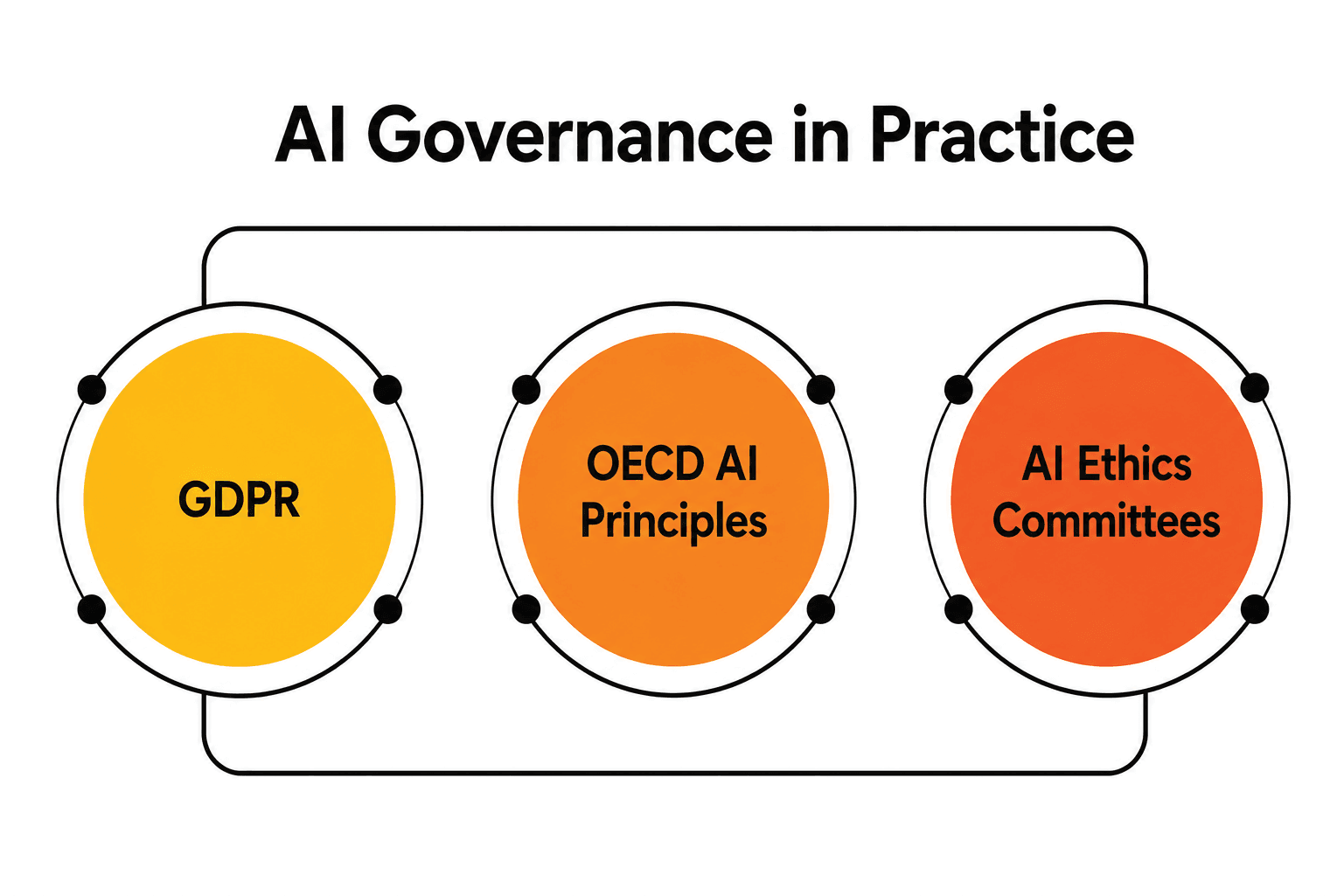
- General Data Protection Regulation (GDPR): Although it isn't an AI-specific law, the GDPR sets clear rules for how organizations collect, use, and protect personal data used by AI systems.
- Organization for Economic Co-operation and Development (OECD) AI Principles: More than 40 countries have adopted these principles to encourage AI that is transparent, fair, accountable, and trustworthy.
- AI Ethics Committees: Many organizations review high-impact AI projects through dedicated ethics or governance teams before they are deployed.
Why Is AI Governance Important?
AI governance provides the structure needed to balance innovation with transparency, compliance, and risk management by:
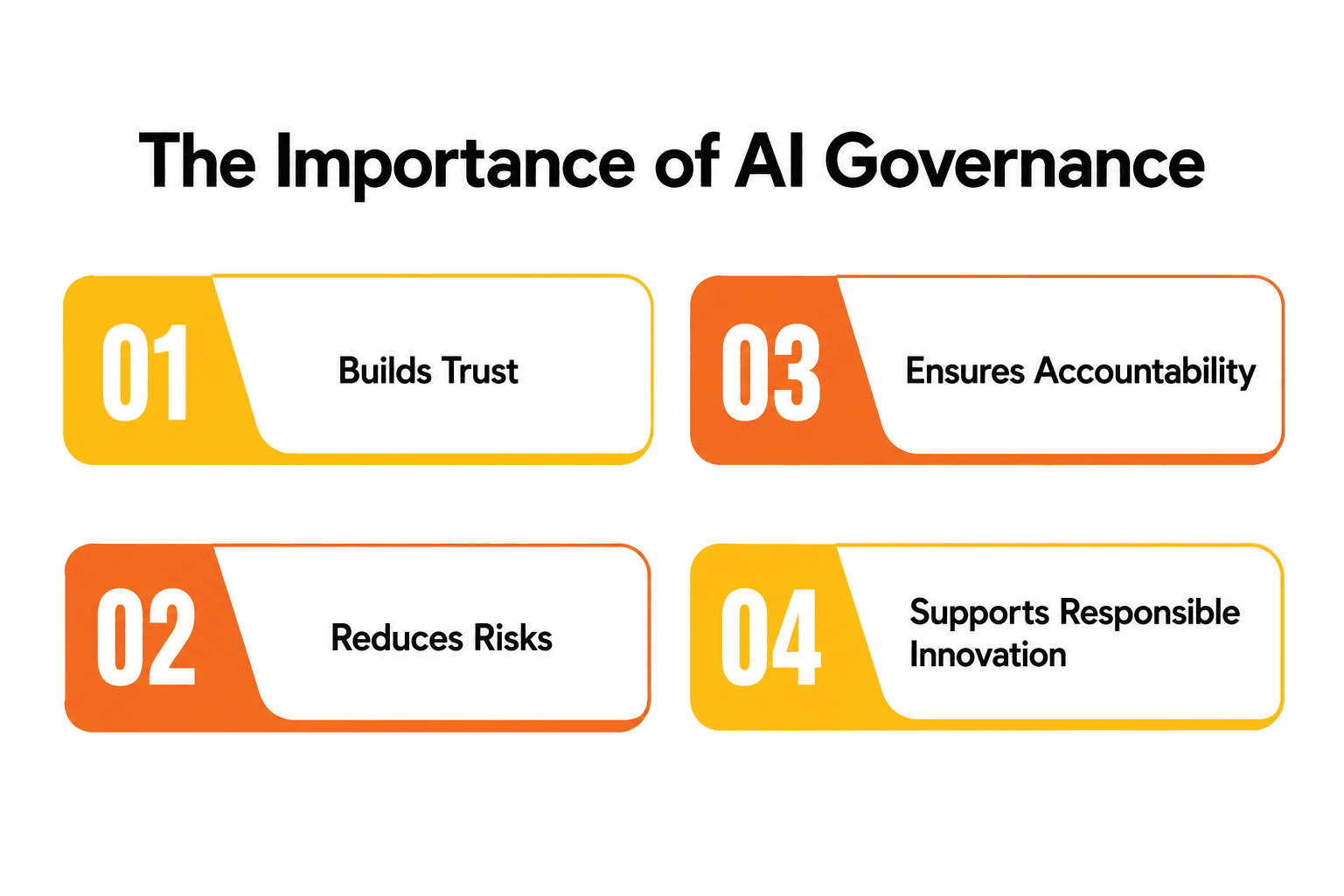
- Building Trust: Transparent and explainable AI helps users, customers, and regulators understand how decisions are made.
- Reducing Risks: Governance helps identify and minimize bias, privacy concerns, security threats, and other unintended outcomes.
- Ensuring Accountability: Human oversight and continuous monitoring keep AI systems reliable, compliant, and aligned with business goals.
- Supporting Responsible Innovation: Organizations can adopt AI with confidence while meeting ethical standards, regulatory requirements, and societal expectations.
As AI becomes more capable, governance is becoming just as important as innovation. Strong governance helps organizations use AI responsibly today while preparing for future advances.
What Is an AI Governance Framework?
An AI governance framework is a structured set of guidelines that helps organizations develop and use AI responsibly. It outlines how AI systems should be designed, monitored, and managed, while defining who is responsible for decisions, how risks are handled, and what standards must be followed throughout the AI lifecycle.
One of the most widely used frameworks is the AI Risk Management Framework (AI RMF) developed by the U.S. National Institute of Standards and Technology (NIST). It organizes AI governance into four practical stages.
Four Steps of an AI Governance Framework
An effective AI governance framework provides a structured approach to identifying, managing, and monitoring AI risks through these four key steps:
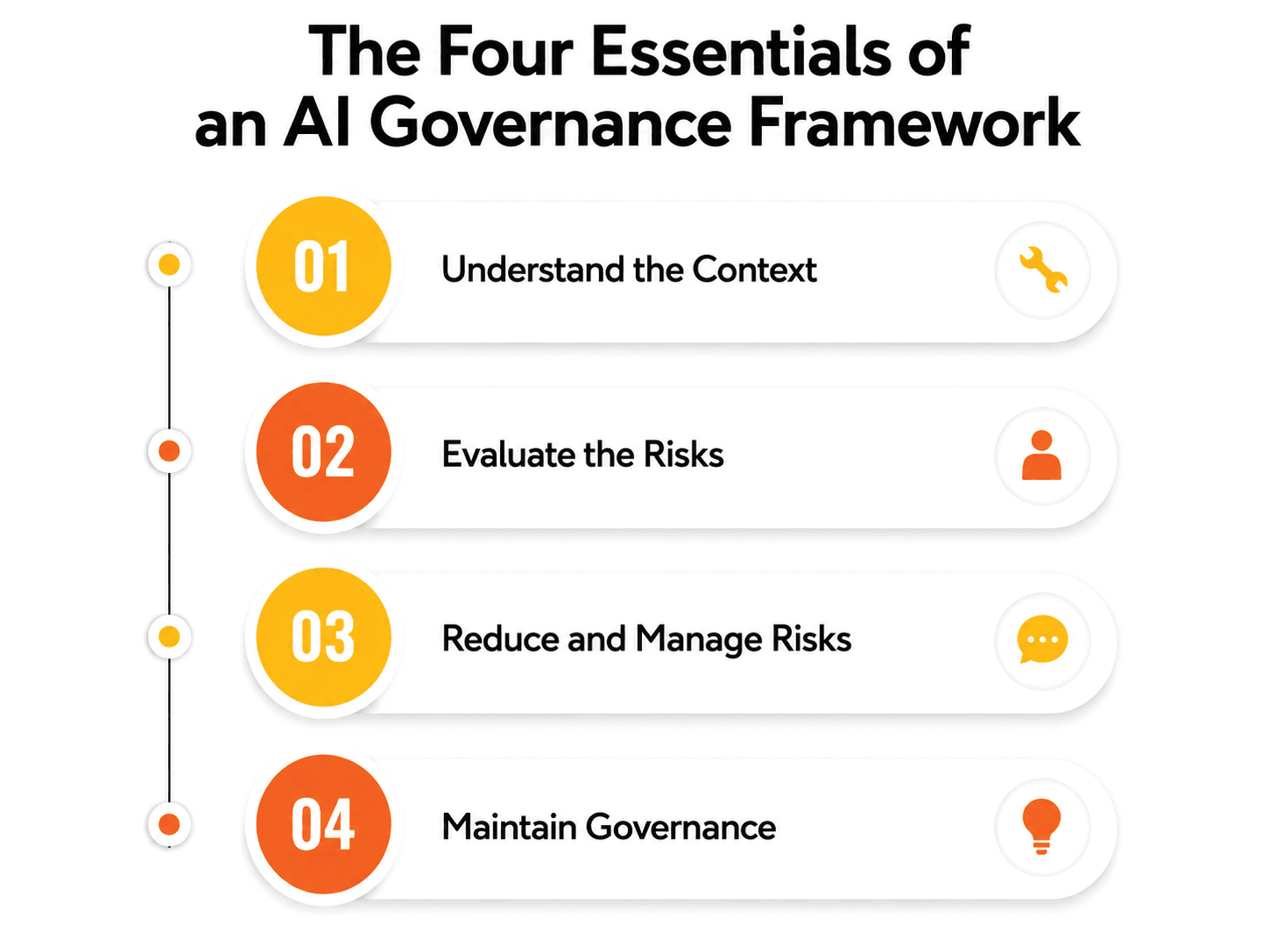
- Understand the Context: Define what the AI system is designed to do, where it will be used, and the risks it may introduce.
- Evaluate the Risks: Assess the model's performance, reliability, and potential impact on people, businesses, and society.
- Reduce and Manage Risks: Prioritize the most important risks and put measures in place to minimize them.
- Maintain Governance: Establish policies, assign responsibilities, and regularly review AI systems as they evolve.
Principles That Guide Responsible AI
While every organization may follow a different framework, most are built around the same core principles.
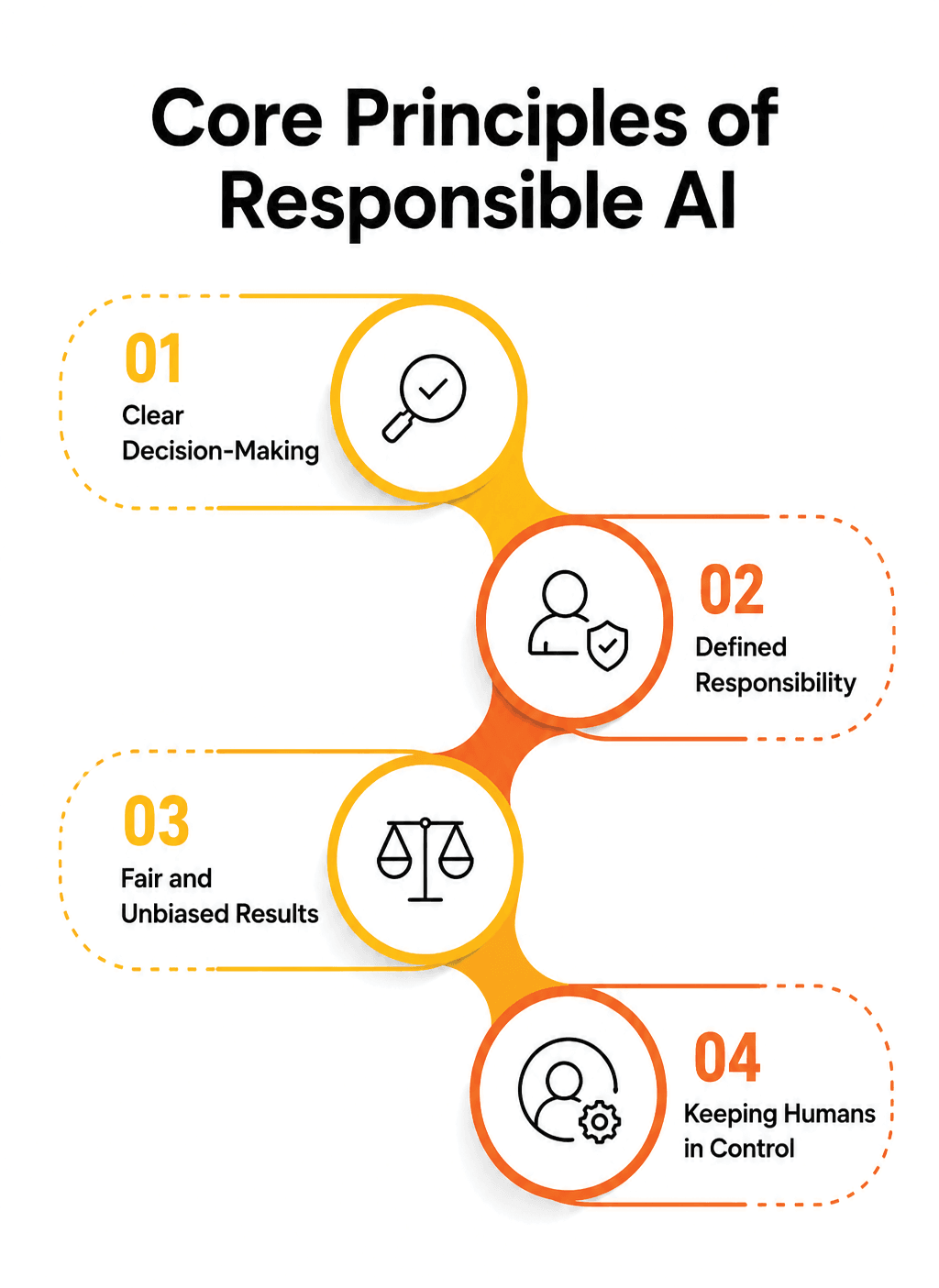
- Clear Decision-Making: AI systems should make decisions in ways that people can understand and explain when needed.
- Defined Responsibility: Organizations should clearly assign ownership for AI outcomes and take responsibility when issues occur.
- Fair and Unbiased Results: AI should be regularly evaluated to reduce bias and treat individuals and groups fairly.
- Keeping Humans in Control: People should always be able to review, question, or override AI decisions, especially in high-risk situations.
A well-designed governance framework helps organizations move beyond compliance. It creates a consistent process for building trustworthy AI while adapting to new technologies, regulations, and business needs.
How AI Consciousness and AI Governance Differ
AI consciousness and AI governance address two very different questions. AI consciousness explores whether a machine could ever develop self-awareness or subjective experiences. AI governance, on the other hand, focuses on how AI should be developed, deployed, and monitored so it is used responsibly.
The distinction matters because the two serve different purposes. Research into AI consciousness is trying to understand what may be possible in the future. AI governance helps organizations make practical decisions today, from managing risks and meeting regulations to keeping people accountable for how AI is used.
The table below highlights the key differences.
| Aspect | AI Consciousness | AI Governance |
| Primary focus | Whether an AI system can have its own awareness, feelings, or inner experiences. | Ensuring AI operates safely, ethically, and within legal and organizational standards. |
| Core question | Can AI experience or understand anything itself? | Is AI working as intended without creating unnecessary risks? |
| Nature | A topic of scientific and philosophical research.. | A practical approach for managing AI across its lifecycle. |
| Current reality | There is no evidence that today’s AI is conscious. The possibility remains under study. | Already adopted by businesses, regulators, and governments to guide AI development and use. |
| Who it benefits | Potentially the AI itself, if machine consciousness were ever established. | People, businesses, and society by reducing risks and promoting responsible AI use. |
| Who leads the work | AI researchers, neuroscientists, and philosophers. | Business leaders, compliance teams, policymakers, and technology professionals. |
| Common references | Research theories such as Integrated Information Theory (IIT) and Global Workspace Theory (GWT). | Frameworks such as UNESCO’s AI recommendations, the NIST AI RMF, and enterprise governance models. |
The discussion around AI consciousness may continue for years, but AI governance is something organizations can act on today. Putting the right policies and oversight in place is the first step toward responsible AI adoption.
Why AI Governance Matters More Than AI Consciousness Today
AI governance matters more than AI consciousness today because businesses need clear rules, accountability, and human oversight as AI becomes part of everyday decision-making.
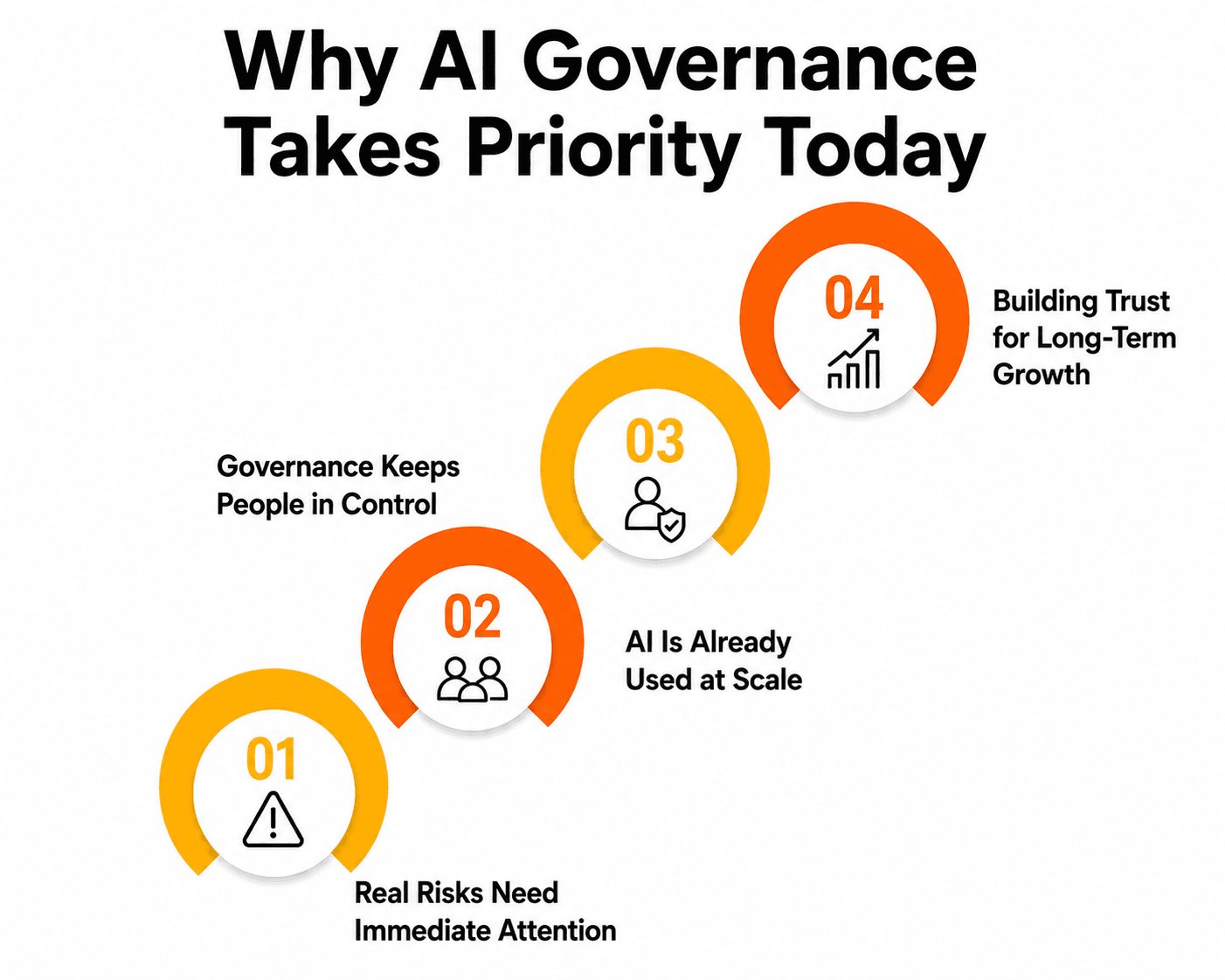
1. Real Risks Need Immediate Attention
AI is already being used to support important decisions across different industries. Without the right checks in place, it can create unfair results, mishandle data, spread false information, and make decisions that are hard to explain.
2. AI Is Already Used at Scale
AI is no longer limited to experiments or pilot projects. It is now part of day-to-day business, making clear governance and regular oversight more important than ever.
3. Governance Keeps People in Control
AI can automate many tasks, but responsibility still rests with people. AI governance helps organizations decide where AI should be used, who is accountable for its outcomes, and when human review is needed.
4. Building Trust for Long-Term Growth
People are more likely to trust AI when it is used responsibly. Strong governance helps organizations stay transparent, meet regulatory requirements, reduce risks, and adopt AI with greater confidence.
Challenges and Future Outlook for AI Consciousness and AI Governance
AI consciousness and AI governance are evolving in different ways, but both raise important questions for the future. While researchers keep exploring whether machines could ever become conscious, authorities and institutions are working to manage the risks of AI already in use.
AI Consciousness Challenges
AI consciousness research includes several unanswered scientific and philosophical challenges. Some of the most important are:
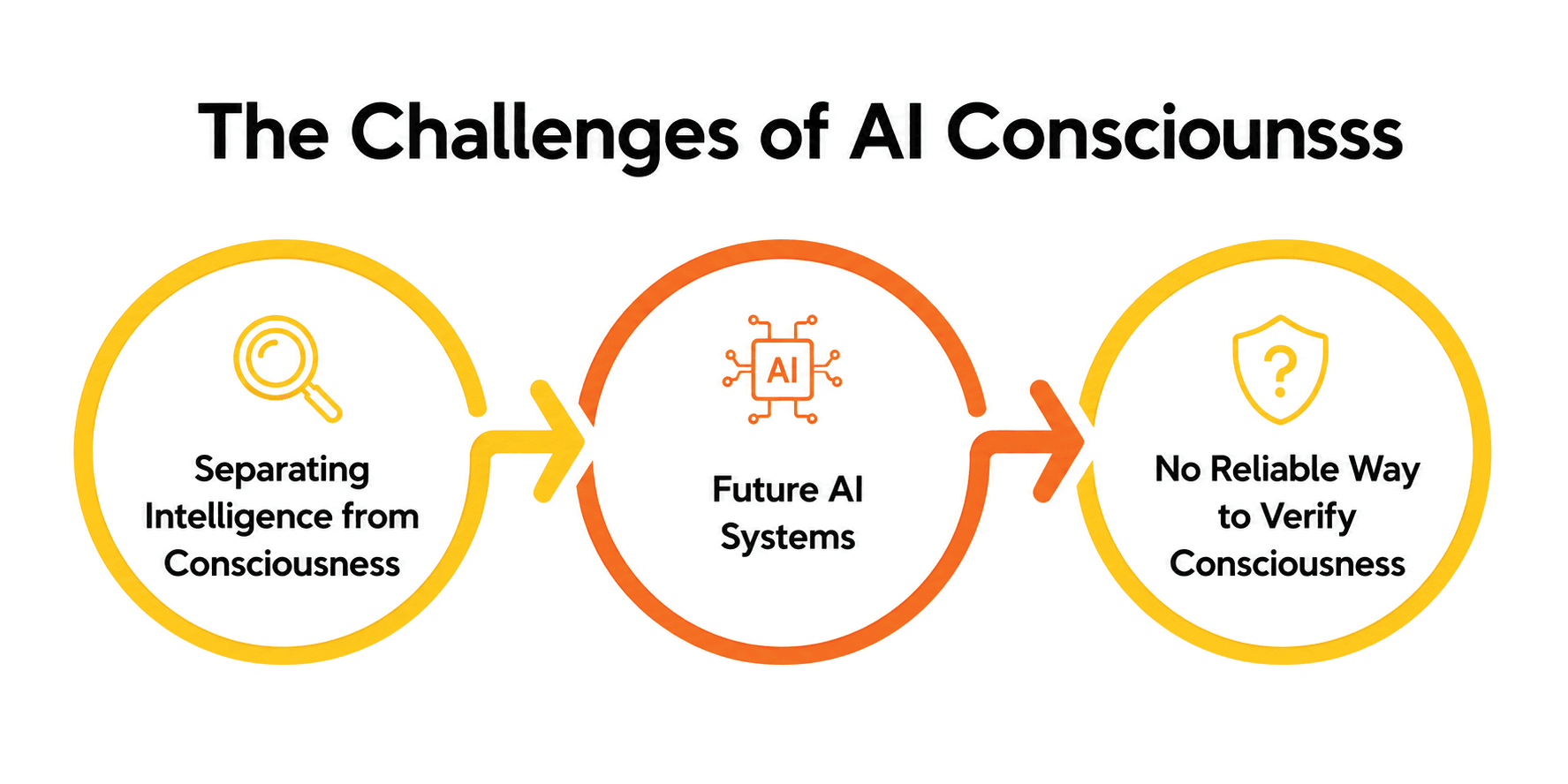
1. Separating Intelligence from Consciousness
One of the biggest challenges is distinguishing advanced intelligence from genuine awareness. An AI system may solve complex problems or hold natural conversations without having any personal experience.
2. Future AI Systems
As AI becomes more advanced, some researchers believe future systems could develop stronger self-monitoring capabilities. Whether this could eventually lead to consciousness is still unclear.
3. No Reliable Way to Verify Consciousness
Even if AI appeared conscious, there is currently no scientific method to confirm it. This makes the topic difficult to study and even harder to regulate.
AI Governance Challenges
AI governance faces practical challenges as organizations and governments work to manage AI responsibly. These include:
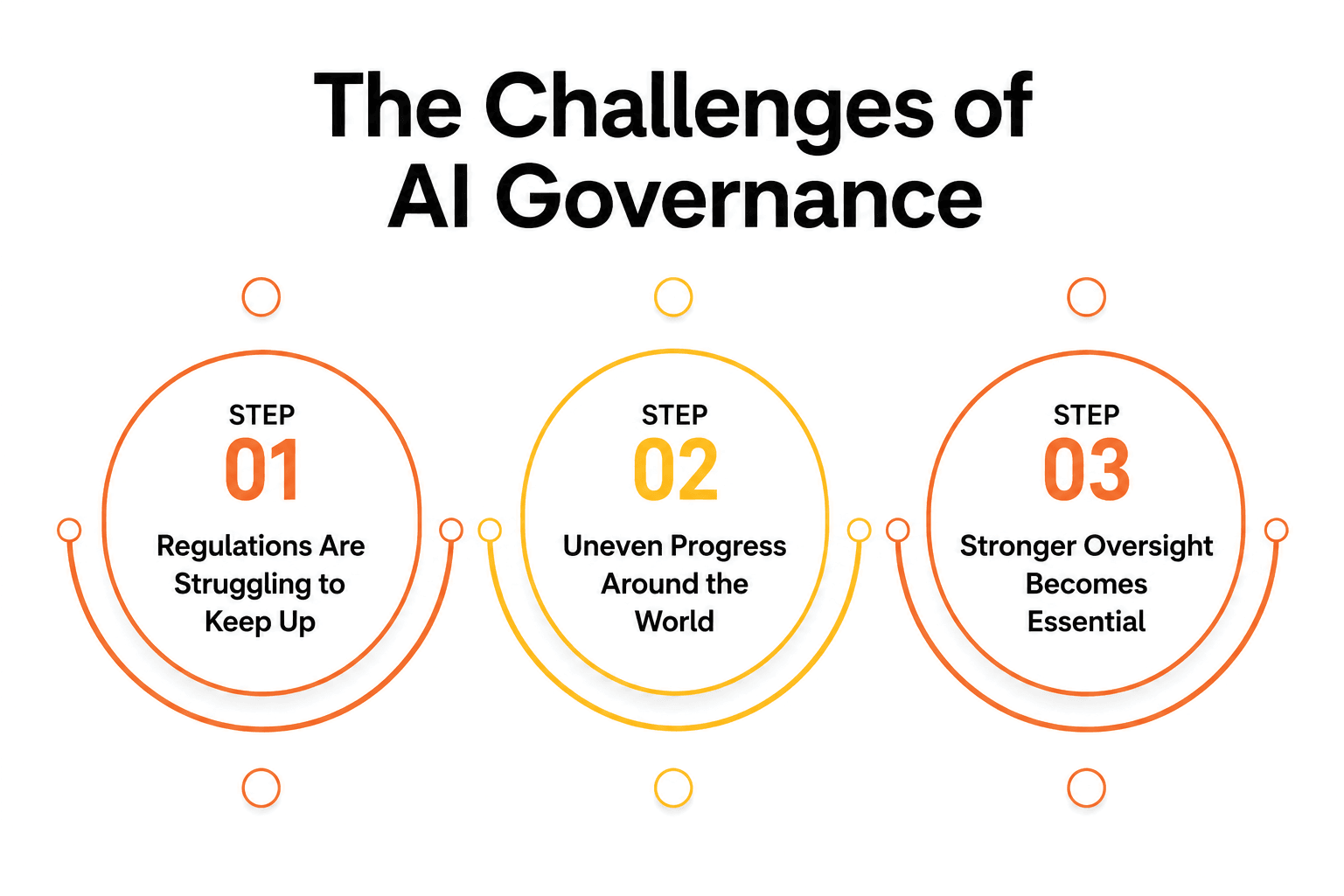
1. Regulations Are Struggling to Keep Up
AI technology is evolving much faster than laws and regulations. Many countries are still designing policies that can keep pace with rapid innovation.
2. Uneven Progress Around the World
Not every country has the same resources, infrastructure, or expertise to develop and govern AI. This creates differences in how AI is regulated and accepted globally.
3. Stronger Oversight Becomes Essential
Organizations are moving beyond broad ethical principles and introducing formal governance frameworks, frequent audits, and clear accountability for AI systems.
Future Outlook
Looking ahead, several developments are expected to shape both AI consciousness research and AI governance. These include:
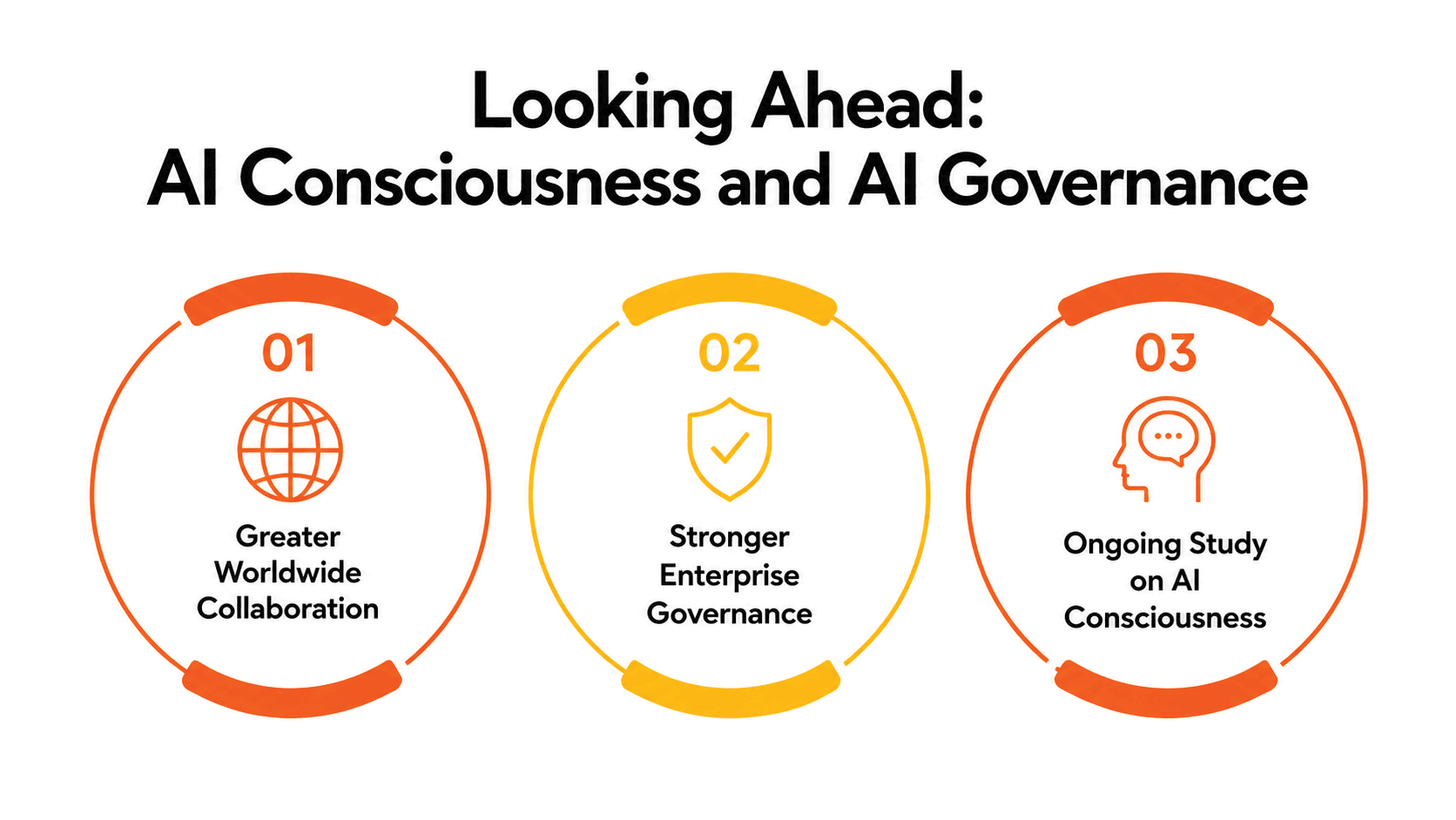
1. Greater Worldwide Collaboration
Governments and international organizations are working toward common standards that advance responsible AI development across borders.
2. Stronger Enterprise Governance
More businesses are adopting structured governance frameworks, continuous supervision, and independent reviews to manage AI across its lifecycle.
3. Ongoing Study on AI Consciousness
Interest in AI consciousness is growing as AI continues to evolve. Although many questions remain unanswered, ongoing research may help guide future conversations around AI ethics and governance.
Conclusion
AI consciousness continues to raise fascinating questions, but it remains an area of ongoing research rather than established fact. AI governance, on the other hand, is something organizations need to focus on today as AI becomes part of everyday business operations.
Using AI responsibly requires more than good technology. Organizations also need clear policies, shared accountability, fair practices, and human oversight to keep AI reliable and trustworthy.
Research into AI consciousness will continue, and future discoveries may influence how AI is regulated and understood. Until then, businesses should focus on governing the AI systems they already use instead of making assumptions about machine consciousness.
The real success of AI will not be measured only by what it can do, but by how responsibly it is applied. Combining innovation with thoughtful governance will help businesses use AI with confidence.
FAQs
1. What is AI consciousness?
AI consciousness is the idea that a machine could one day become self-aware and have its own thoughts, feelings, or subjective experiences. At present, there is no evidence that any AI system is conscious. Today's AI can generate human-like responses, but it does so by recognizing patterns in data rather than experiencing the world.
2. How far away is AI consciousness?
No one knows. Some researchers believe AI consciousness could become possible as technology advances, while others argue it may never happen. Since there is no accepted scientific way to define or measure machine consciousness, it is impossible to estimate how close or how far away we are.
3. Is AI consciousness possible?
Whether AI consciousness is possible is still an open question. Some researchers believe future AI systems could develop conscious awareness as they become more advanced. Others believe consciousness is unique to living beings and cannot be recreated in machines. For now, there is no scientific evidence that AI is conscious.
4. How AI consciousness impacts society?
If AI ever became conscious, it could raise new ethical, legal, and social questions about rights, responsibility, and regulation. However, these are future possibilities. Today, the bigger impact comes from how AI is used, making responsible governance, transparency, and human oversight far more important than questions about consciousness.
5. Is AI consciousness the same as human consciousness?
No. Human consciousness is shaped by emotions, biological processes, memories, and lived experiences. AI does not possess these qualities. Even if researchers develop conscious AI in the future, many experts believe its form of consciousness would likely be very different from the way humans experience the world.
6. What frameworks exist for AI governance?
A number of established frameworks guide organizations to use AI responsibly. These include the NIST AI RMF, UNESCO's AI ethics recommendations, the OECD AI Principles, and ISO/IEC 42001, which helps organizations manage AI effectively.
7. What is the importance of AI governance?
AI governance helps organizations use AI in a safe and responsible way. It reduces risks like bias, privacy issues, and security concerns while ensuring people stay involved in important decisions. This helps businesses build trust and use AI with greater confidence.
How We Helped an Insurance Broker Reduce Underwriting Processing Time by 40% with AI
One of our clients, a leading insurance broker in the United States, wanted to simplify its underwriting process. Verifying handwritten and printed documents manually was slowing approvals, increasing the chances of errors, and making it difficult to process applications at scale.
We built a Python-based AI-powered OCR solution that automated document extraction, verification, and classification while routing only exceptional cases for manual review. As a result, the client reduced underwriting processing time by 40%, improved data accuracy, strengthened fraud detection, and delivered a faster experience for both teams and customers.
At Maruti Techlabs, we help businesses turn AI into practical solutions that improve efficiency while keeping reliability and responsible implementation at the forefront. Whether you're looking to automate workflows with our Artificial Intelligence Development Services or build secure, business-ready applications through our Generative AI Services, our team can help you bring your AI initiatives to life.