

Understanding AI, Gen AI, and Agentic AI: A Practical Guide
Key Takeaways
- Artificial Intelligence, Generative AI, and Agentic AI each solve different business problems.
- Generative AI is best suited for creating content, while Agentic AI is designed to complete tasks and automate workflows.
- Choosing the right AI technology depends on your business goals, not the latest trend.
- Successful AI adoption requires good data, clear governance, and human oversight.
- As AI continues to evolve, businesses that use it thoughtfully will be better prepared for future growth.
Introduction
Imagine a factory worker identifying a production issue and building a machine learning model to solve it without needing a team of data scientists. That's exactly what Toyota enabled through its AI initiative with Google Cloud. The result was more than 10,000 man-hours saved each year and a pronounced uplift in business efficiency.
This is just one example of a much larger trend. The global AI market is expected to reach $3,680.47 billion by 2034, while the Generative AI market is projected to grow to $109.37 billion by 2030. At the same time, the Agentic AI market is forecast to expand from USD 7.29 billion in 2025 to USD 139.19 billion by 2034, signifying mounting interest in autonomous AI systems.
Yet many business leaders still find it difficult to distinguish between AI, Generative AI, and Agentic AI. The terms are often used together, but they represent different stages of AI capability. Knowing what each one does can help organizations choose the right solution for their goals.
In this blog, we’ll explore what AI, Generative AI, and Agentic AI are, how they differ, real-world use cases, implementation challenges, and how to determine the right approach for your business.

What Is Artificial Intelligence (AI)?
Artificial Intelligence (AI) is a branch of computer science that enables machines to perform tasks that typically require human intelligence. These tasks include learning from data, recognizing patterns, solving problems, understanding language, and making decisions. Today, AI powers everything from recommendation engines and virtual assistants to fraud detection systems and self-driving vehicles.
As Mitul Makadia, CEO of Maruti Techlabs, explains: “AI technologies have well and truly reformed information systems by making them far more adaptive to humans while significantly improving the interaction between humans and computer systems.” |
How Does AI Work?
At its core, AI learns from data patterns to make predictions and decisions. Rather than relying on predefined rules for every scenario, AI systems analyze large volumes of data, identify relationships, and use those insights to respond to new situations. This ability allows AI to continuously improve its performance as it processes more information.
What are the Different Subfields of AI?
AI is a broad field made up of several specialized areas, each designed to solve different types of problems.
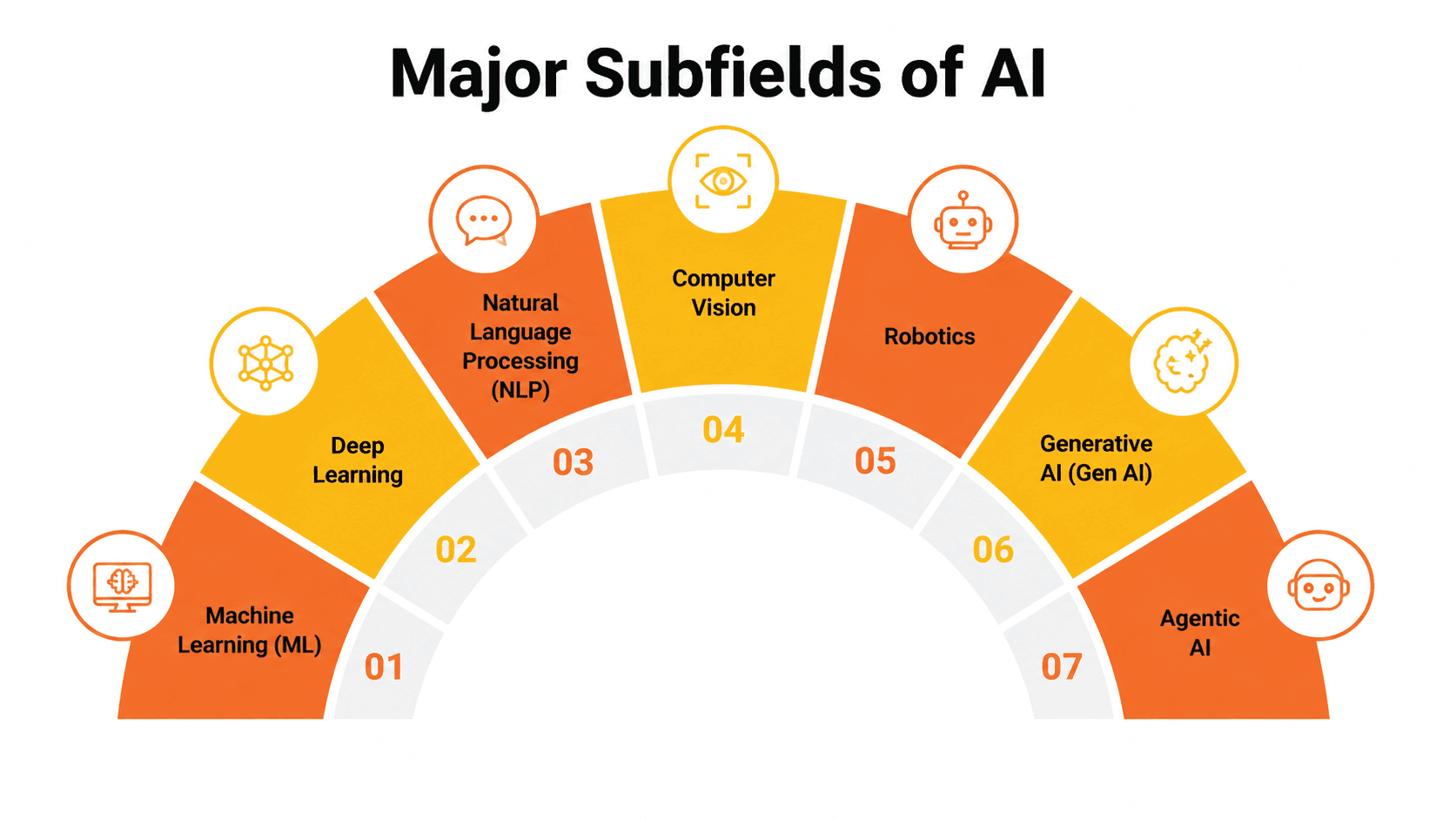
- Machine Learning (ML): Enables systems to learn from data and improve over time.
- Deep Learning: Uses neural networks to process complex data such as images and speech.
- Natural Language Processing (NLP): Helps machines understand and generate human language.
- Computer Vision: Allows systems to analyze and interpret images and videos.
- Robotics: Combines AI with physical machines to automate real-world tasks.
- Generative AI (Gen AI): Creates new content such as text, images, audio, and code.
- Agentic AI: Enables AI systems to plan, reason, and execute tasks autonomously.
These developments have pushed AI far beyond its early applications, leading to innovations like Generative AI and Agentic AI.
What Is Generative AI?
Generative AI (Gen AI) is a type of artificial intelligence that creates new content based on user prompts. Unlike traditional AI, which focuses on analyzing data and making predictions, Generative AI can produce text, images, audio, videos, and even software code.
| According to AWS, Generative AI can create new content and ideas, including conversations, stories, images, videos, and music. It learns from vast amounts of information and applies that knowledge to generate original outputs in response to a request. |
How Does Generative AI Work?
Generative AI learns from large collections of text, images, audio, and other data. By studying these examples, it understands how different pieces of information fit together. When you provide a prompt, it uses that knowledge to create a response that matches your request.
For instance, if you ask a chatbot to write an email, it generates text based on similar writing patterns it has learned. If you describe an image, it creates a visual that aligns with your instructions.
Common Architectures Behind Generative AI
Generative AI relies on several underlying technologies to create content:
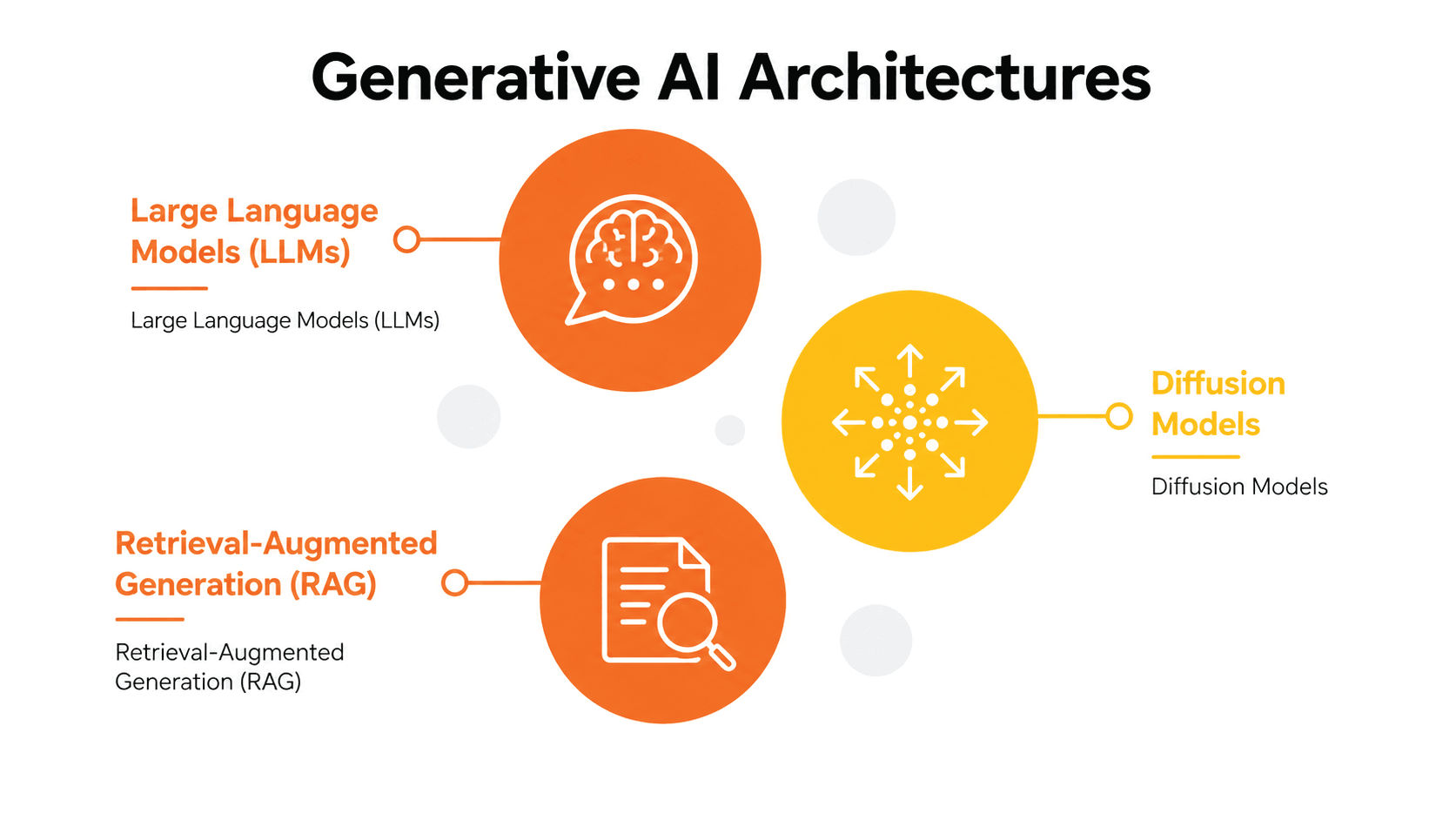
- Large Language Models (LLMs): Models such as GPT and Llama use transformer architectures to understand context and generate human-like text.
- Diffusion Models: Commonly used for image generation, these models transform random noise into detailed visuals based on a prompt.
- Retrieval-Augmented Generation (RAG): Enhances model responses by retrieving relevant information from external knowledge sources before generating an answer.
These technologies power many of the Generative AI applications businesses use today, from chatbots and content creation tools to coding assistants and design platforms.
What Is Agentic AI?
Agentic AI is an AI system that can autonomously plan, make decisions, and complete tasks to achieve a goal with little human intervention. In contrast to traditional AI or Generative AI, which commonly respond to prompts, Agentic AI can determine the steps needed to complete a task and carry them out on its own.
Agentic AI goes beyond responding to prompts. It can understand a goal, figure out the steps required to achieve it, and take action with minimal human involvement. ~ Google Cloud |
How Does Agentic AI Work?
Agentic AI follows a repetitive cycle that helps it work toward a goal:
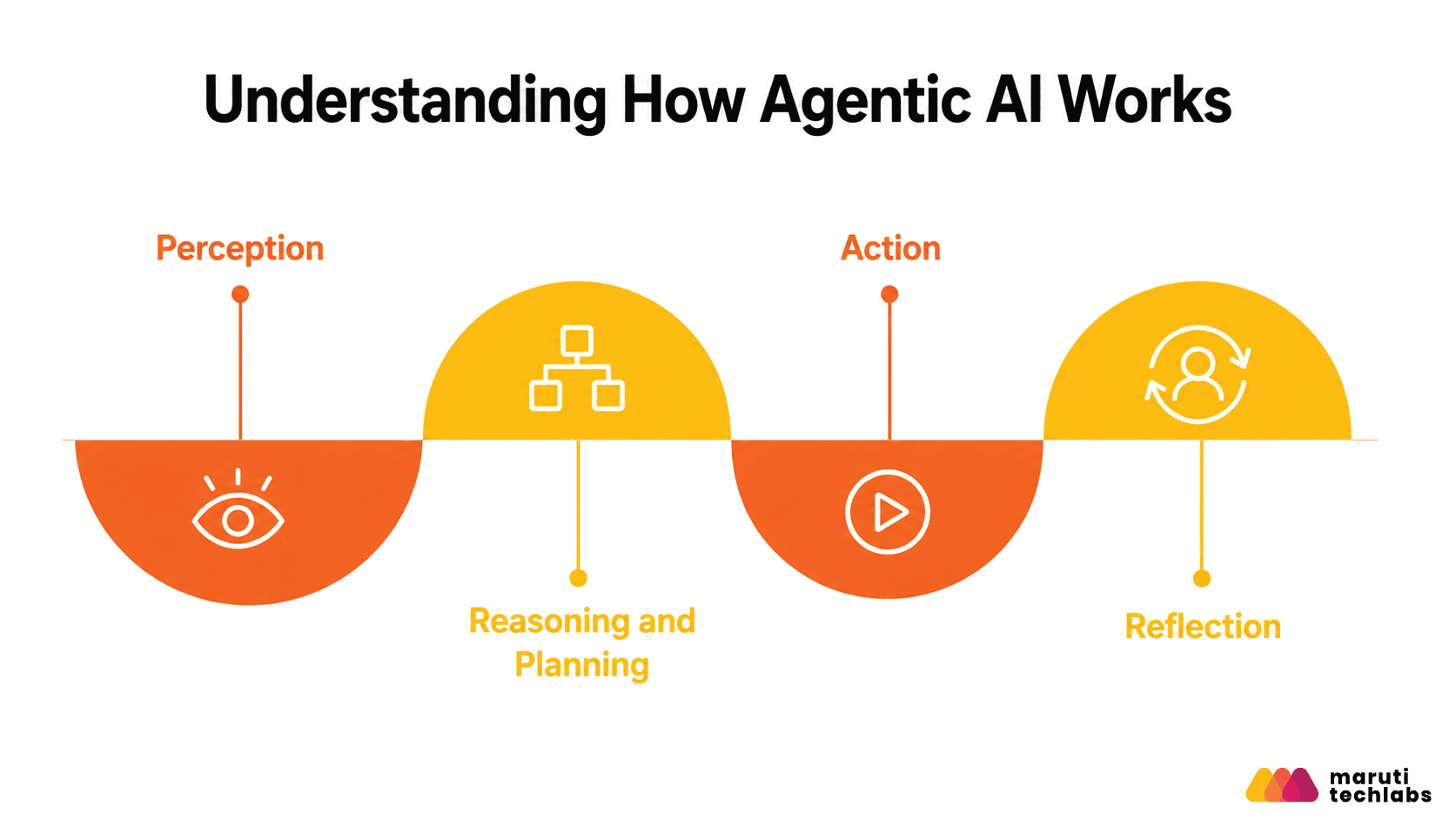
- Perception: Gathers information from user inputs, databases, systems, or its environment.
- Reasoning and Planning: Breaks a goal into smaller tasks and determines the best way to complete them.
- Action: Executes tasks by interacting with tools, applications, APIs, or other systems.
- Reflection: Reviews outcomes, identifies errors or gaps, and adjusts its approach when needed.
This process allows Agentic AI to handle multi-step tasks without calling for constant human guidance.
Common Agentic AI Architectures
The way an Agentic AI system is structured often depends on the problem it is trying to solve. Some tasks can be handled by a single agent, while others require multiple agents working together.
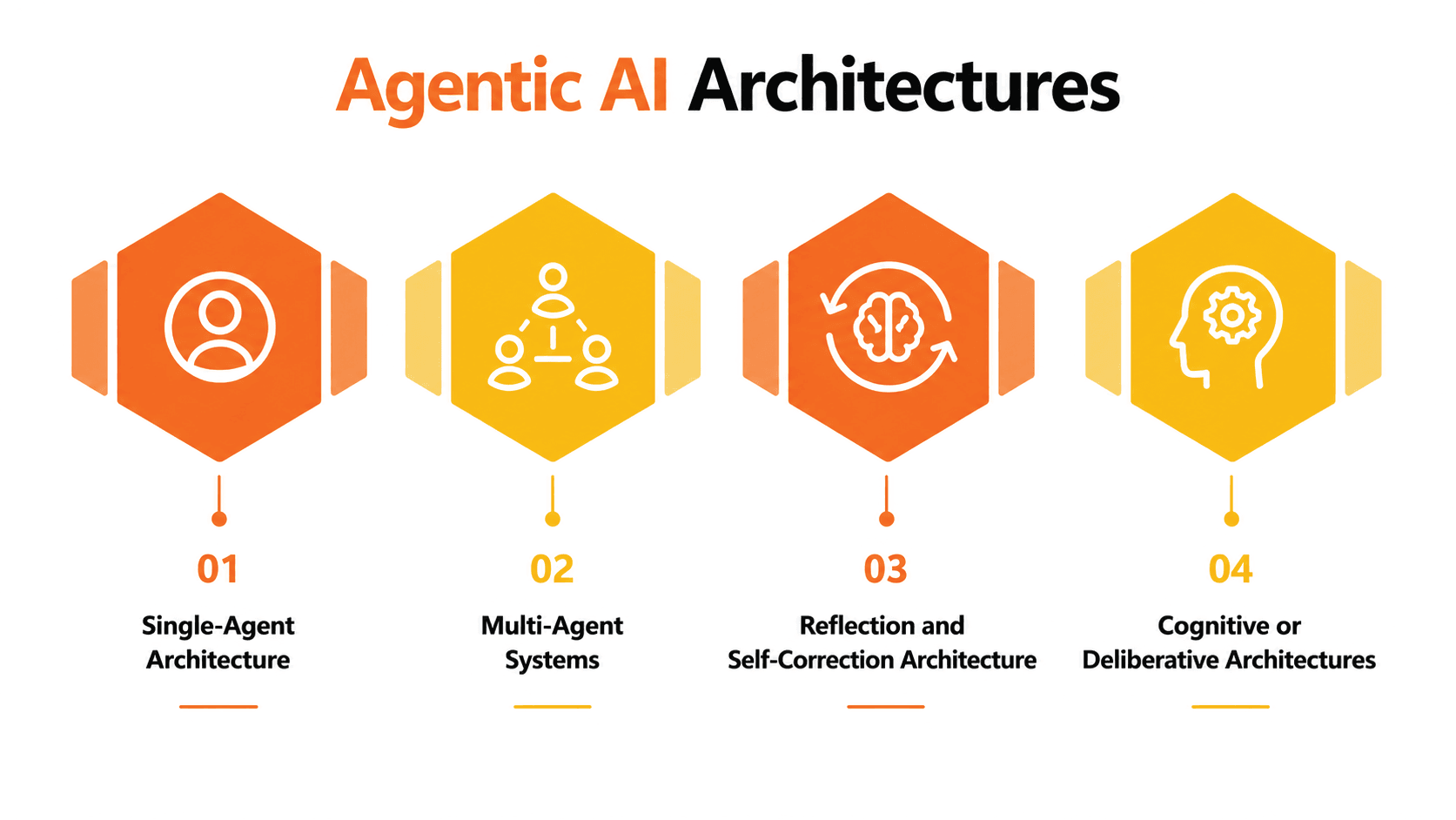
- Single-Agent Architecture: One agent manages the task from start to finish.
- Multi-Agent Systems: Multiple agents collaborate to complete different parts of a task.
- Reflection and Self-Correction Architecture: The agent checks and improves its own work.
- Cognitive or Deliberative Architectures: The agent reasons through different choices before taking action.
These capabilities make Agentic AI a natural next step in the evolution of AI, moving beyond content generation toward autonomous task execution.
AI vs Generative AI vs Agentic AI: Understanding the Evolution
Businesses have been using AI for years to automate regular processes and make better use of data. But while technology progressed, expectations changed. Companies no longer wanted AI to stop at predictions or recommendations. They wanted systems that could generate content, support decision-making, and even carry out tasks from start to finish.
Each stage of AI has added a new layer of capability. Traditional AI is built to analyze data and support decision-making. Generative AI can create new content from a simple prompt. Agentic AI builds on these capabilities by taking action, handling tasks, and working toward a defined goal with limited supervision. Together, they give organizations more ways to improve productivity, automate work, and solve business problems.
The progression can be understood as follows:
| Stage | What it Does | Business Focus | Example |
| Traditional AI | Analyzes data and predicts outcomes | Automation & insights | Fraud detection, forecasting |
| Generative AI | Creates new content | Productivity & creativity | ChatGPT, image generation |
| Agentic AI | Plans and completes tasks | End-to-end workflow automation | AI customer support agent, coding agent |
As AI has evolved, its role has expanded from helping people analyze information to assisting with content creation and, more recently, handling entire workflows. This shift is opening new opportunities for businesses to automate increasingly complex processes while lowering manual effort.
Each type of AI is built for a different purpose. Whether you need better insights, faster content creation, or end-to-end task automation, knowing what each technology can do helps you make better investment decisions.
Agentic AI vs. Generative AI: 7 Key Differences
As discussed earlier, Generative AI and Agentic AI are closely related, but they are designed for different purposes. Generative AI focuses on creating content in response to a prompt, while Agentic AI goes beyond content generation by planning, making decisions, and completing tasks with little human intervention. The table below highlights how the two compare across several aspects.
| Feature | Generative AI | Agentic AI |
| Core Purpose | Creates content such as text, images, code, and audio. | Completes tasks and achieves goals through autonomous actions. |
| Behavior | Responds to user prompts. | Proactively plans and executes multiple steps to complete a task. |
| Autonomy | Requires a prompt for every request. | Works independently after receiving an objective. |
| Memory & Context | Uses the context provided during a conversation. | Maintains context, tracks progress, and adapts as tasks evolve. |
| Tool Integration | Primarily generates outputs for users to review or use. | Connects with APIs, databases, applications, and other tools to perform actions. |
| Simple Analogy | Like a skilled writer who creates content when asked. | Like a project manager who plans the work, coordinates tasks, and delivers the final outcome. |
| Primary Use Cases | Content writing, coding assistance, image generation, document summarization. | Customer support automation, research, software testing, workflow automation, and business process orchestration. |
The biggest difference comes down to autonomy. Generative AI produces an output and waits for the next instruction. Agentic AI keeps working toward a goal by deciding what needs to happen next, using the right tools, and modifying its approach when required.
This does not mean one is better than the other. Generative AI is often the right choice for creating content, while Agentic AI is better suited for automating workflows that involve multiple steps, decisions, and interactions with different systems.
Agentic AI vs Generative AI Examples: Real-World Business Applications
Both Generative AI and Agentic AI are already being used across industries. However, the way organizations apply them varies depending on the business problem they are trying to solve.
Generative AI Applications
Organizations are adopting Generative AI in a variety of business functions to streamline operations and enhance productivity. Some key applications include:
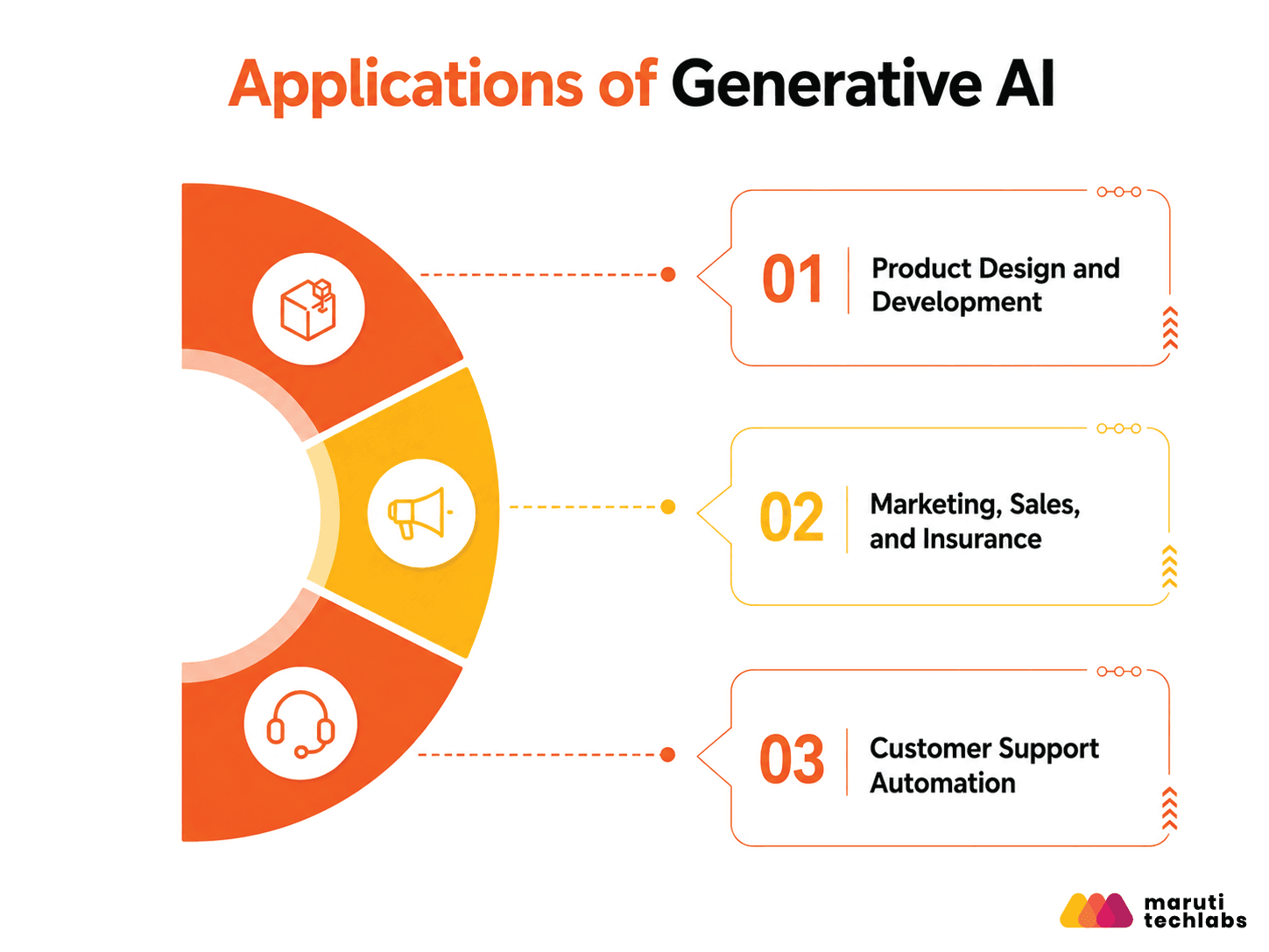
- Product Design and Development: Product teams use Generative AI to create design concepts, explore new ideas, and build prototypes based on customer preferences and market trends.
- Marketing, Sales, and Insurance: Generative AI helps create blogs, email campaigns, personalized sales content, insurance policy summaries, and customer support responses more efficiently.
- Customer Support Automation: Businesses use AI-powered assistants to answer common customer queries, draft responses, summarize conversations, and help support teams resolve issues more efficiently.
Agentic AI Applications
Organizations are using Agentic AI to handle tasks that require continuous monitoring, autonomous decision-making, and coordinated actions. Some common applications include:
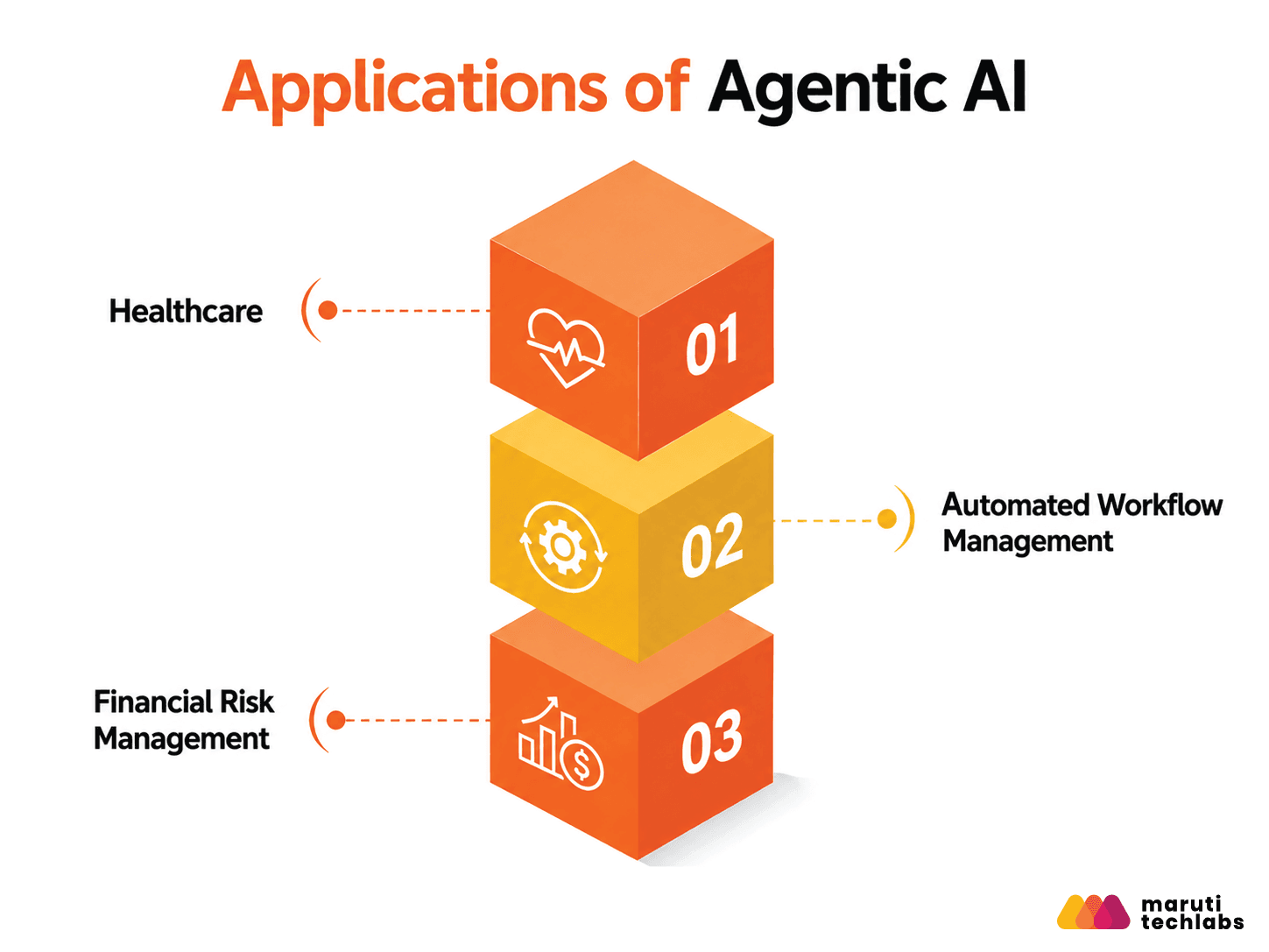
- Healthcare: Healthcare providers use Agentic AI to monitor patient data, detect potential health risks, alert medical teams when intervention is needed, and support ongoing patient care.
- Automated Workflow Management: Organizations automate routine business processes such as inventory management, supply chain operations, approvals, and task scheduling, allowing employees to focus on higher-value work.
- Financial Risk Management: Financial institutions use Agentic AI to monitor market changes, assess investment risks, identify fraud, and adjust strategies based on real-time financial data.
Challenges and Best Practices of Implementing Generative AI and Agentic AI
Adopting Generative AI or Agentic AI comes with its own challenges. Inaccurate outputs, data privacy issues, security risks, and understanding how AI makes decisions are some of the most common concerns. Addressing them early helps organizations use AI with greater confidence.
Generative AI Challenges
To get the most value from Generative AI, organizations must understand and address the following challenges:
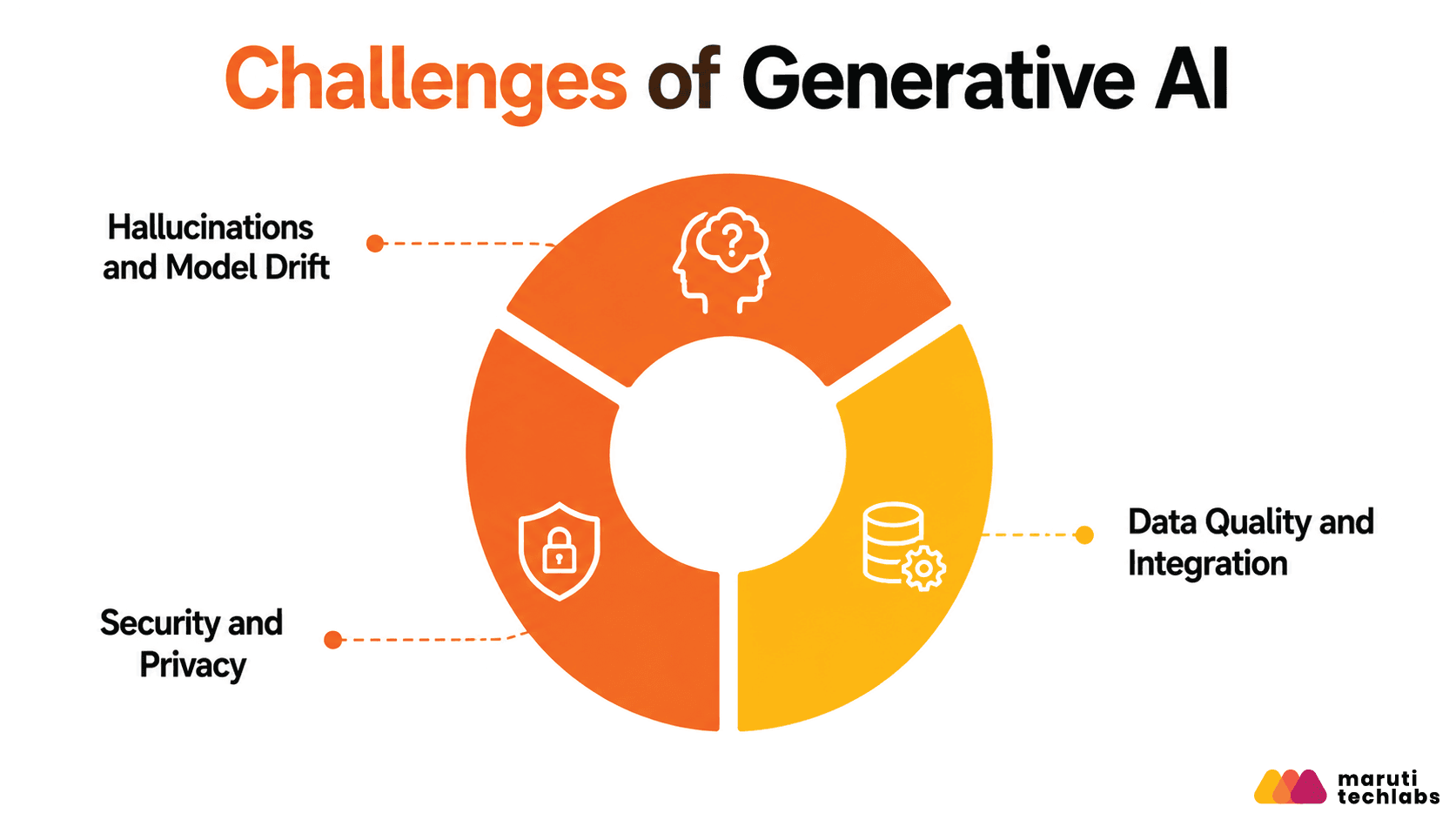
- Hallucinations and Model Drift: Generative AI can sometimes produce information that sounds convincing but is inaccurate or completely made up. Its performance can also decline over time if the model isn't regularly updated with relevant, high-quality data.
- Data Quality and Integration: The quality of AI results depends on the quality of the data it receives. Disconnected systems and inconsistent data can make implementation more difficult.
- Security and Privacy: Protecting business and customer data is essential. Strong security measures help reduce the risk of data leaks and privacy issues.
Agentic AI Challenges
As Agentic AI takes on more responsibility with minimal human intervention, organizations need to ensure it operates reliably, transparently, and securely. Some of the key challenges include:
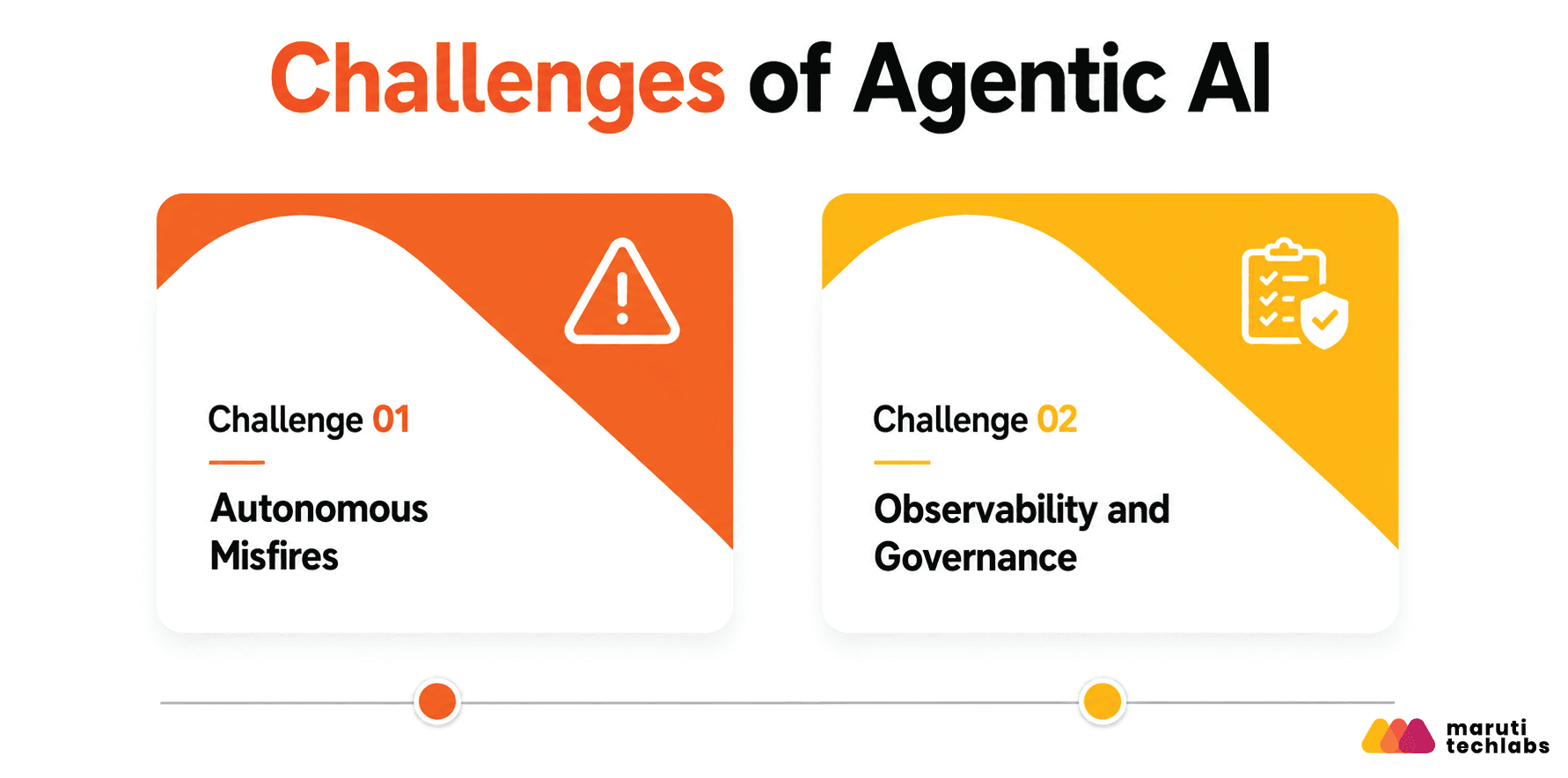
- Autonomous Misfires: Agentic AI can work independently, but it may sometimes misunderstand a task or make the wrong decision. When that happens, the mistake can affect other connected systems or workflows.
- Observability and Governance: It isn’t always easy to see how an AI agent reached a decision or what actions it has taken. Without proper tracking, reviewing its performance and meeting compliance requirements becomes much harder.
Best Practices for Successful AI Implementation
Following a few best practices can help organizations implement AI more effectively, reduce risks, and achieve better long-term results. These include:
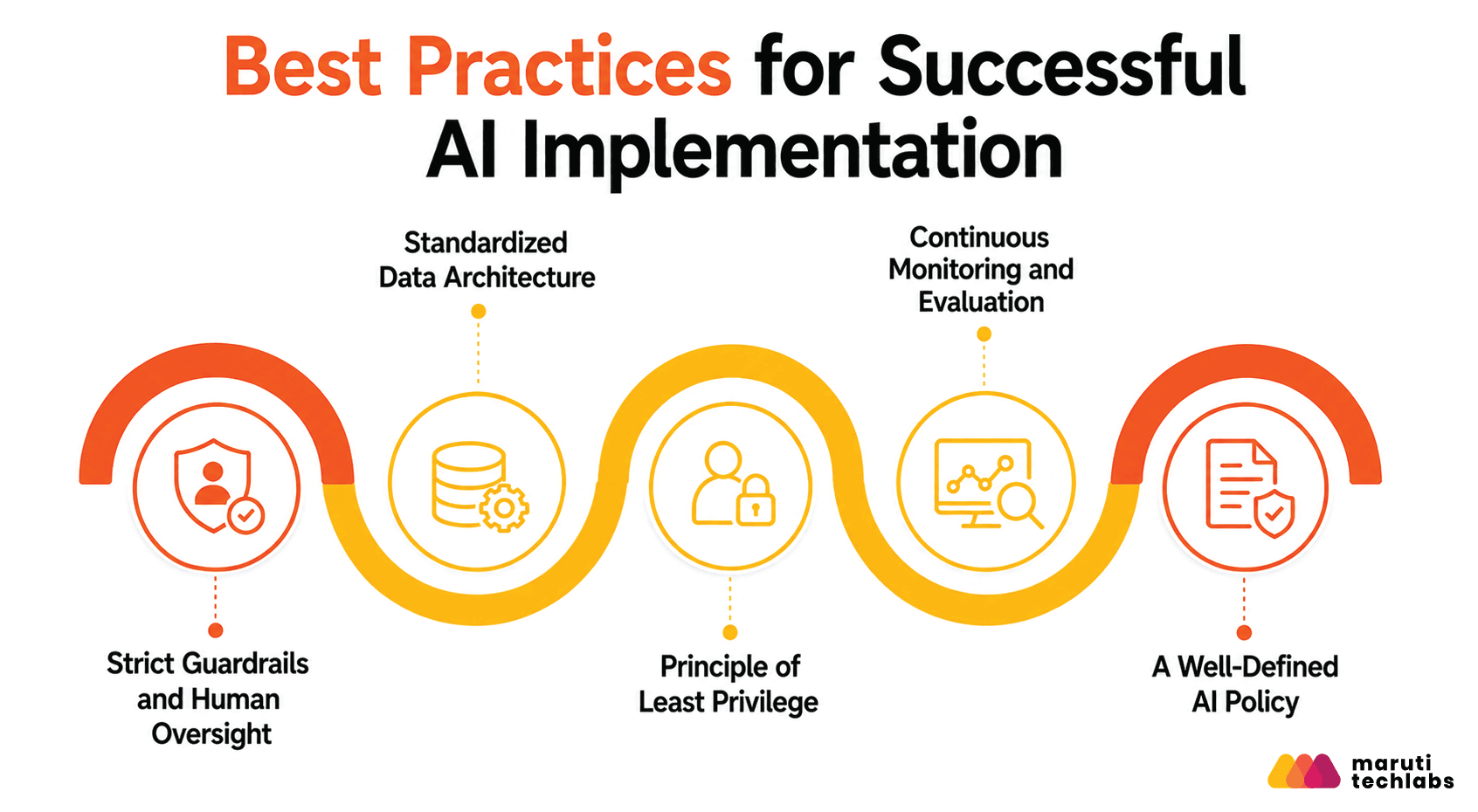
- Strict Guardrails and Human Oversight: AI can make work faster, but people should still review important decisions. A quick human check can help catch mistakes before they become bigger problems.
- Standardized Data Architecture: A consistent and well-organized data foundation improves the quality of AI outputs and makes integration with existing systems much smoother.
- Principle of Least Privilege: Giving AI access only to the data and tools required for a specific task reduces security risks and protects sensitive business information.
- Continuous Monitoring and Evaluation: Checking AI results from time to time helps catch errors early and keeps the system working reliably.
- A Well-Defined AI Policy: Clear rules around AI usage, data access, and responsibilities help teams use the technology with confidence.
Conclusion
AI is evolving rapidly, and new technologies are introduced almost every year. That makes it easy to assume one approach is replacing another. In reality, traditional AI, Generative AI, and Agentic AI each solve a different problem. Understanding those differences is far more valuable than simply adopting the latest trend.
Every business has different priorities, so there isn't a single AI solution that fits every situation. Understanding what each technology does makes it easier to choose the right approach, avoid unnecessary complexity, and invest in AI where it can make the biggest difference.
Agentic AI is still evolving, but it's already changing how organizations think about automation. As the technology matures, we'll likely see AI move beyond assisting people with individual tasks and begin managing more complete business processes, always with the right balance of human involvement.
FAQs
1. What is Generative AI and how does it differ from Agentic AI?
Generative AI creates content such as text, images, code, and audio based on user prompts. Agentic AI goes beyond content creation by planning tasks, making decisions, and taking actions to achieve a specific goal. In simple terms, Generative AI produces outputs, while Agentic AI can use those outputs as part of a larger workflow.
2. Can Agentic AI enhance Generative AI?
Yes. Agentic AI can use Generative AI as part of its decision-making process. For example, an AI agent may use a language model to draft an email, summarize information, or generate a report before moving on to the next step in a workflow. This allows tasks to be completed with less human involvement.
3. Which is best, Gen AI or Agentic AI?
Neither is universally better. The right choice depends on the problem you are trying to solve. Generative AI is ideal for creating content and assisting with creative work. Agentic AI is better suited for automating processes that involve multiple steps, decisions, and interactions with different systems.
4. How does Agentic AI enhance decision-making?
Agentic AI can analyze information from multiple sources, evaluate different options, and take action based on predefined goals. It can also adapt to changing conditions and continue working without constant human guidance. This helps organizations make faster and more informed decisions while reducing manual effort.
5. How does Agentic AI relate to Generative AI?
Agentic AI and Generative AI are closely connected. Many Agentic AI systems rely on Generative AI models to understand requests, generate responses, summarize information, or communicate with users. While Generative AI focuses on creating content, Agentic AI uses those capabilities to complete broader tasks and workflows.
How We Helped Automate Image Verification with AI
One of our clients, a leading used car marketplace in the US, received nearly 120,000 vehicle images every month from sellers across the country. Reviewing every image manually required a team of 15 people, making the process slow and difficult to scale.
We built a Computer Vision model that automatically identified valid vehicle images and compared them with the details provided by the seller. Trained on 1,500 images, the model achieved 85% accuracy initially and improved to 90% within six months through regular feedback. This reduced manual review time, improved image verification, and helped speed up approvals.
With 8+ years of experience in AI, Maruti Techlabs helps businesses build practical AI solutions that solve real operational challenges. Explore our AI Development Services to see how we help organizations automate processes, improve decision-making, and build intelligent applications.
If you’re looking to build AI-powered content generation, intelligent assistants, or custom LLM solutions, explore our Generative AI Services to learn how we can help bring your ideas to life.